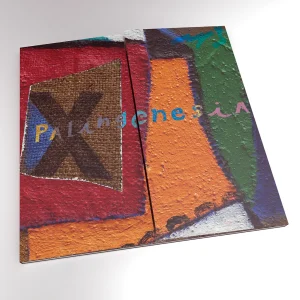
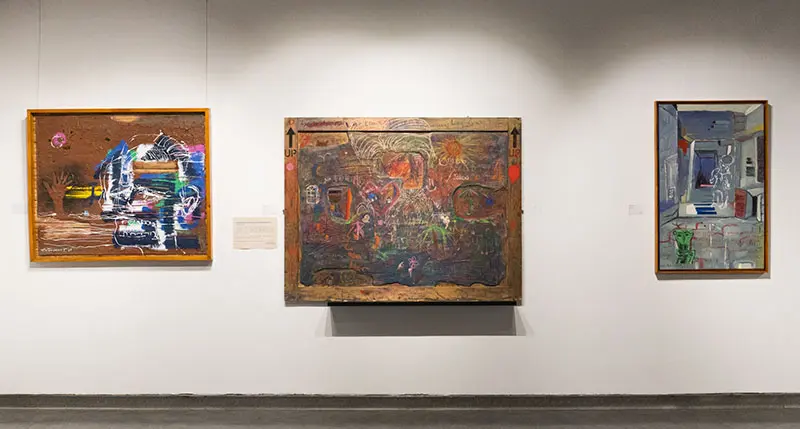
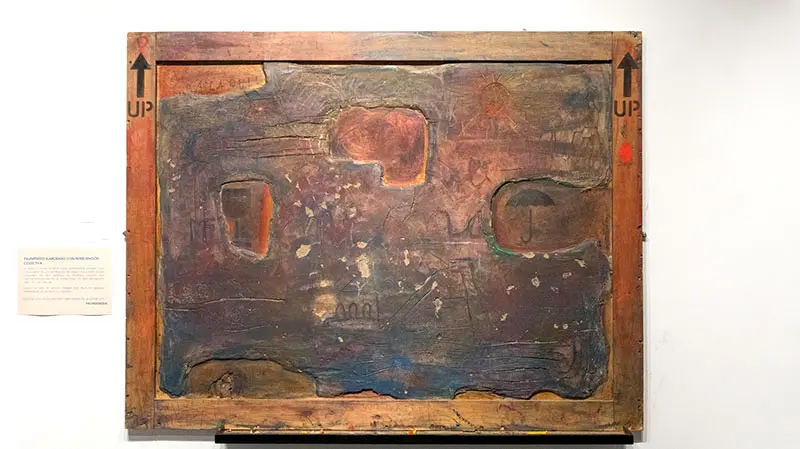
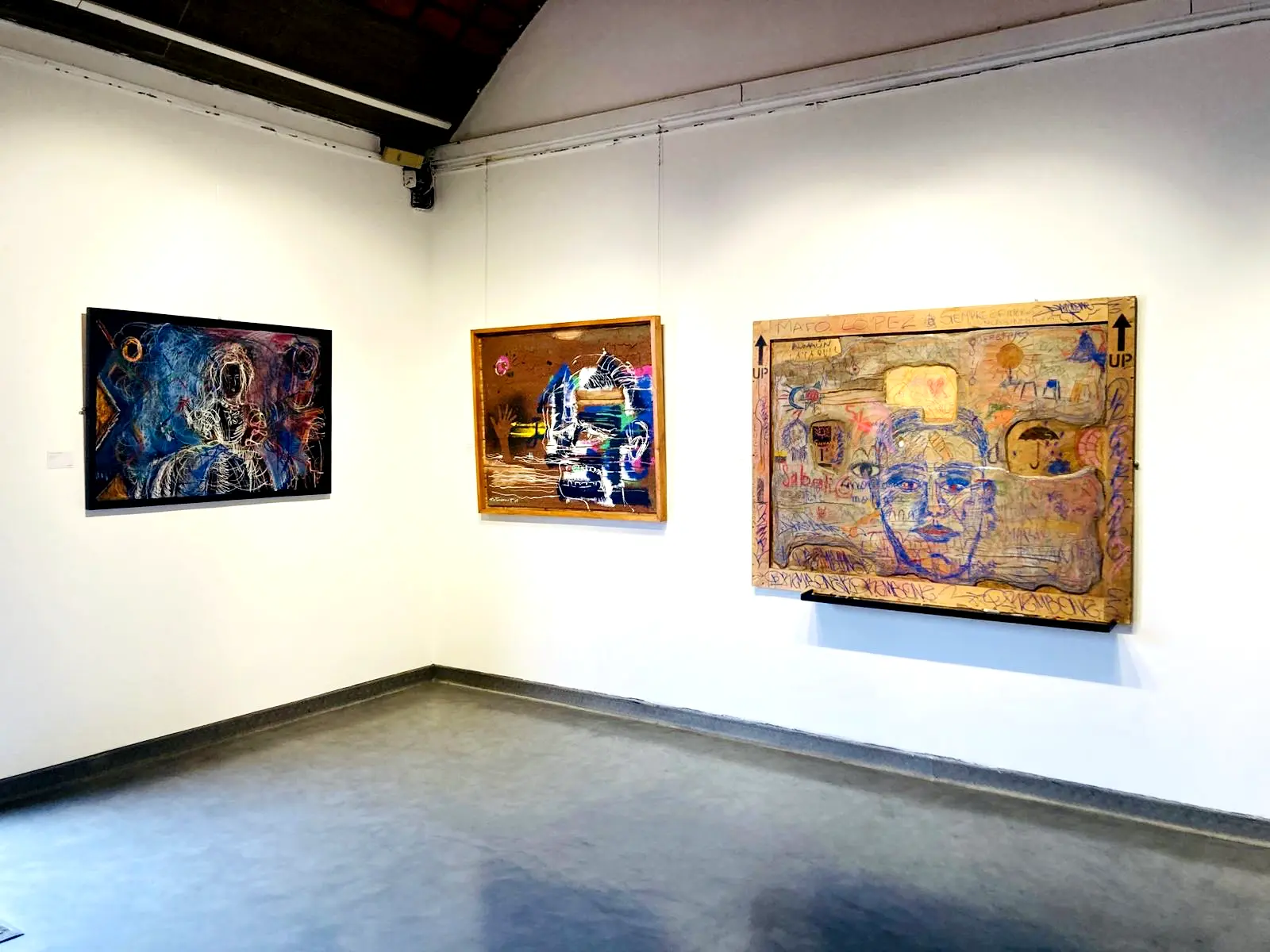
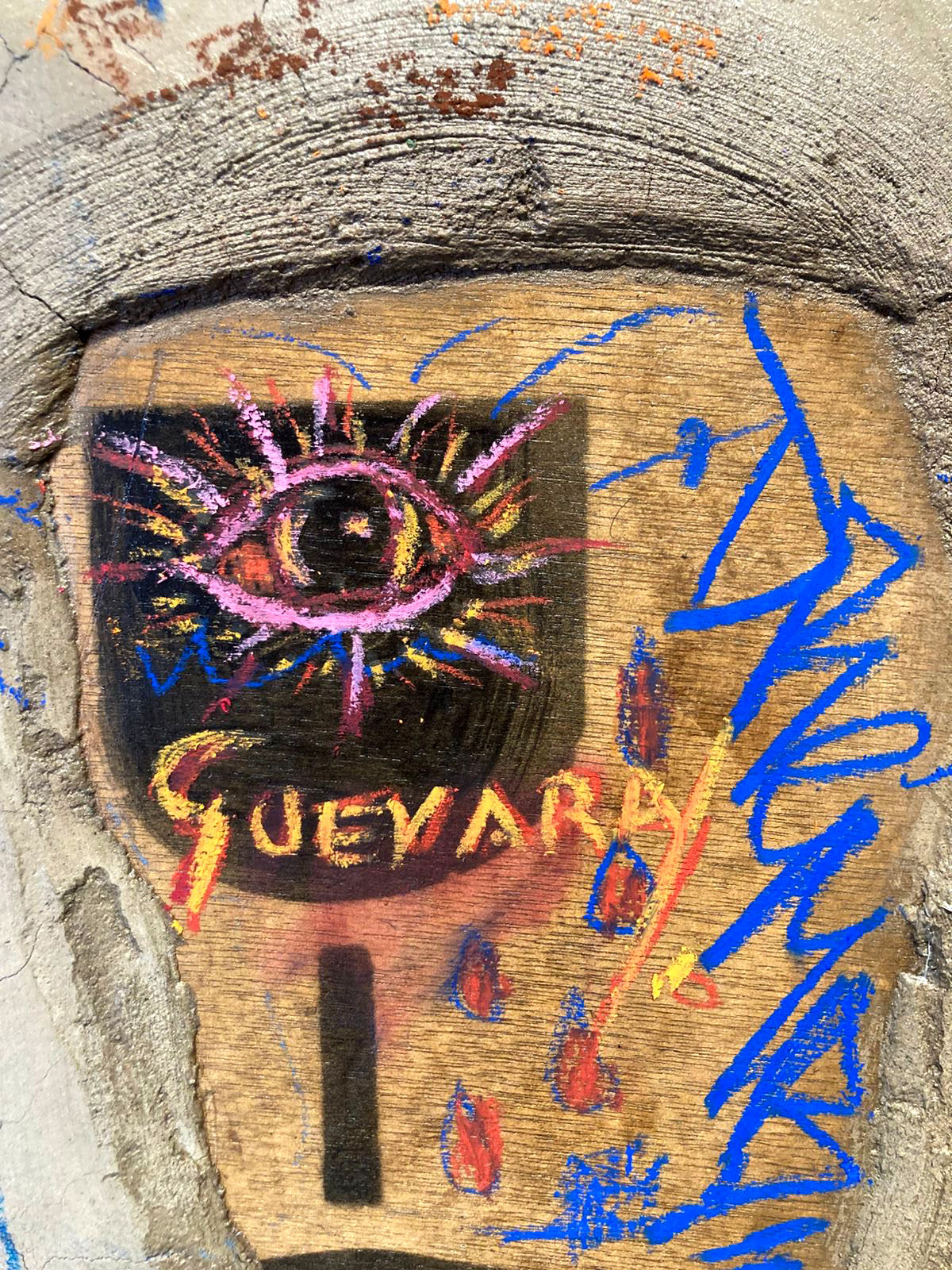
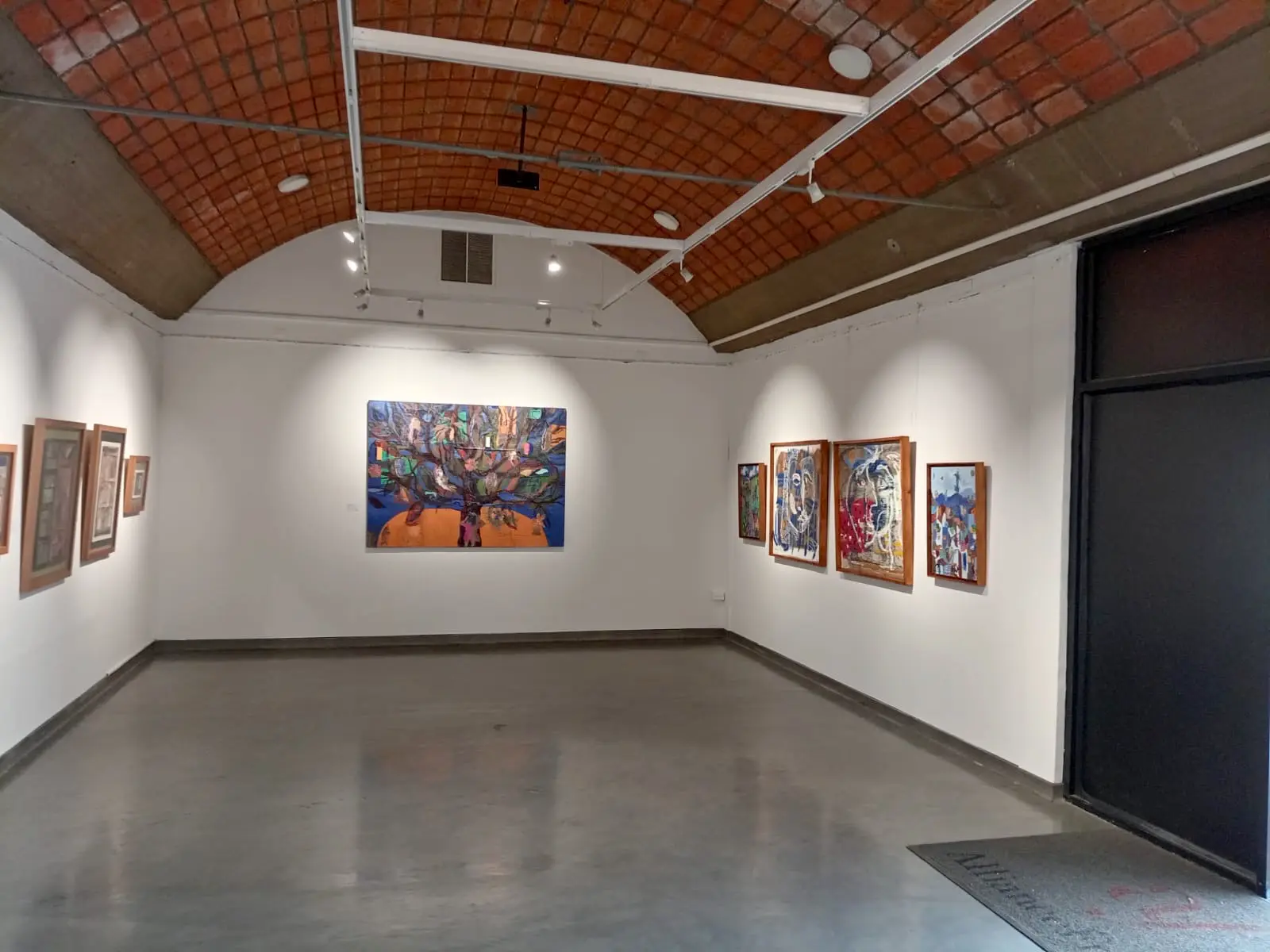
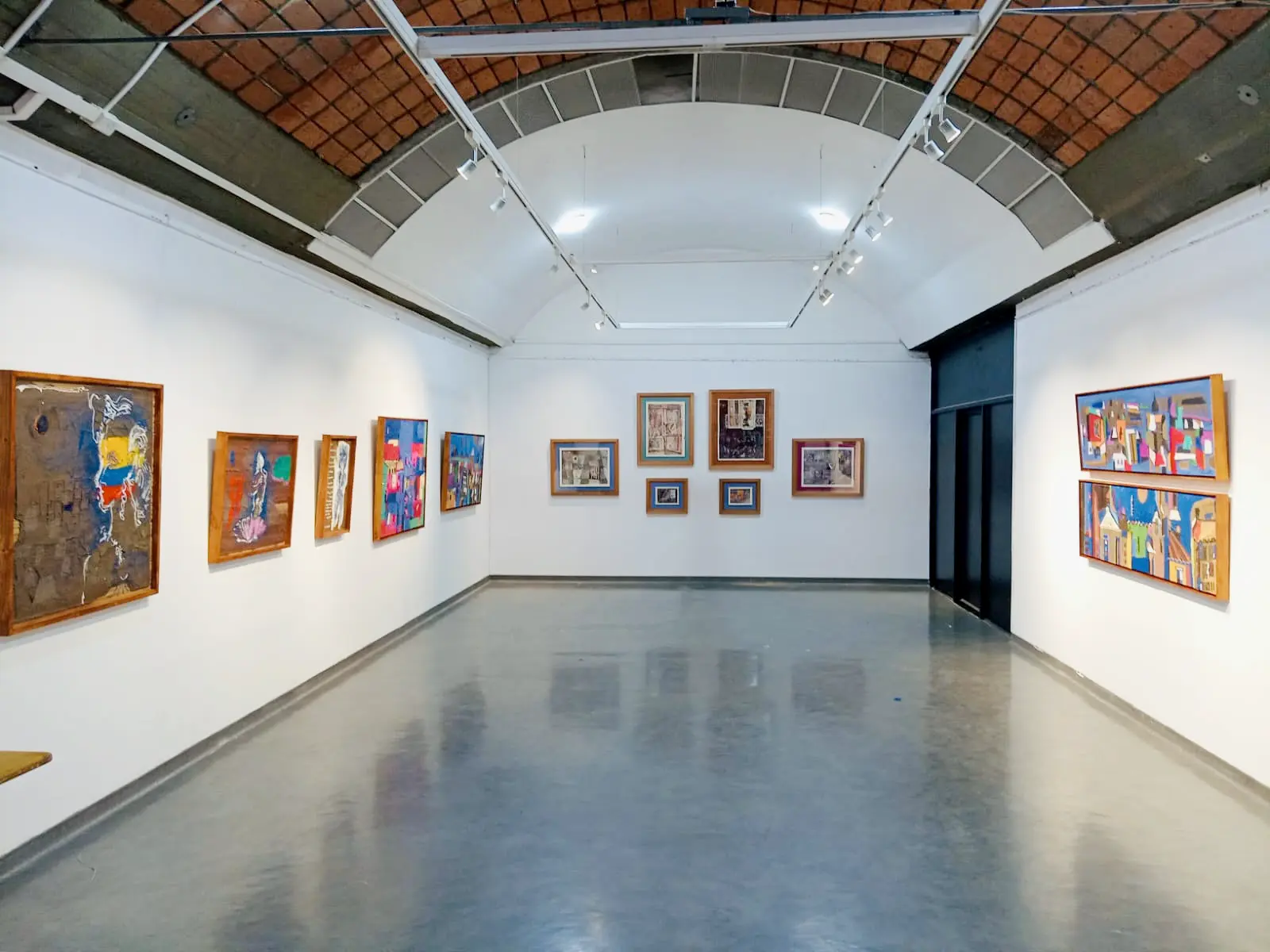
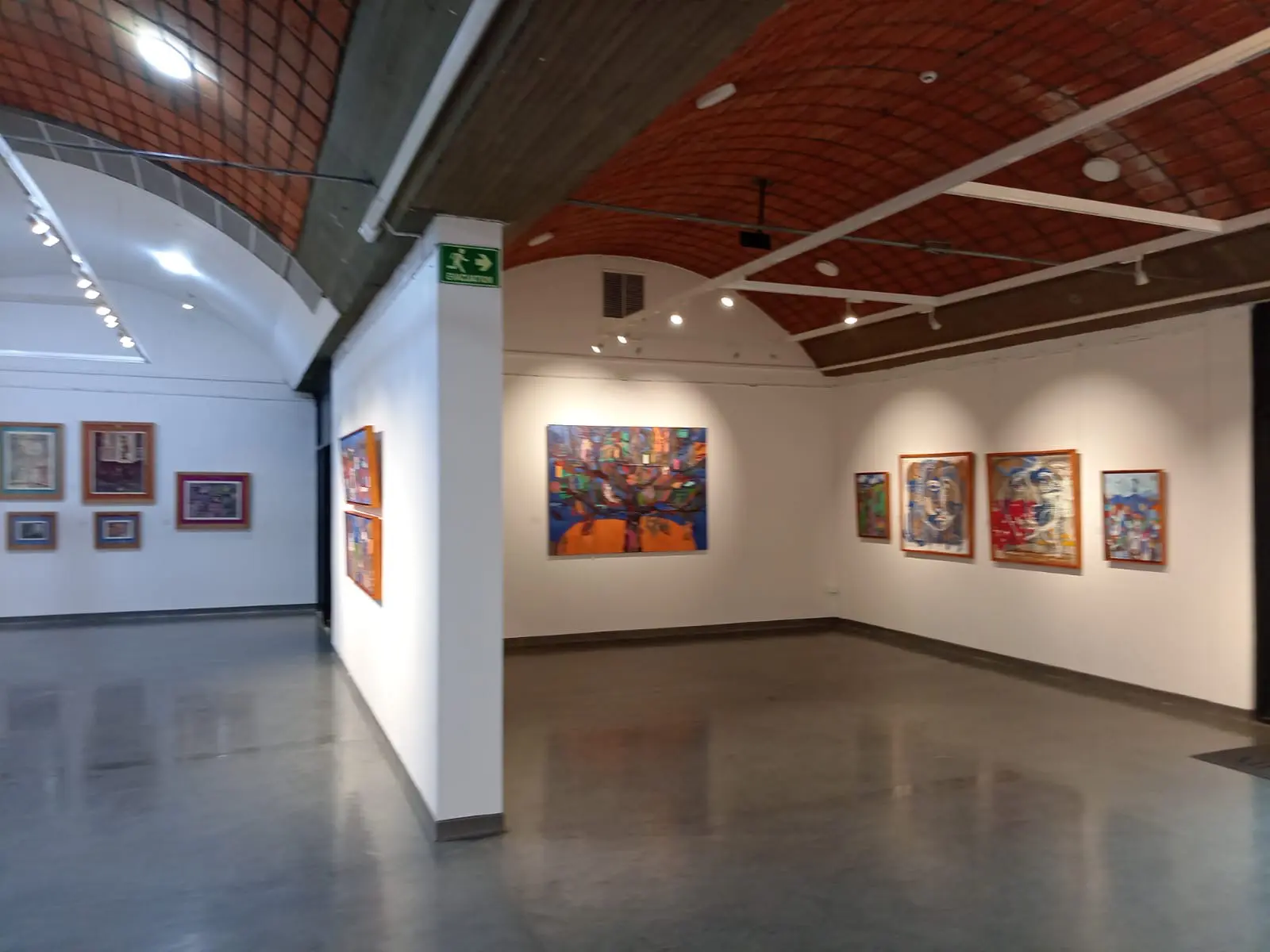
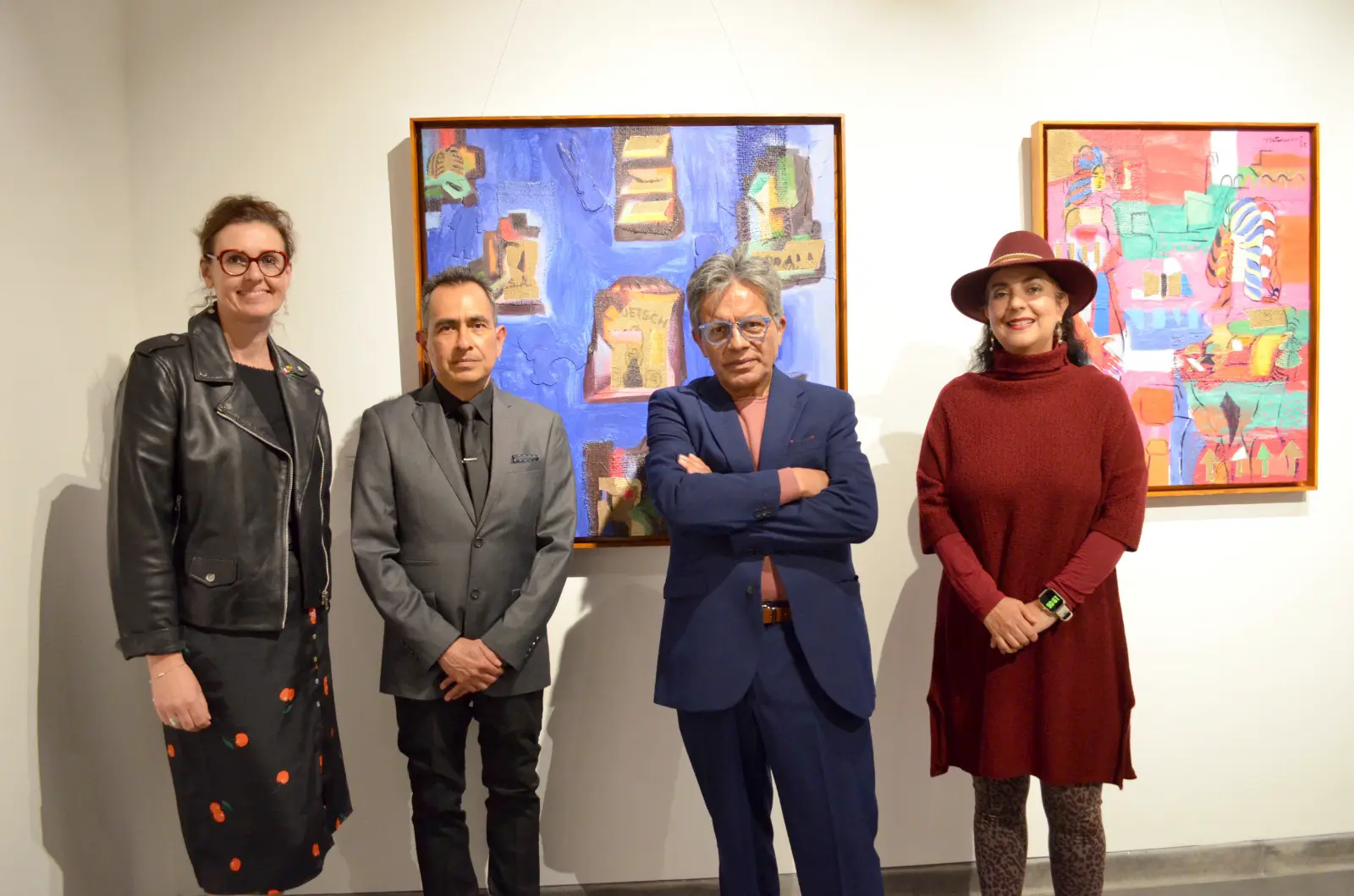
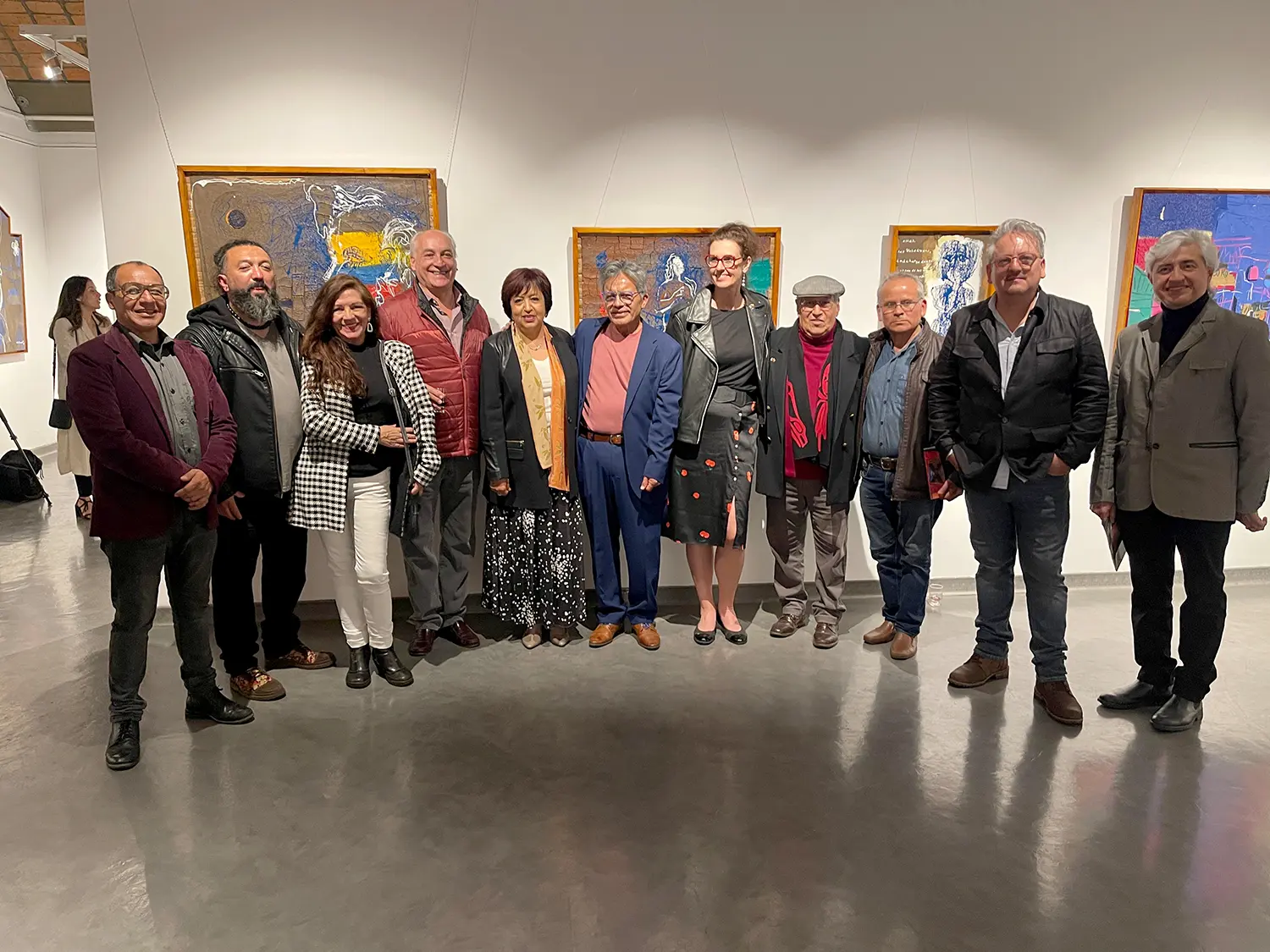
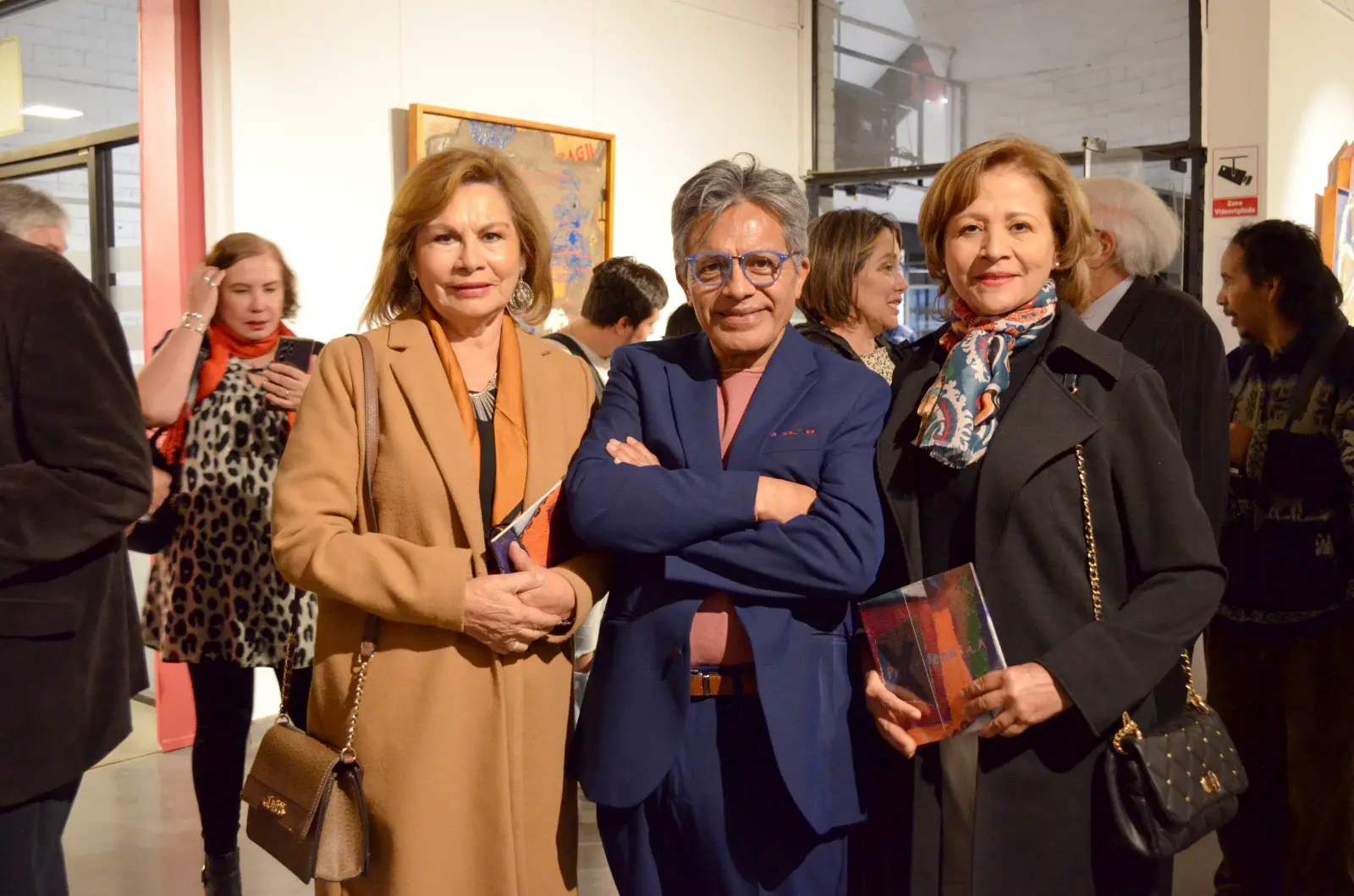
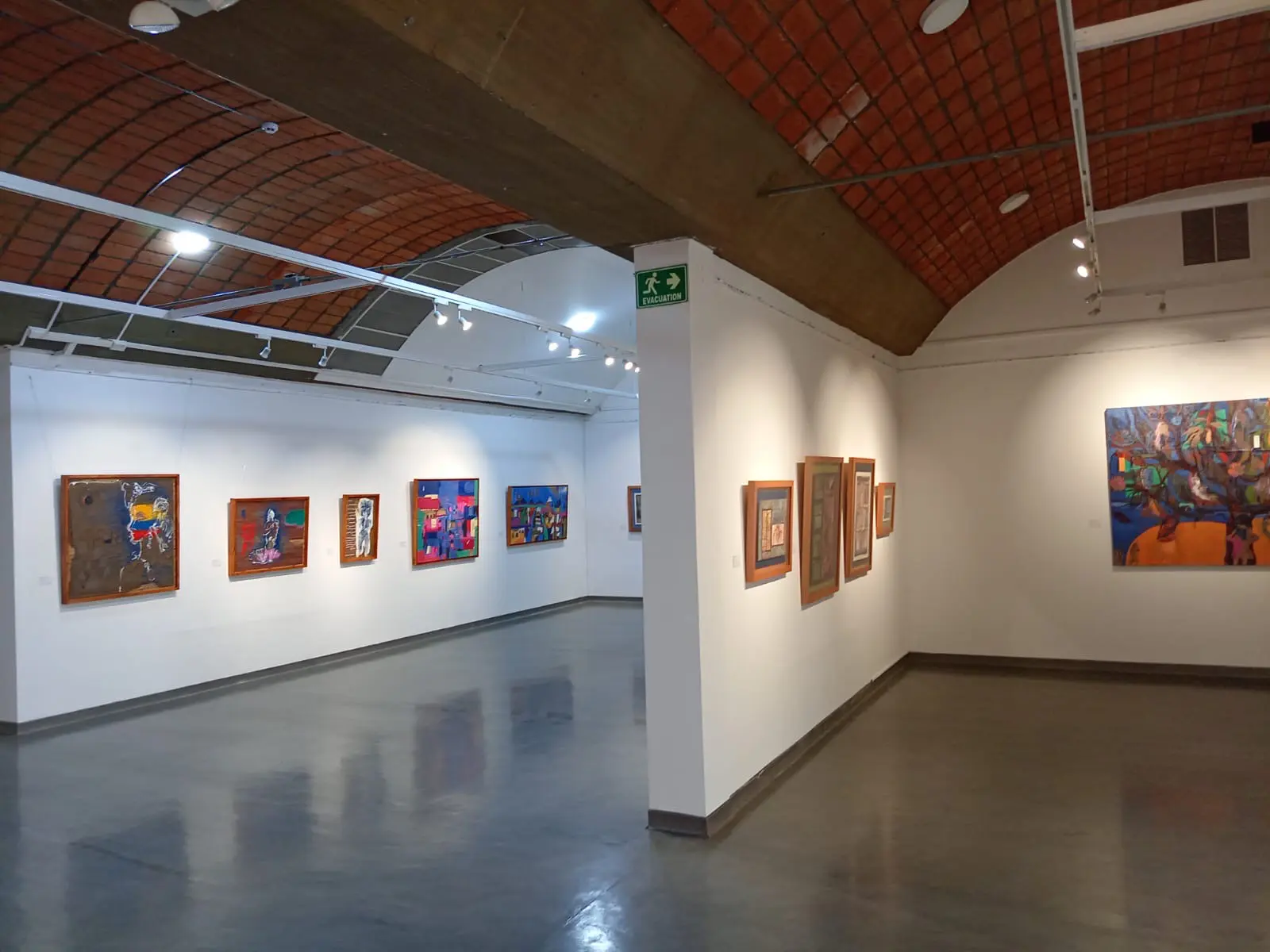
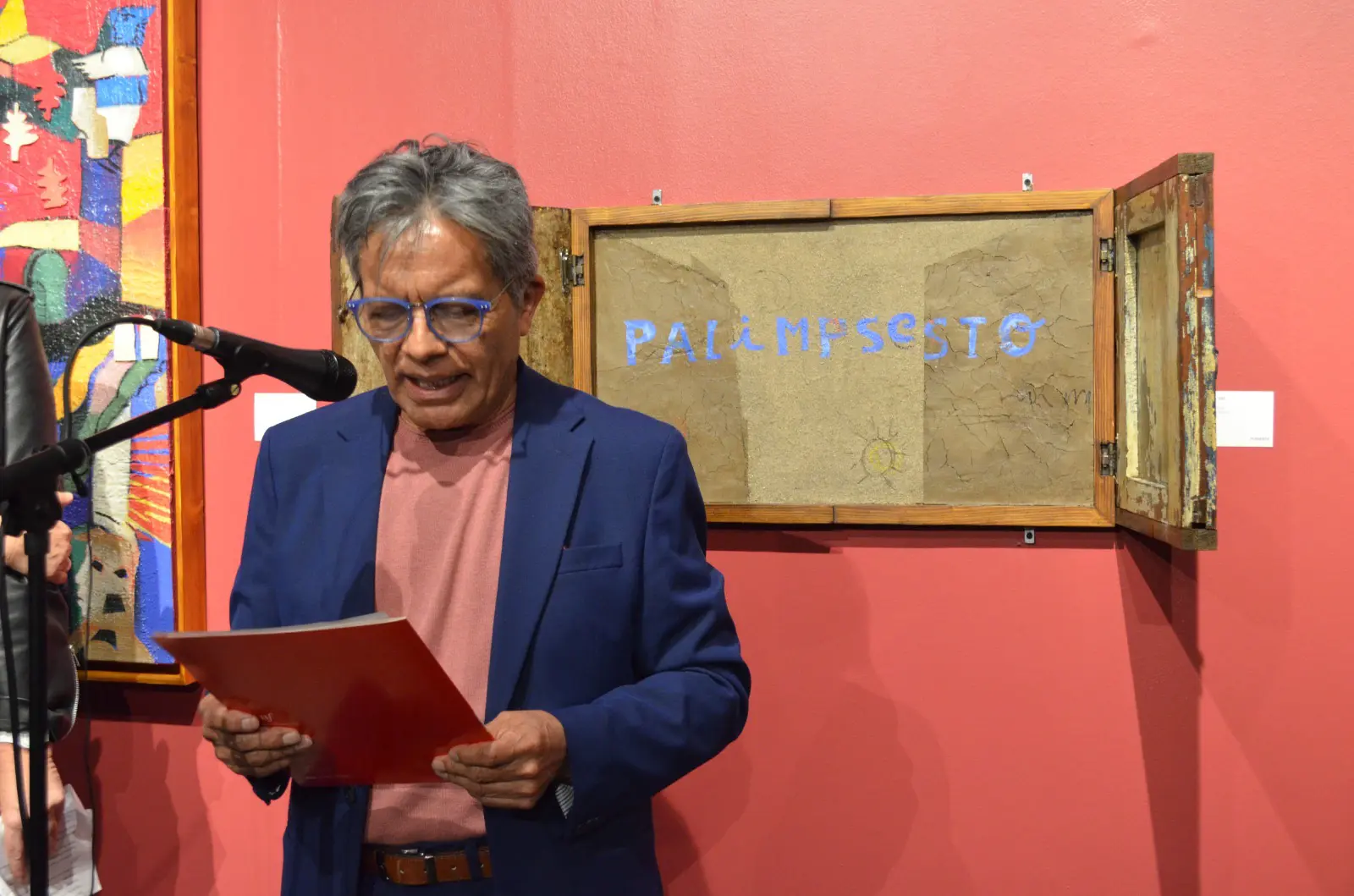
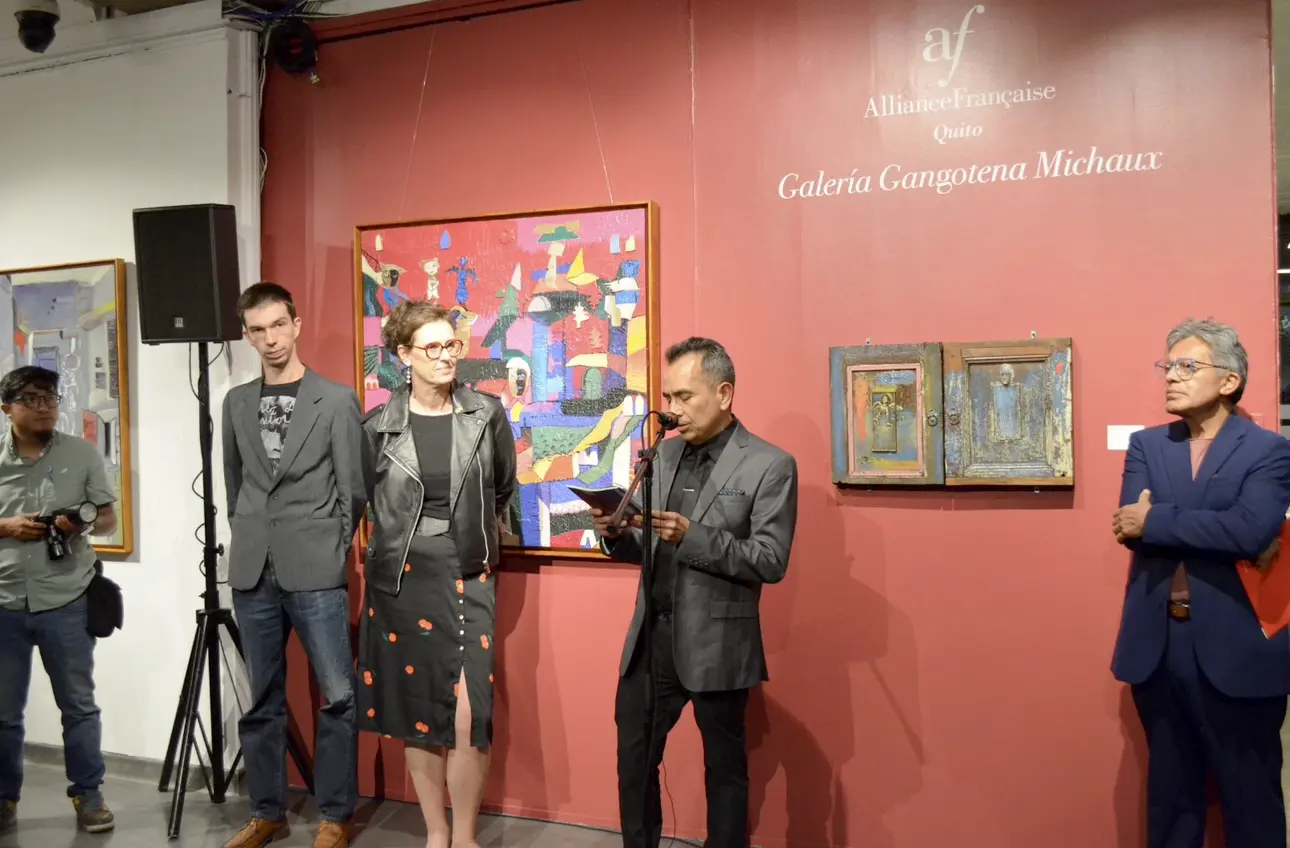
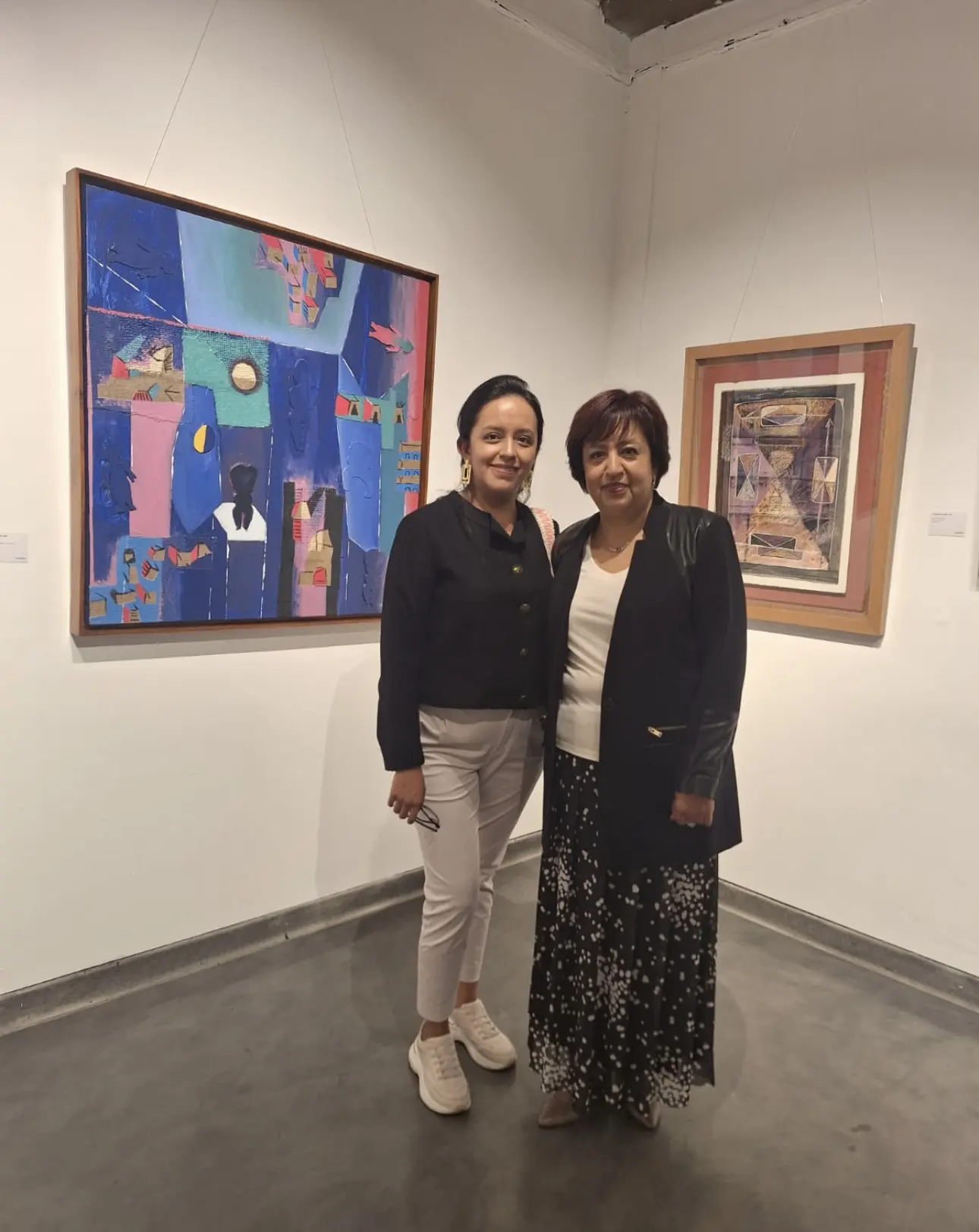
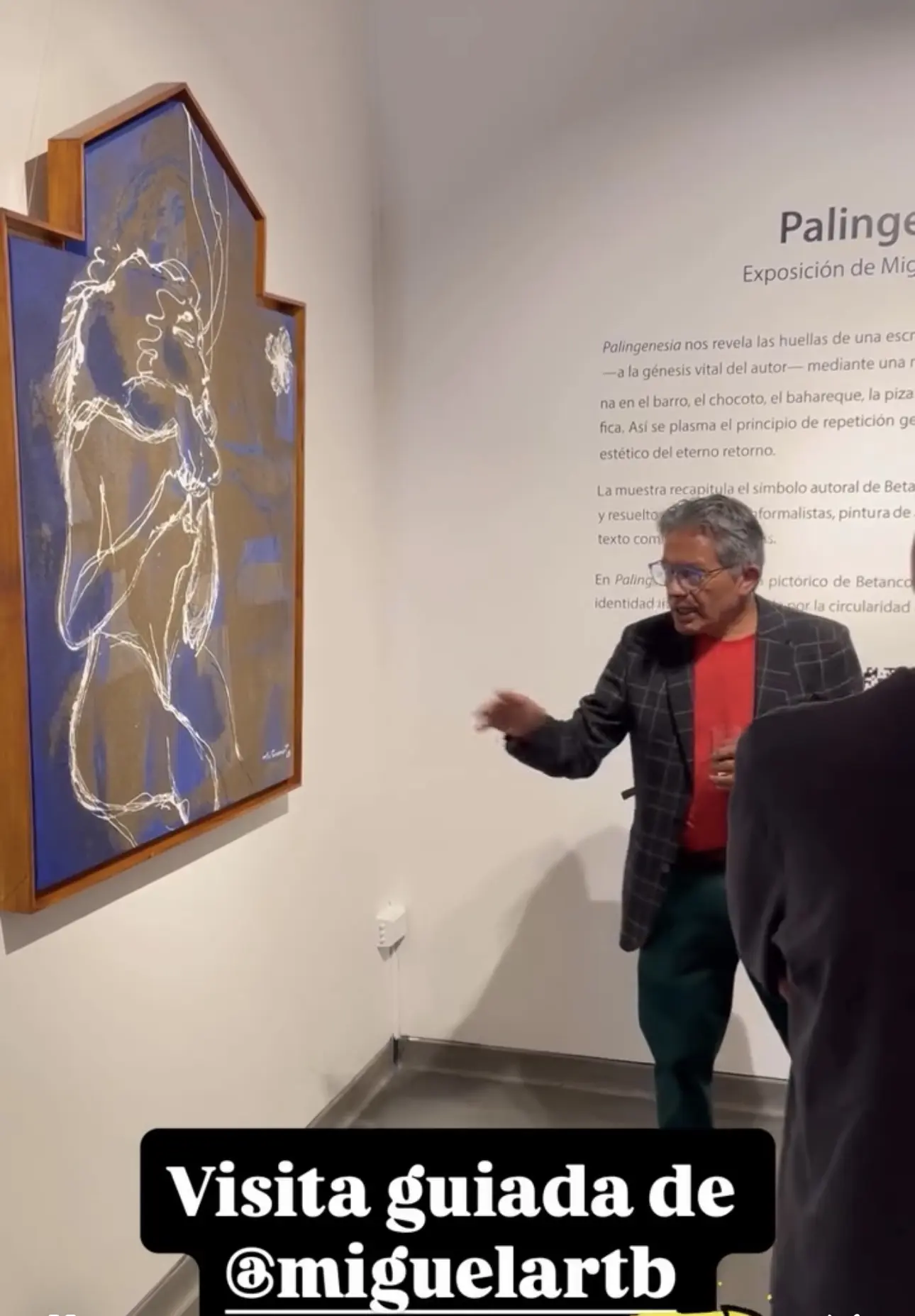
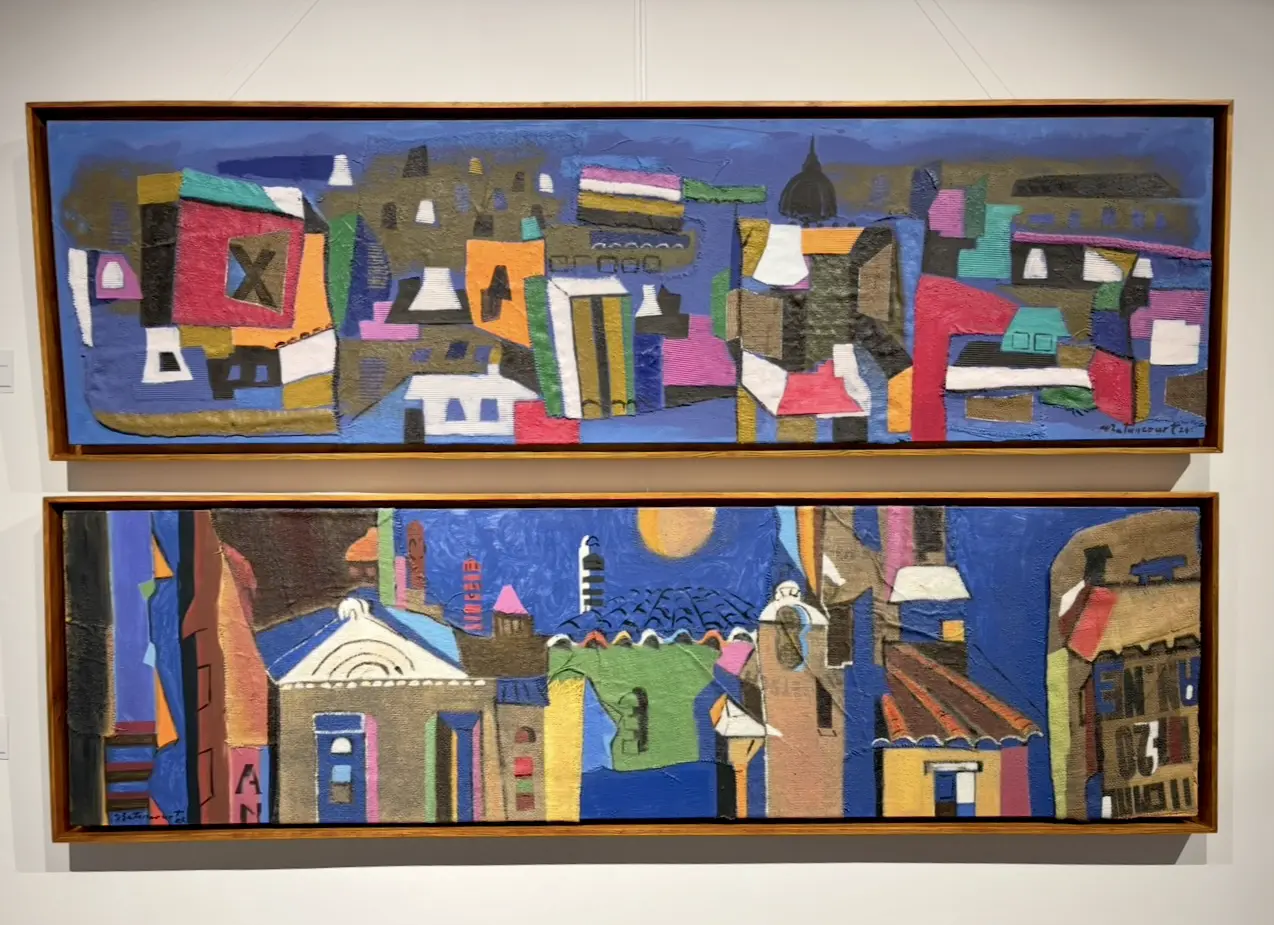
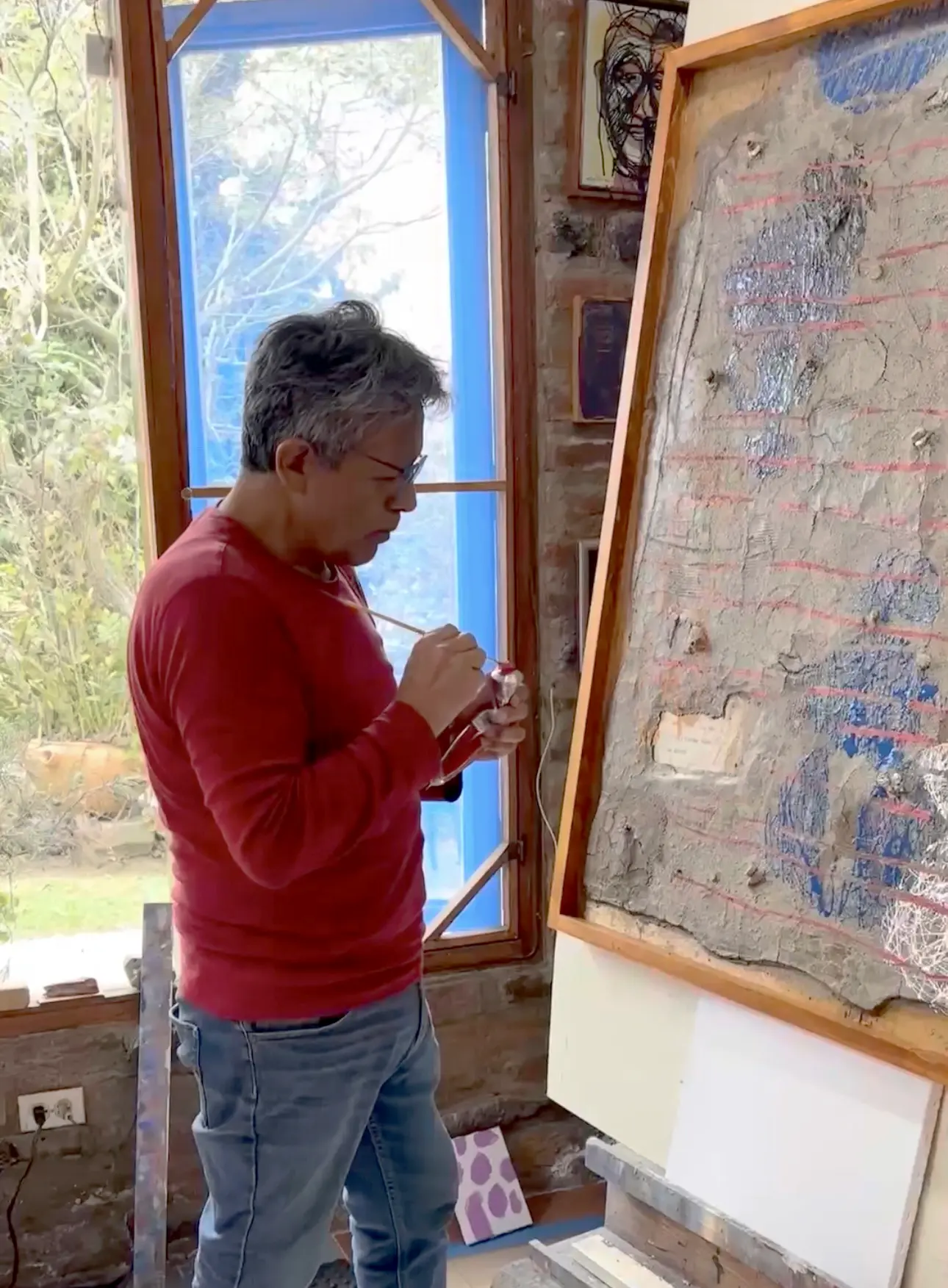
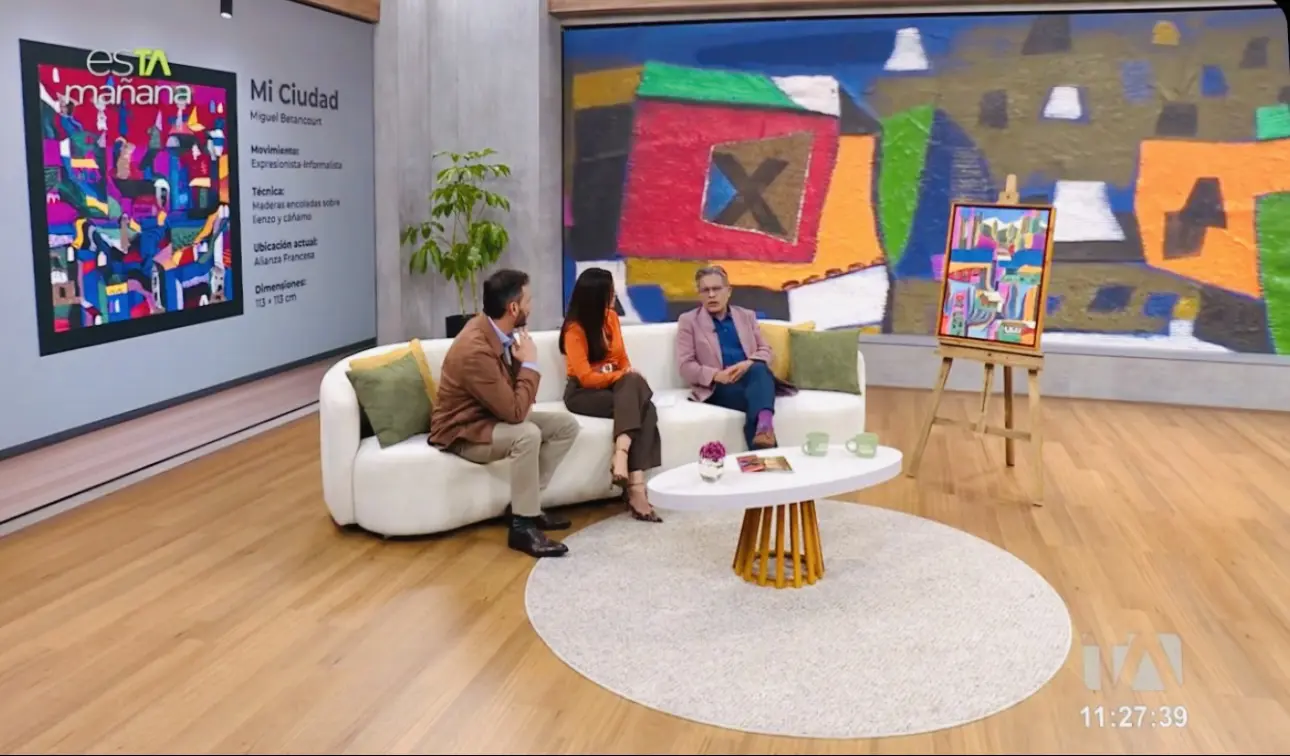
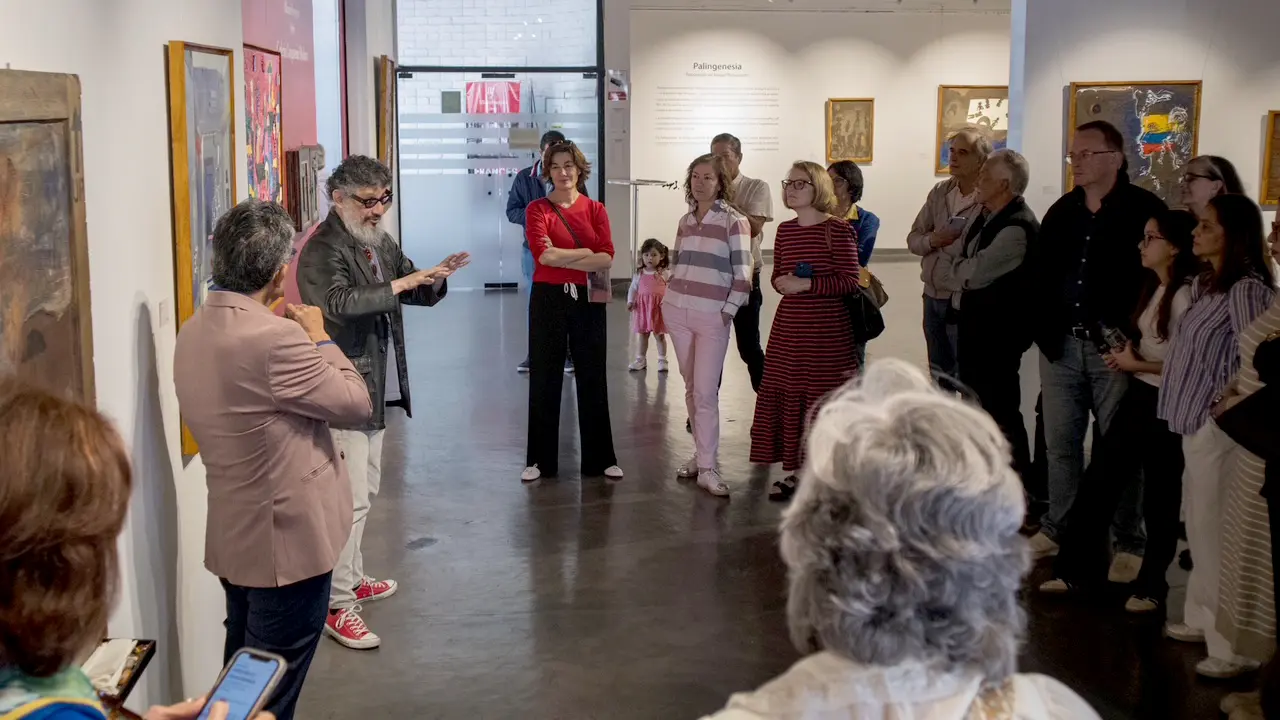
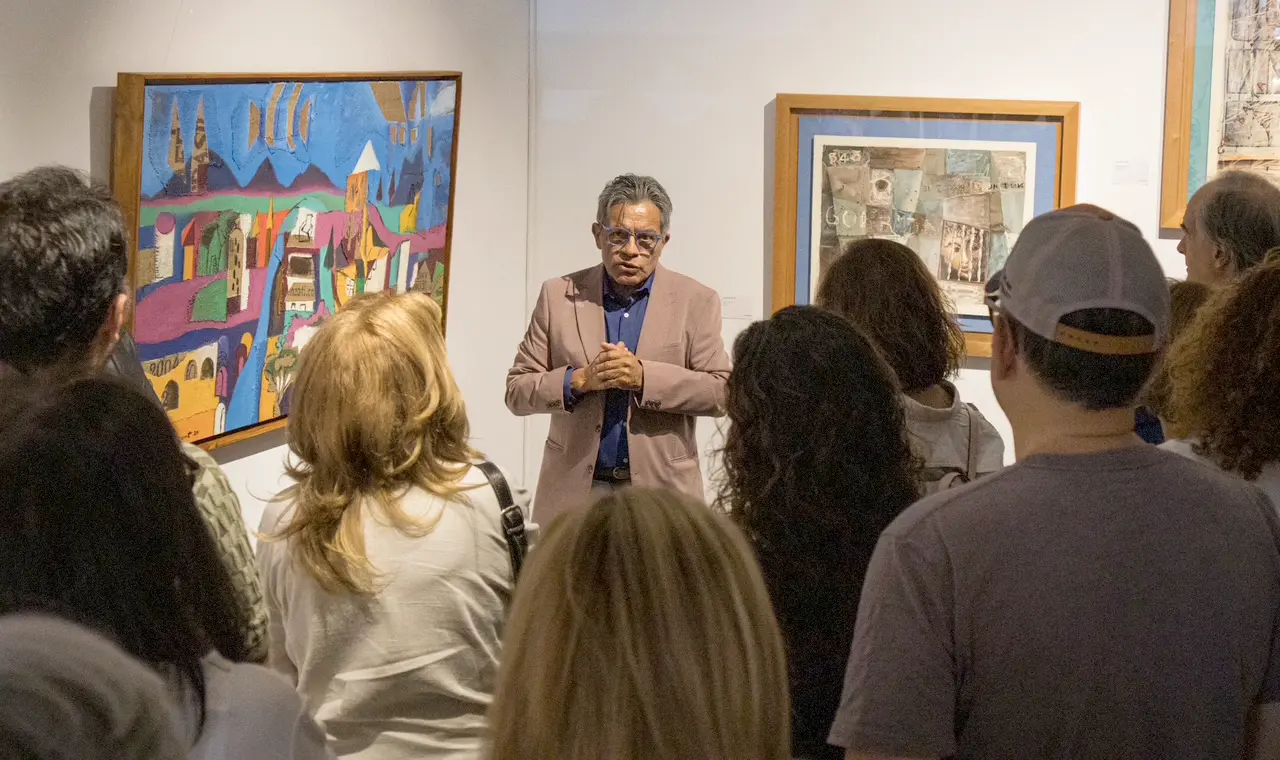
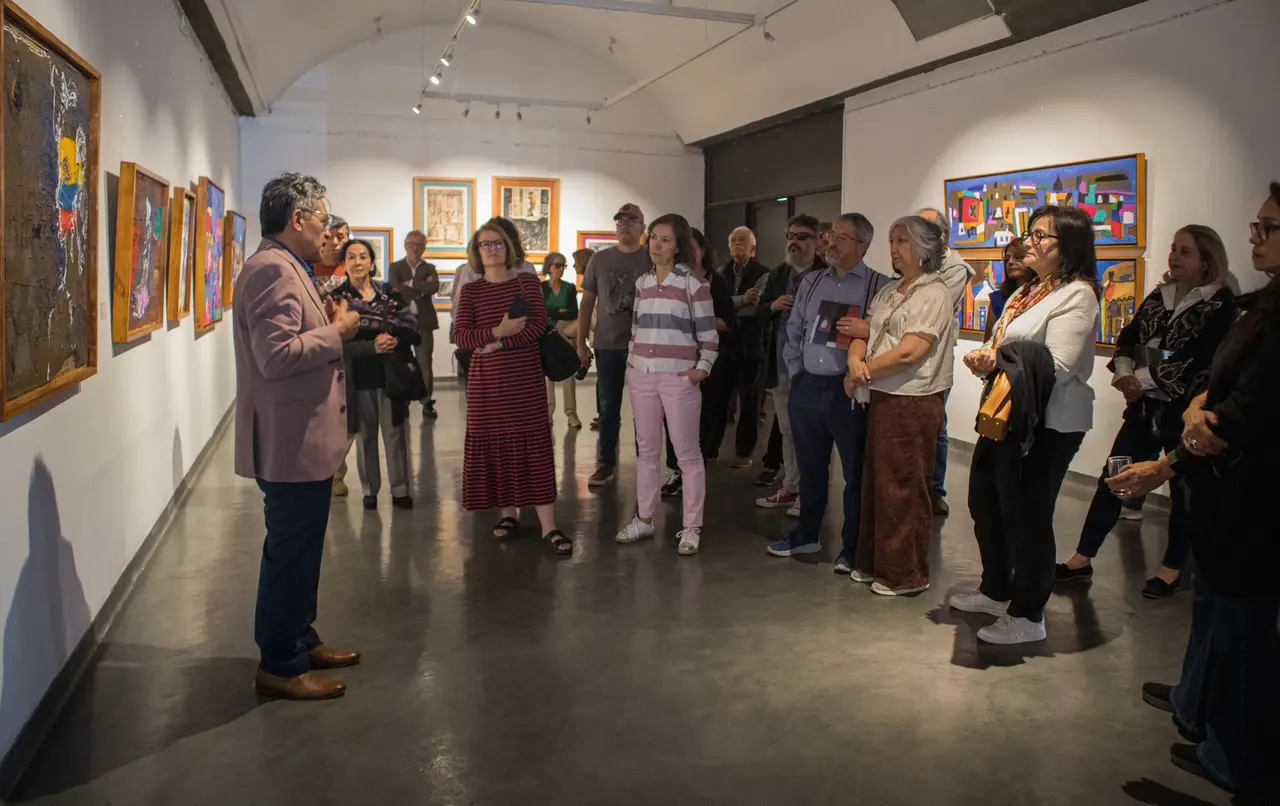
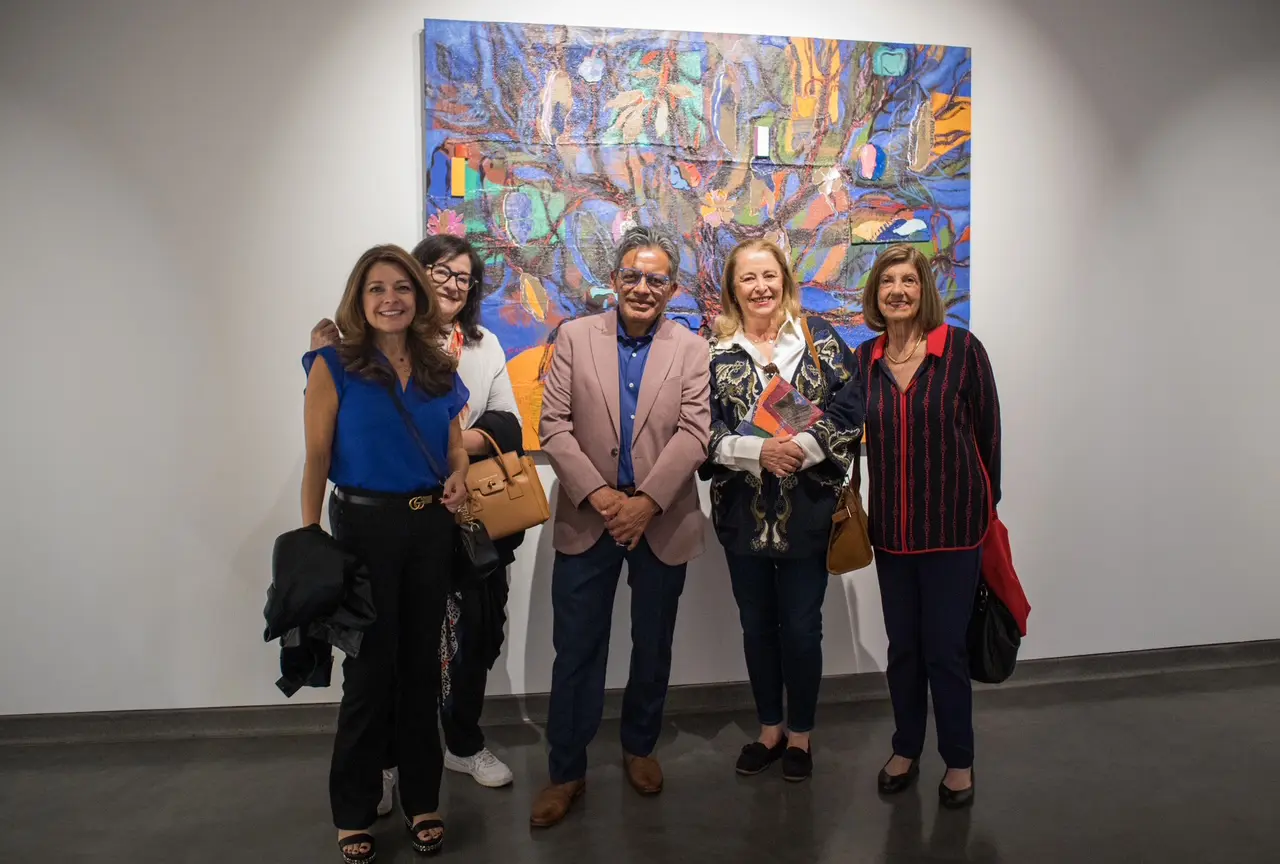
Palingenesia is an exhibition that marks Miguel Betancourt’s return to the very essence of his painting: matter as memory. The show explores a “return to the origin,” where the artist activates the support before the image itself, transforming materials such as clay, chocoto, slate, bahareque, and jute into an expressive substance charged with history. As the curatorial text notes, it is about “returning to the origin again and again, to the very genetics of the pictorial act.”
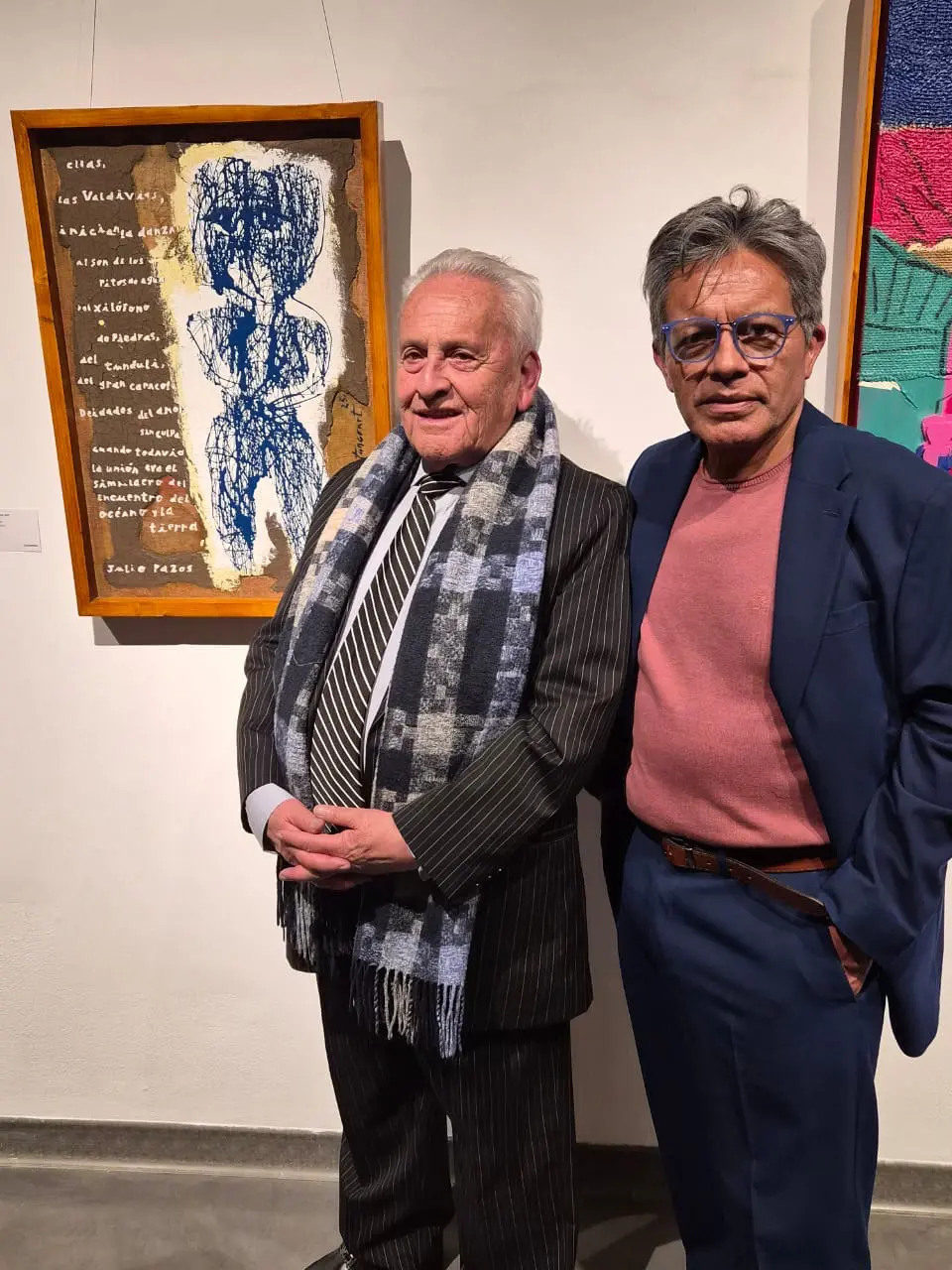
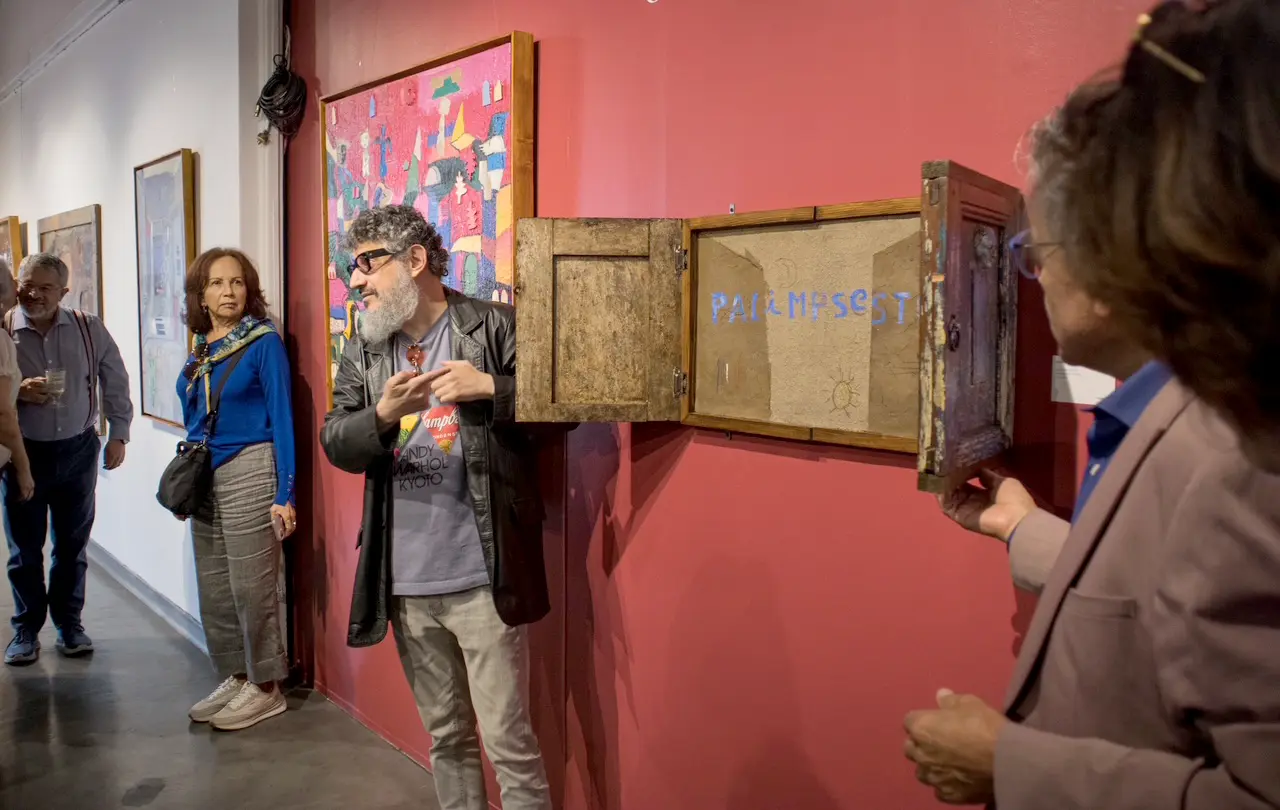
The series combines elements of informalism, action painting, and Betancourt’s characteristic naïf iconography. Calligraphic drips, bahareque structures, and fragments of jute—many bearing partial texts—function as a living, almost archaeological archive, where each work behaves like a palimpsest: layers that tear, cover, and rewrite themselves.
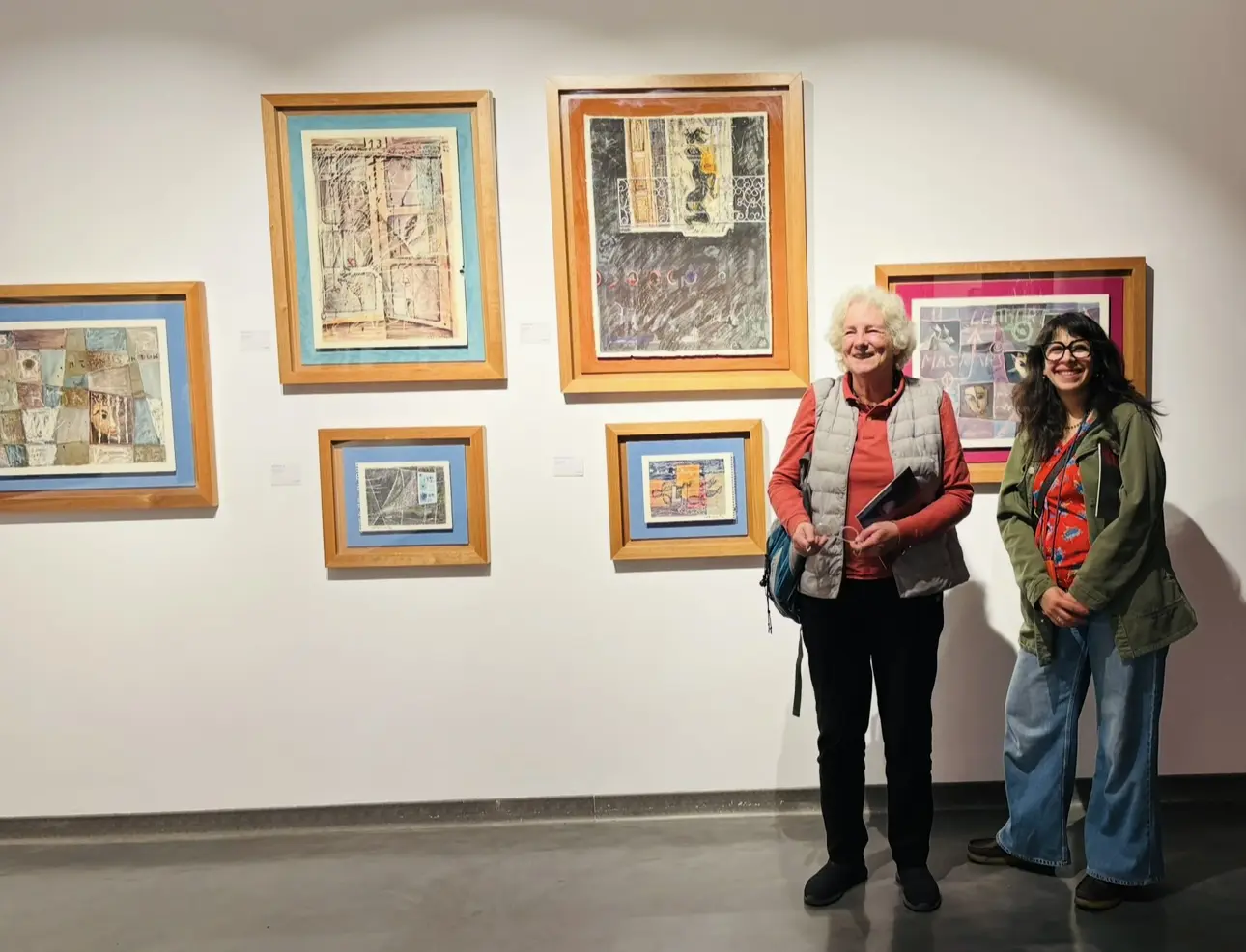
The exhibition also includes pieces from different periods, creating a dialogue between the current Betancourt and his earlier selves. This diachrony reveals a circular sense of time in his work, where form and biography intertwine as a single creative gesture.
In sum, Palingenesia is a reaffirmation of the artist’s pictorial origin: a journey into matter, memory, and identity that has accompanied Betancourt since his earliest strokes.
Living Palimpsest: A Work Created by All
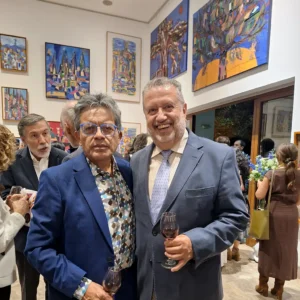
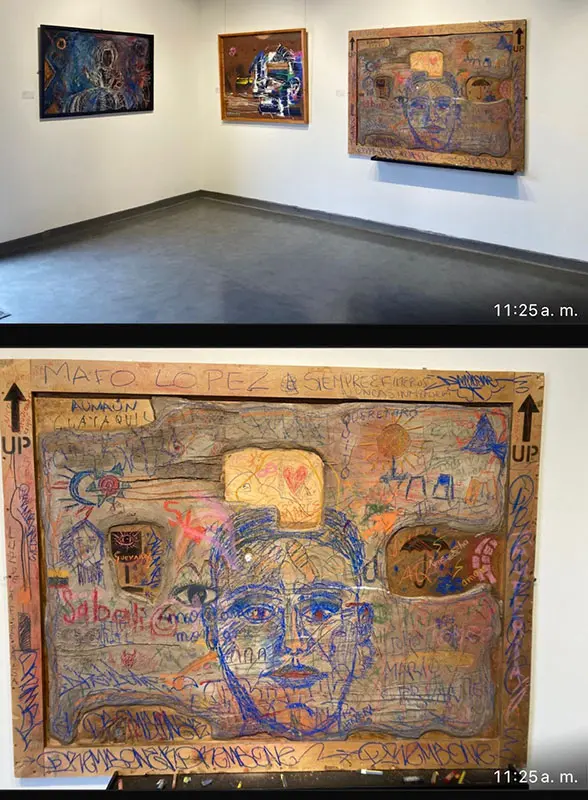
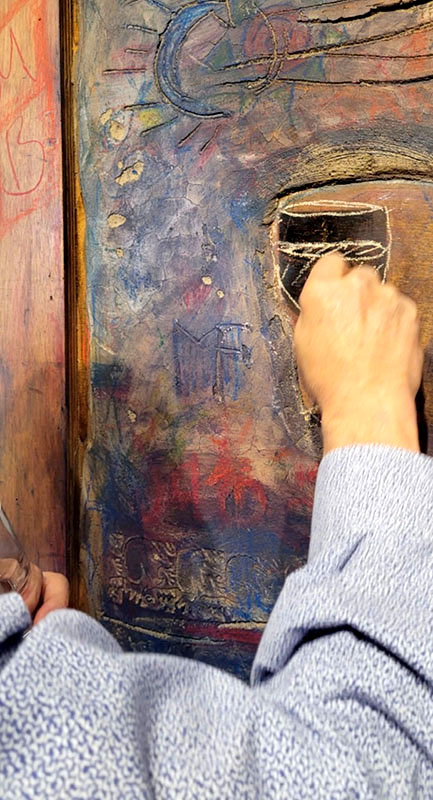
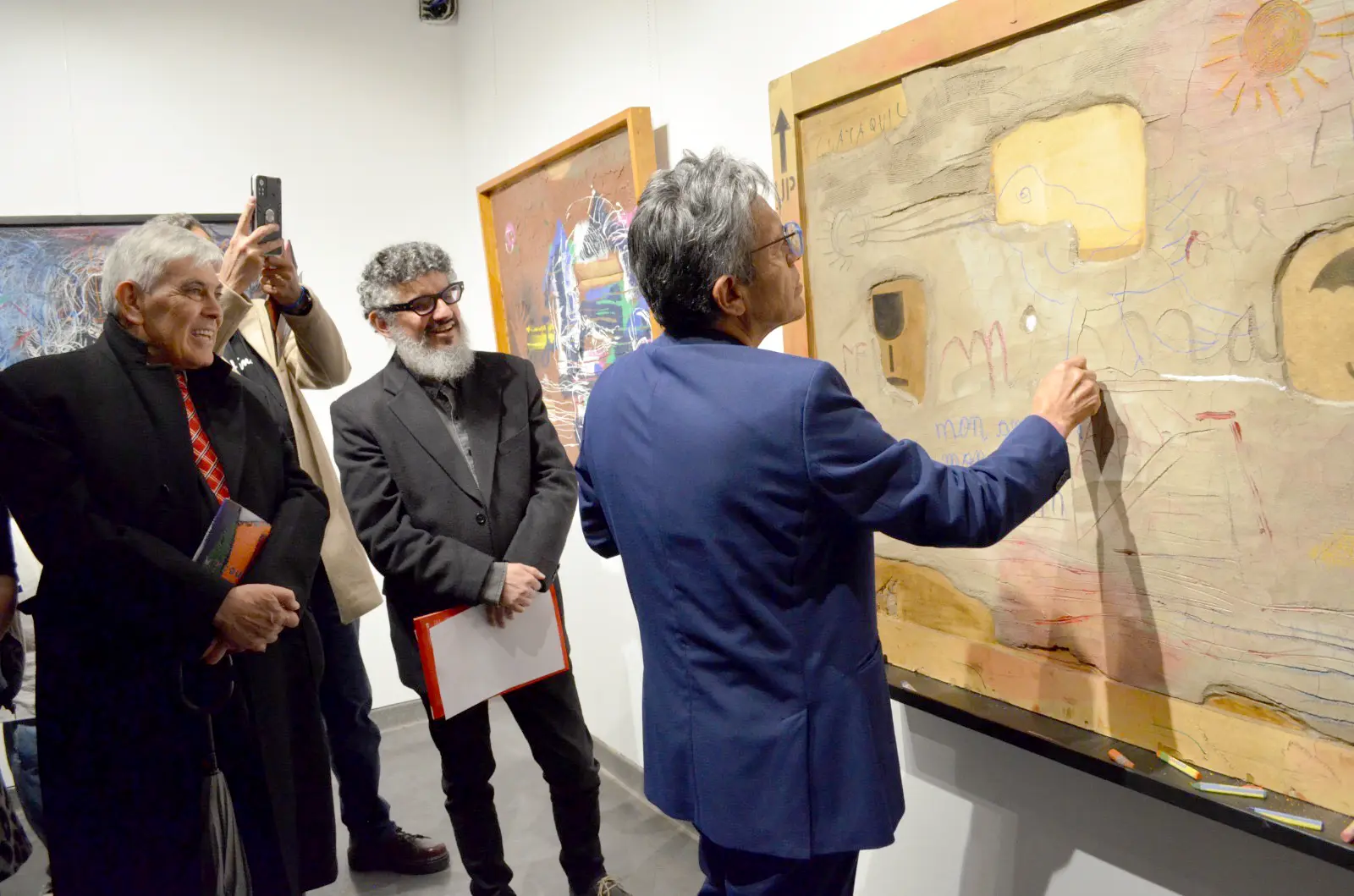
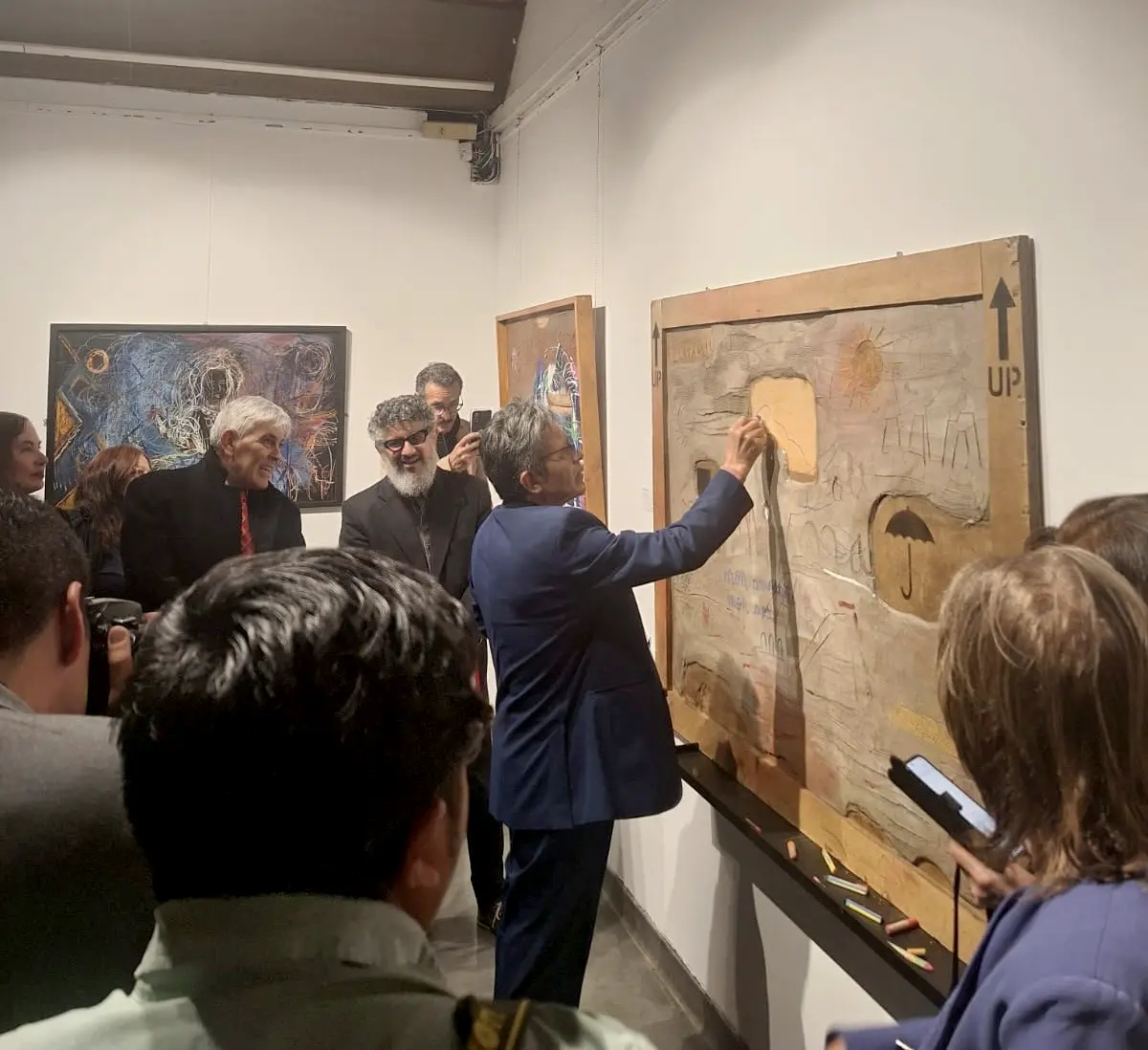
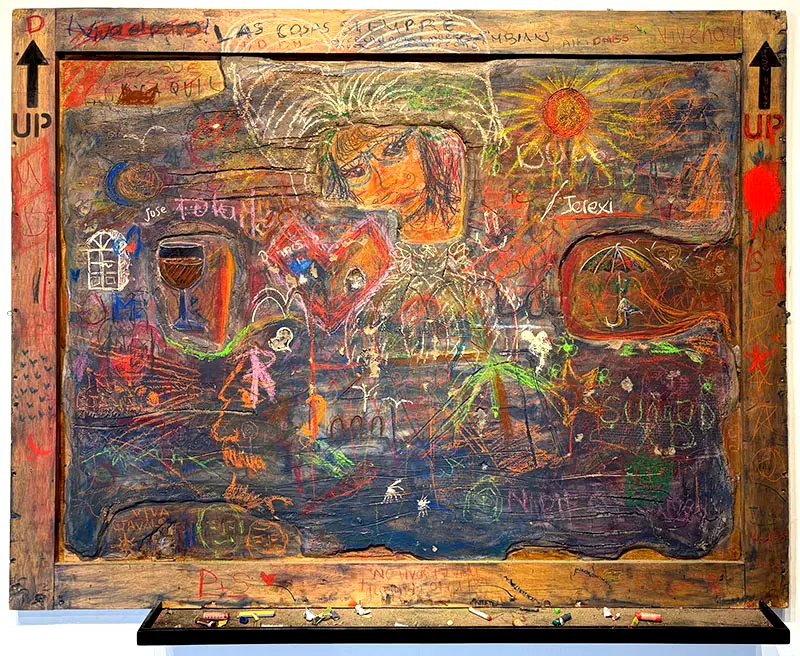
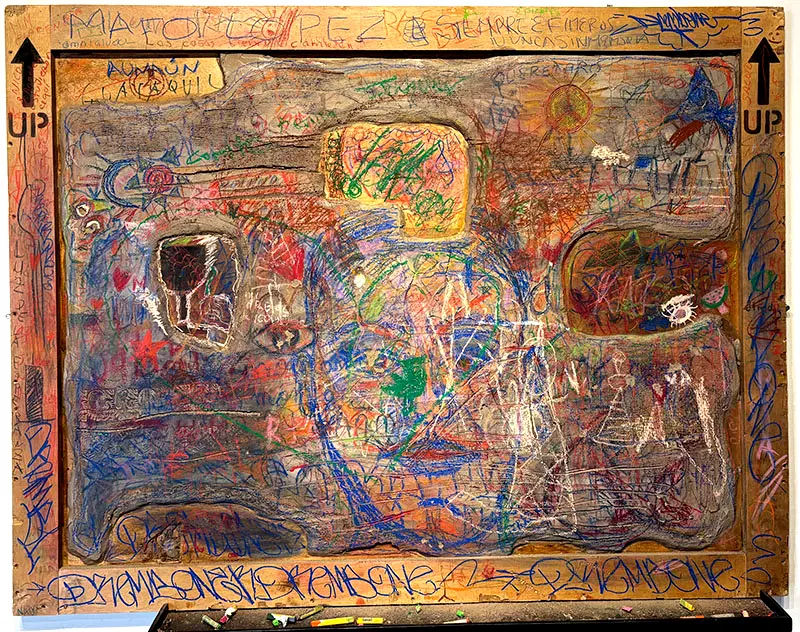
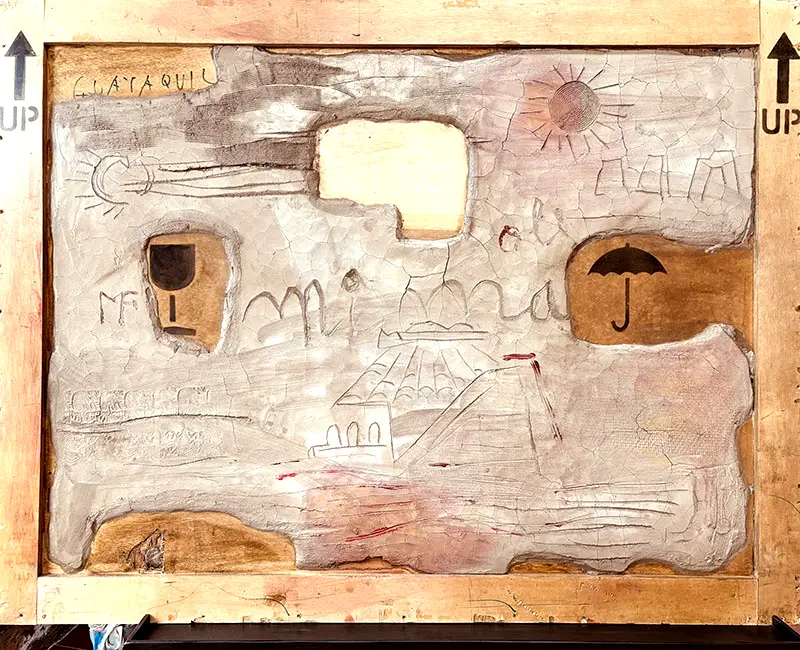
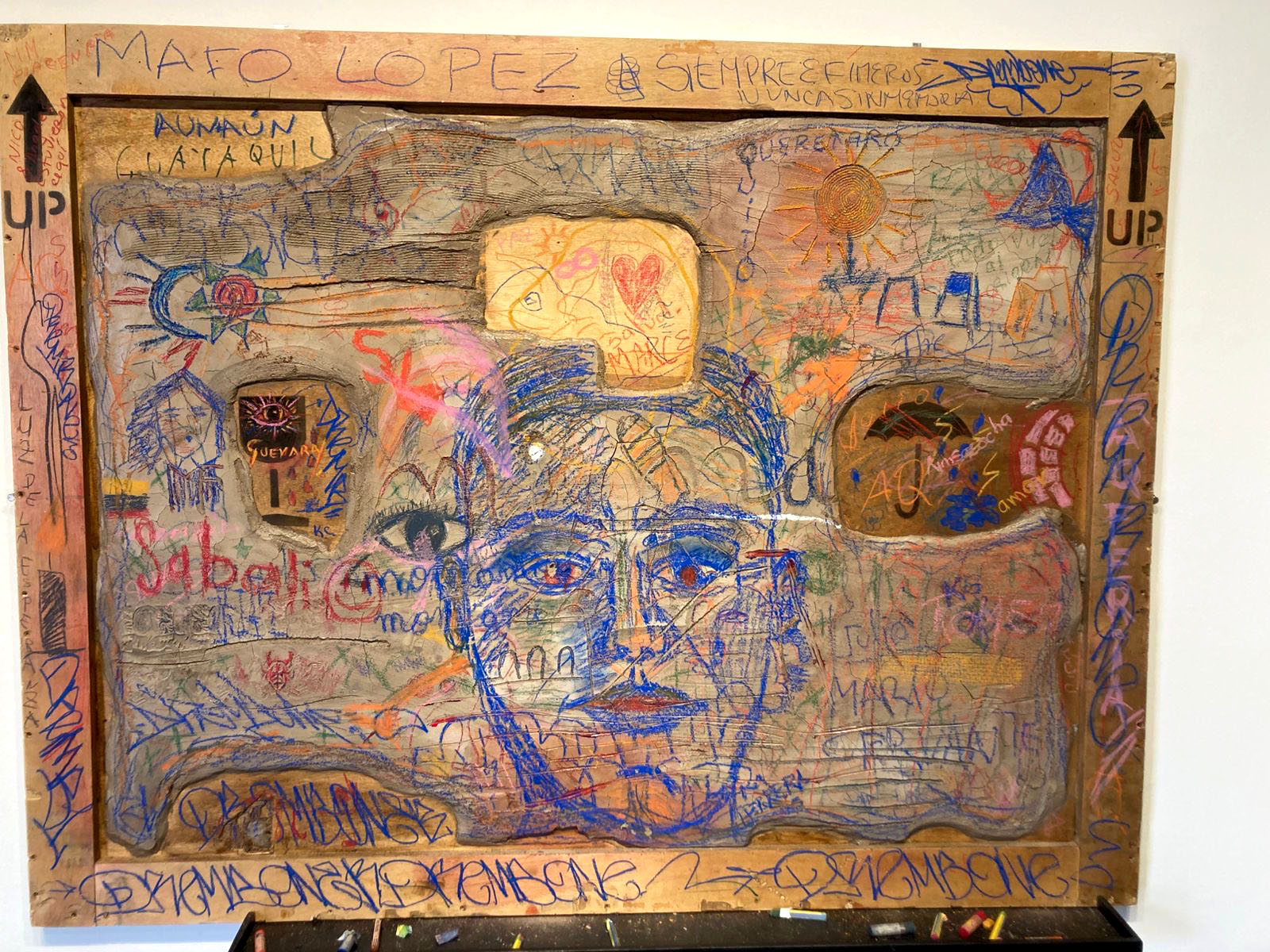
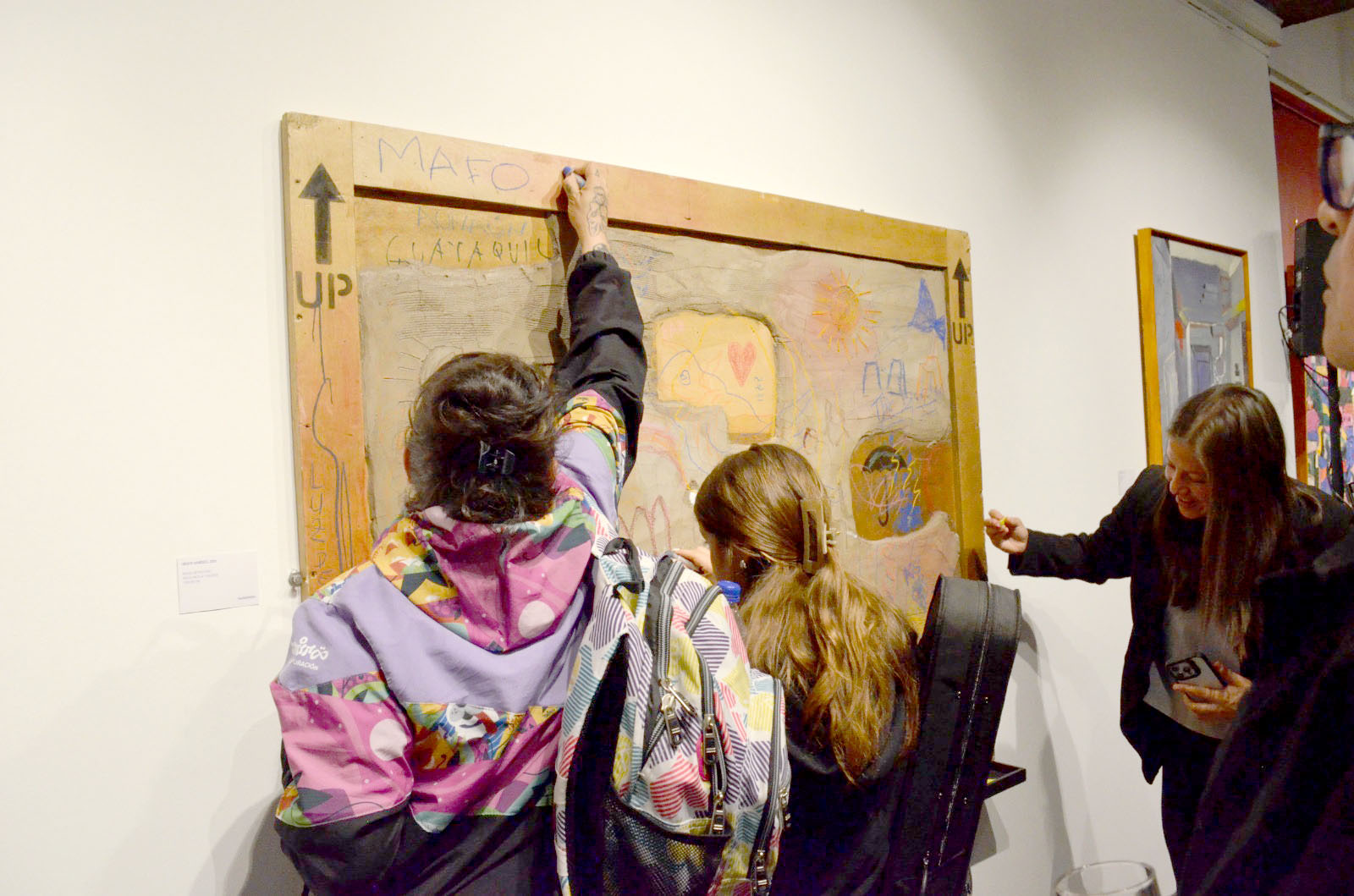
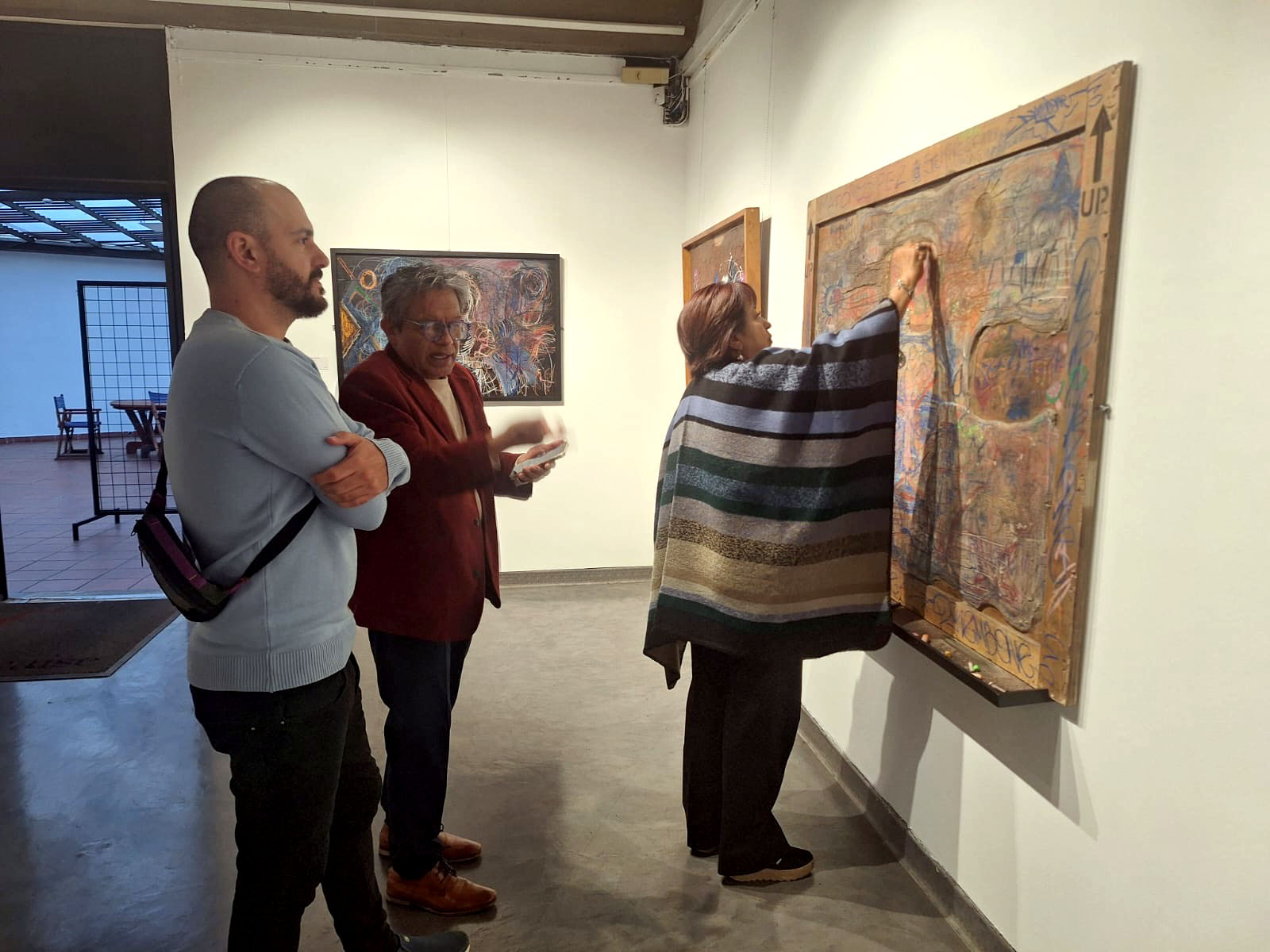
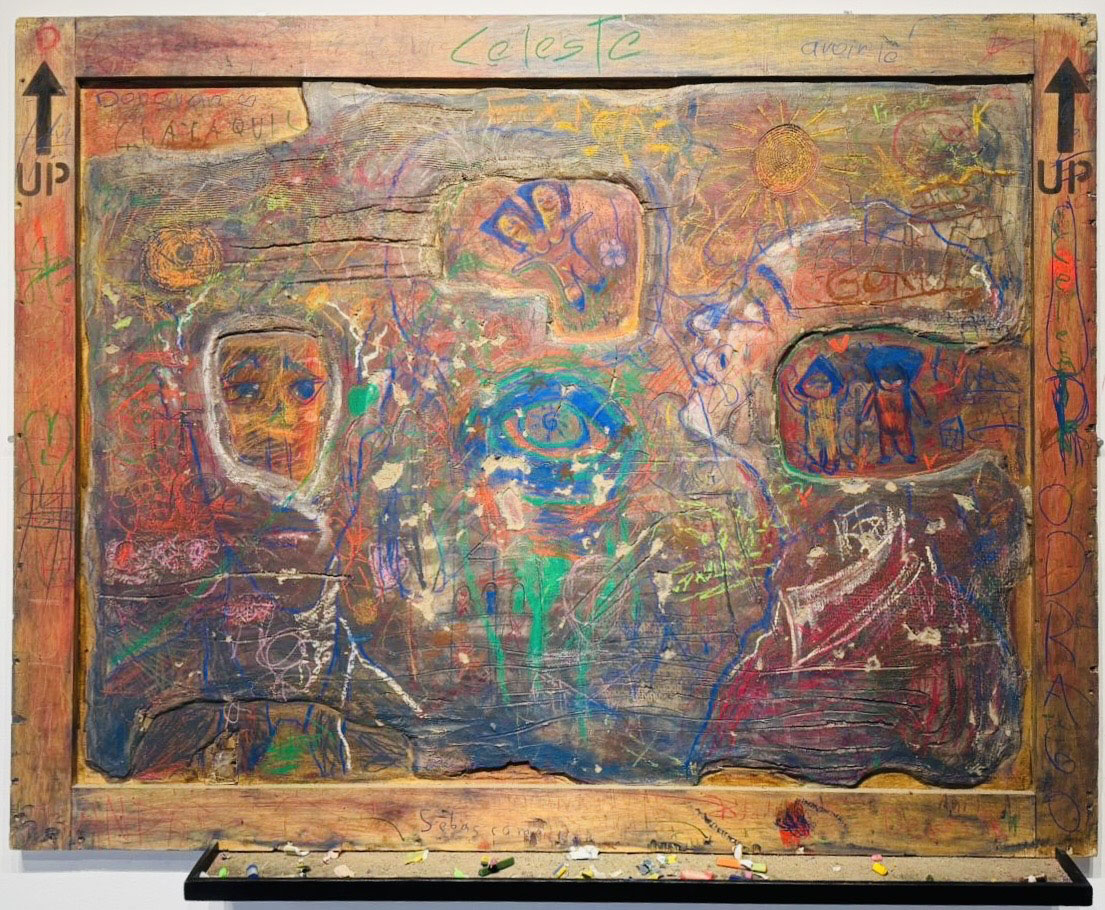
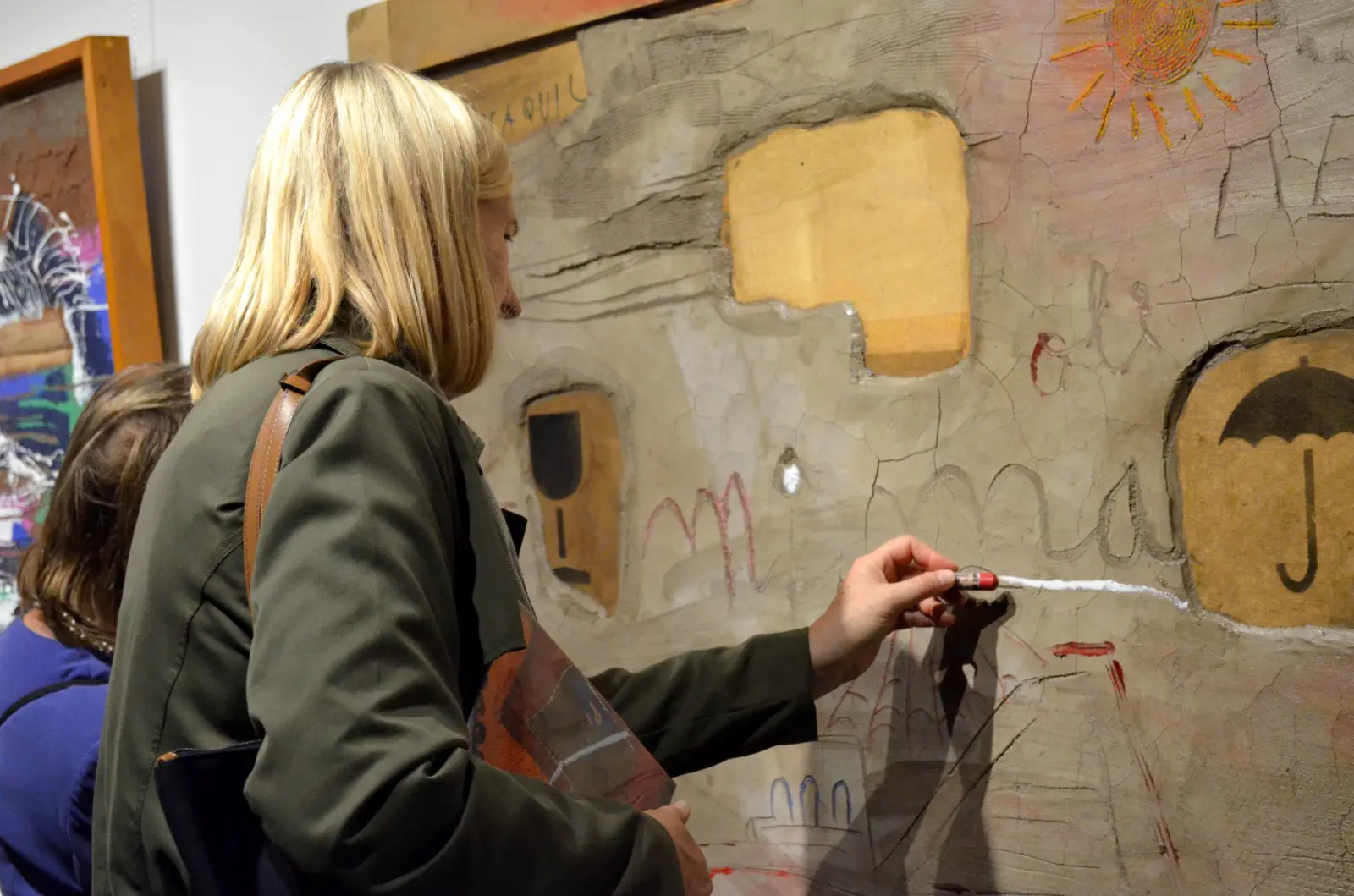
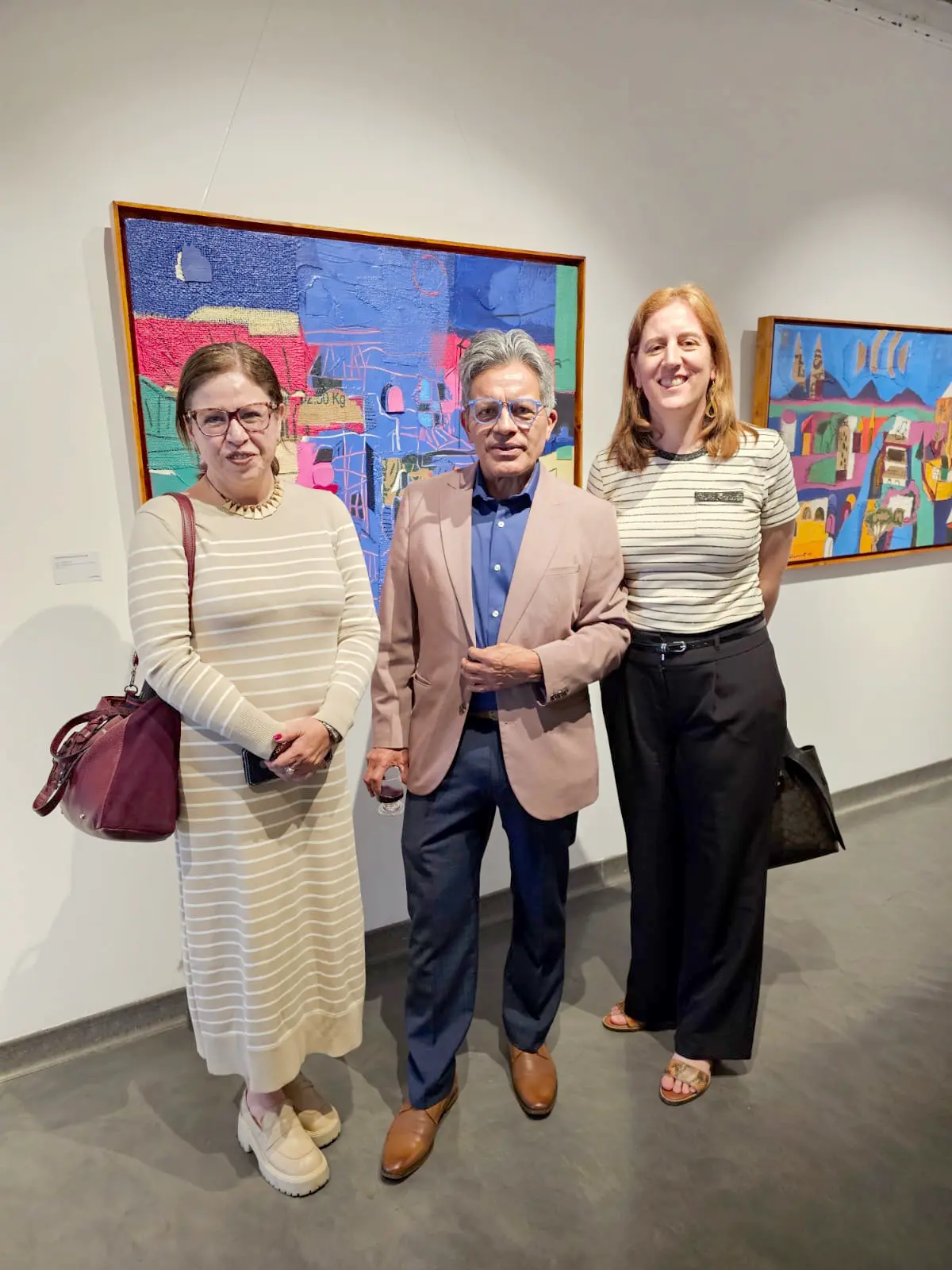
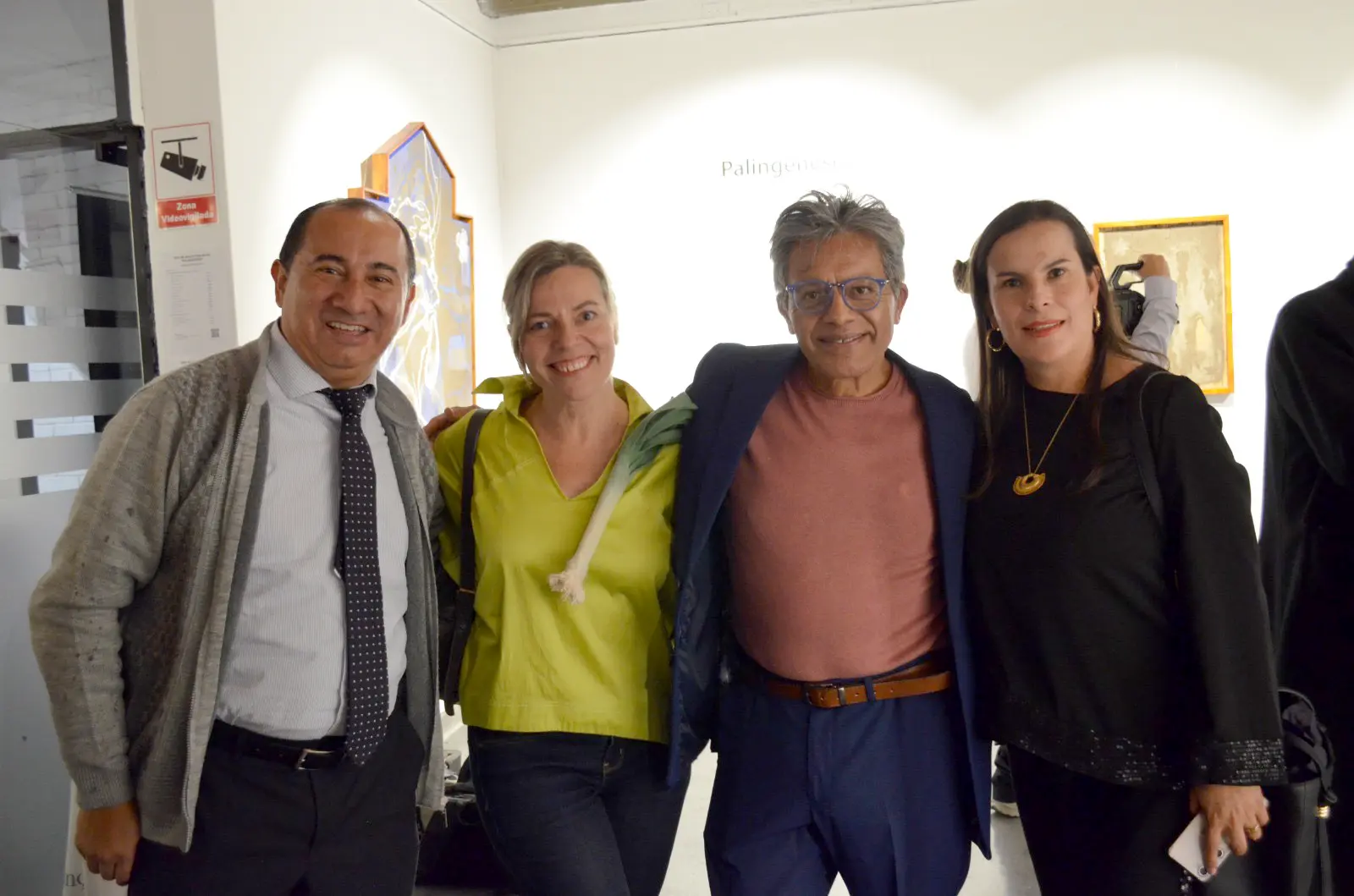
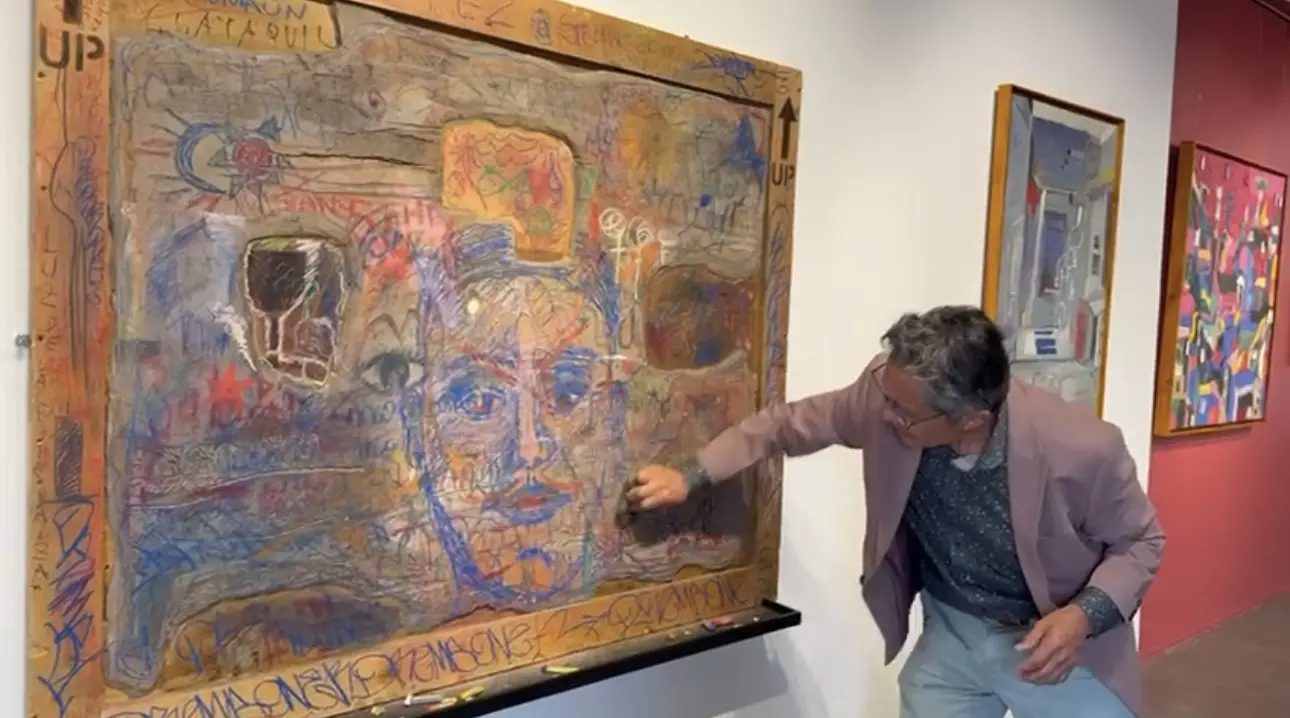
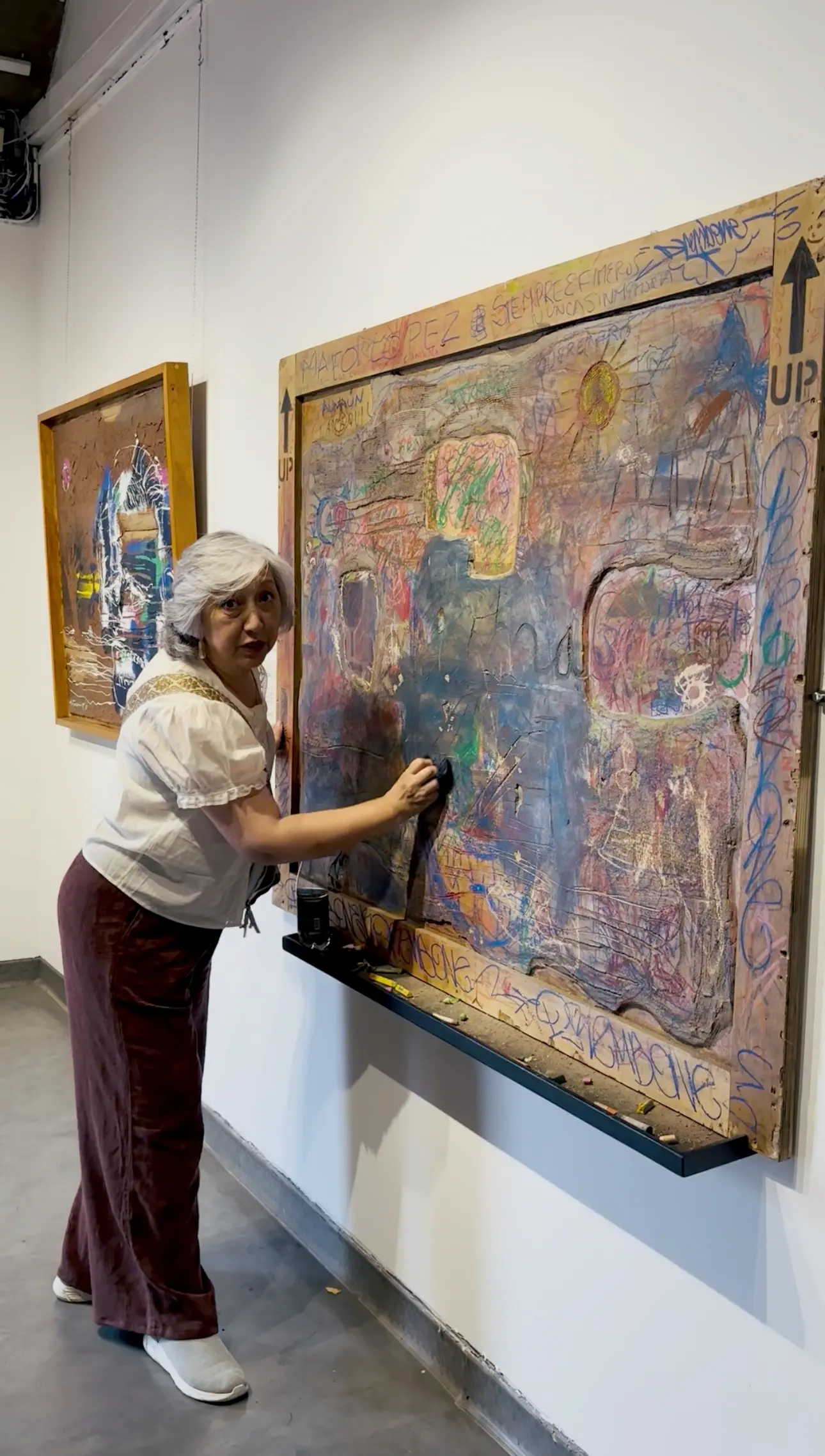
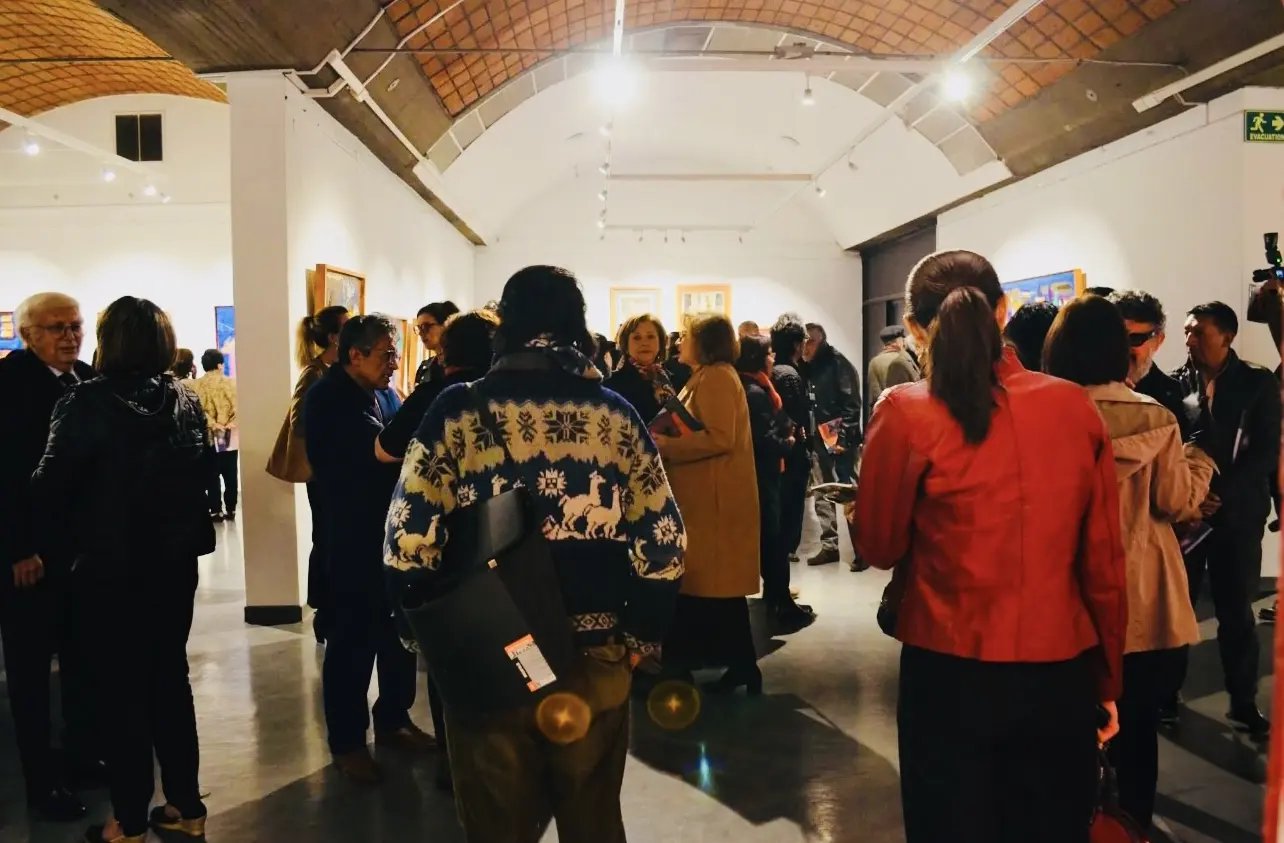
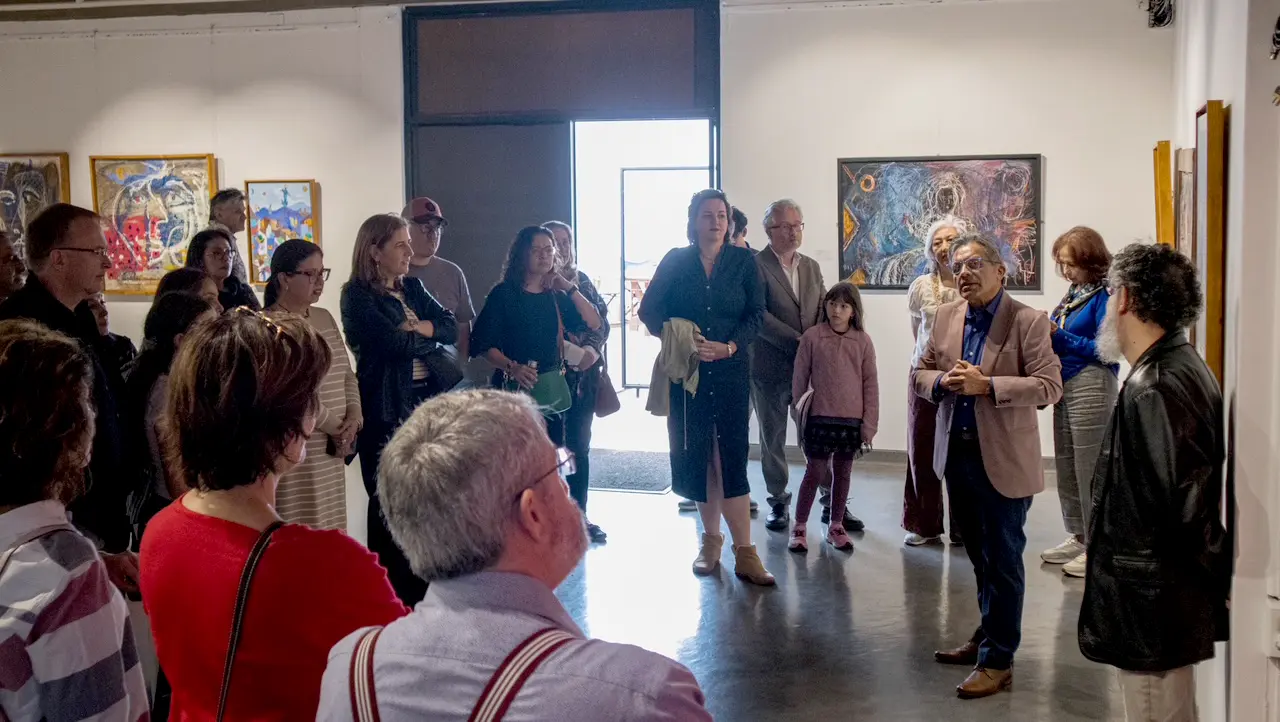
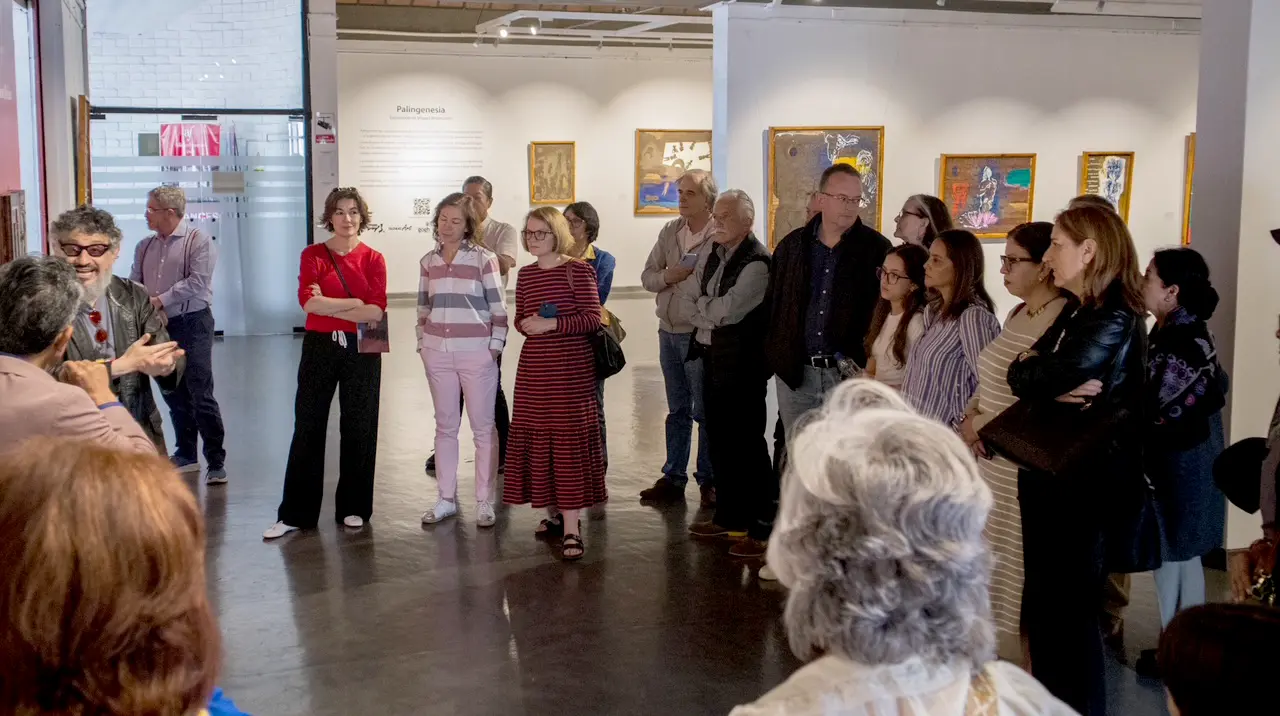
During the opening of Palingenesia, attendees took part in the creation of a living palimpsest — a collective artwork that extended the spirit of the exhibition into a shared experience. Those who wished to participate added strokes, gestures, and colors onto a single canvas, activating the surface just as the exhibition proposes: returning to the origin, layering, and leaving traces that converse with one another.
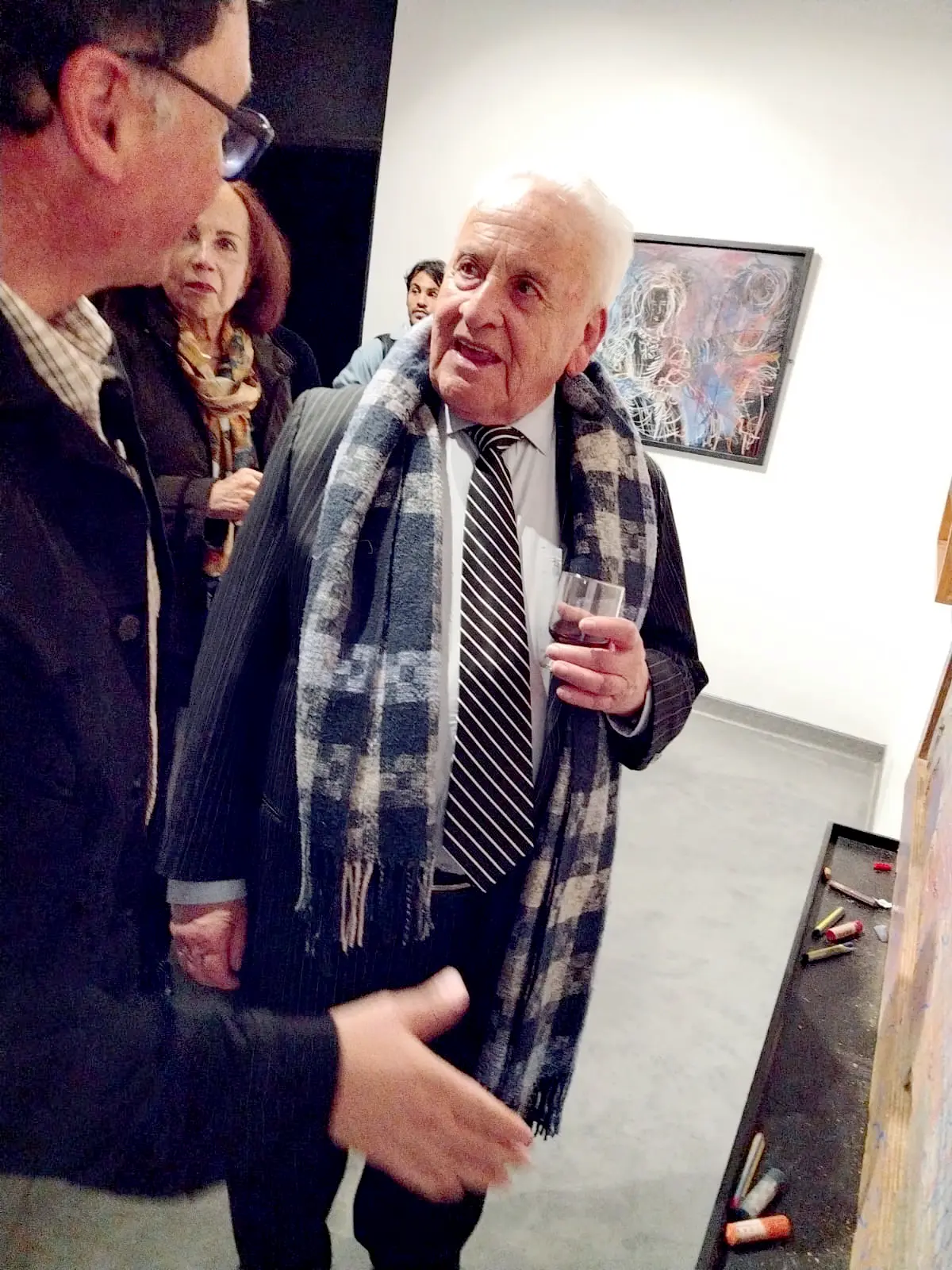
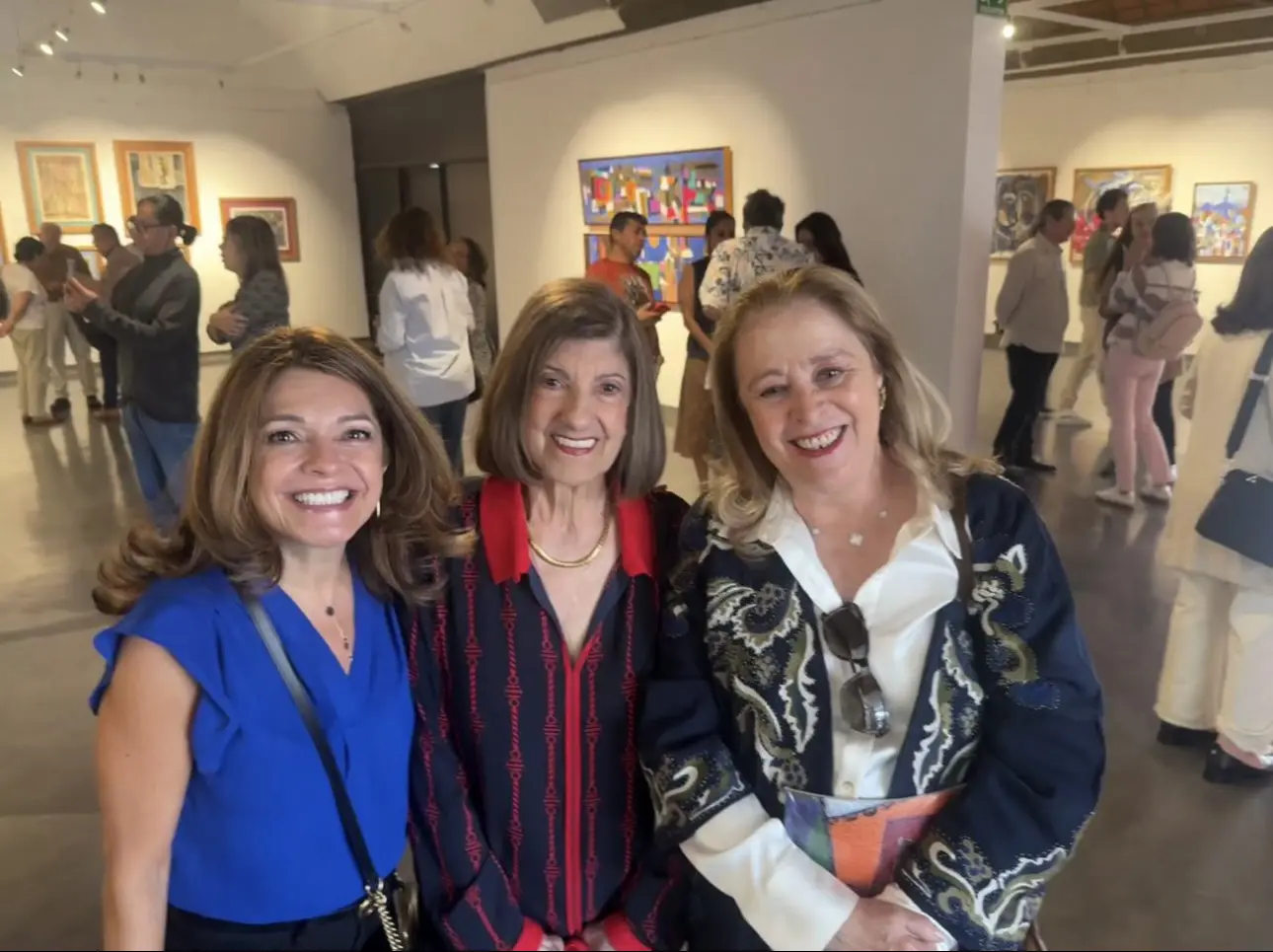
Below are several images of this participatory process, which transformed the gallery into a space of communal creation.