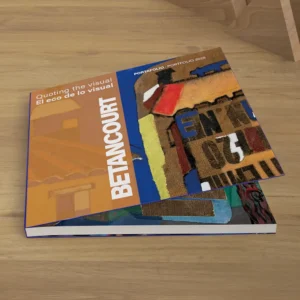
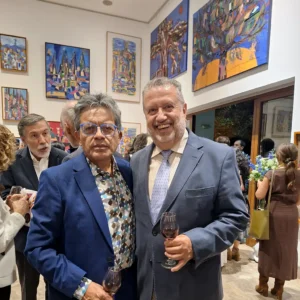
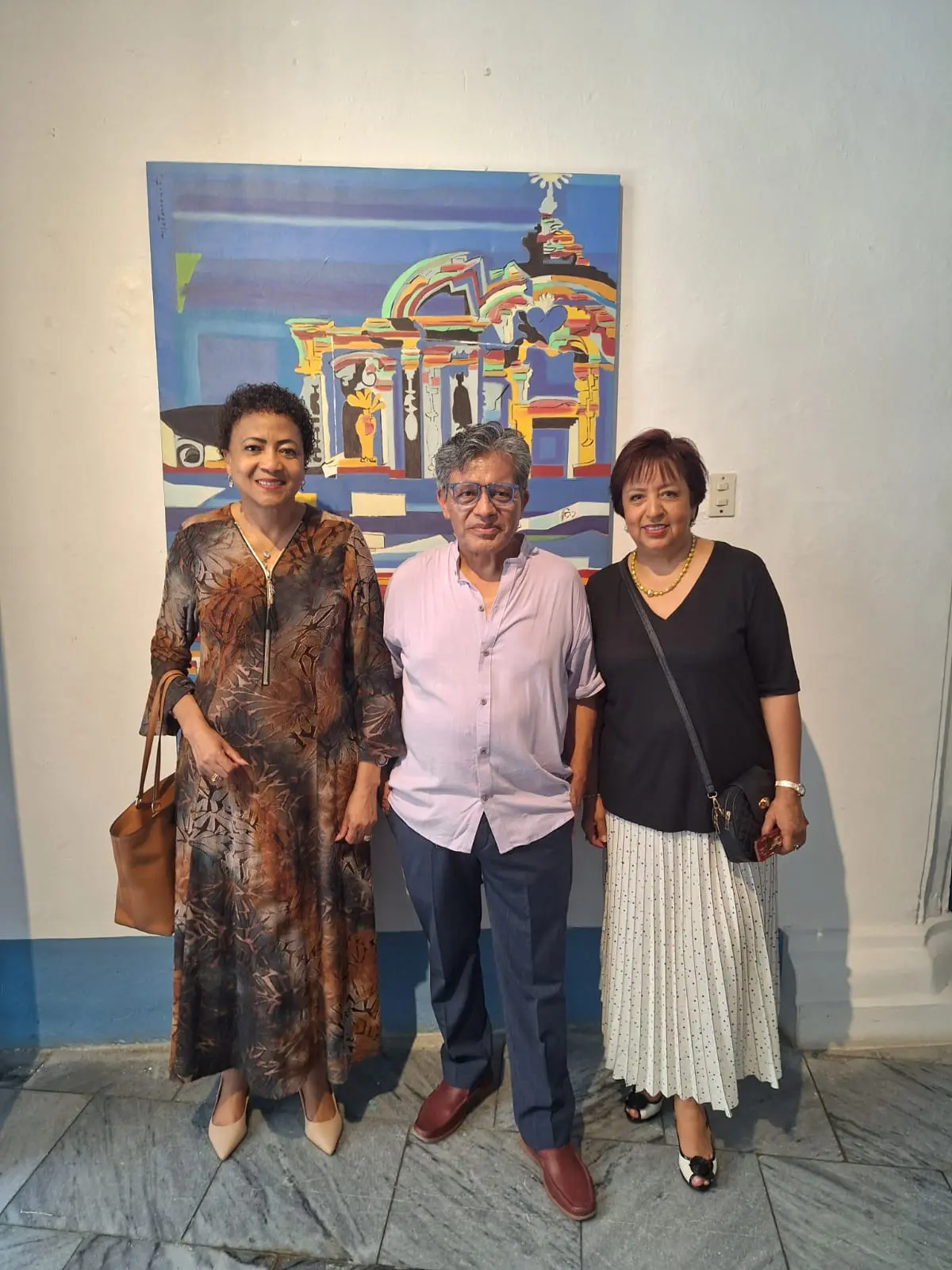
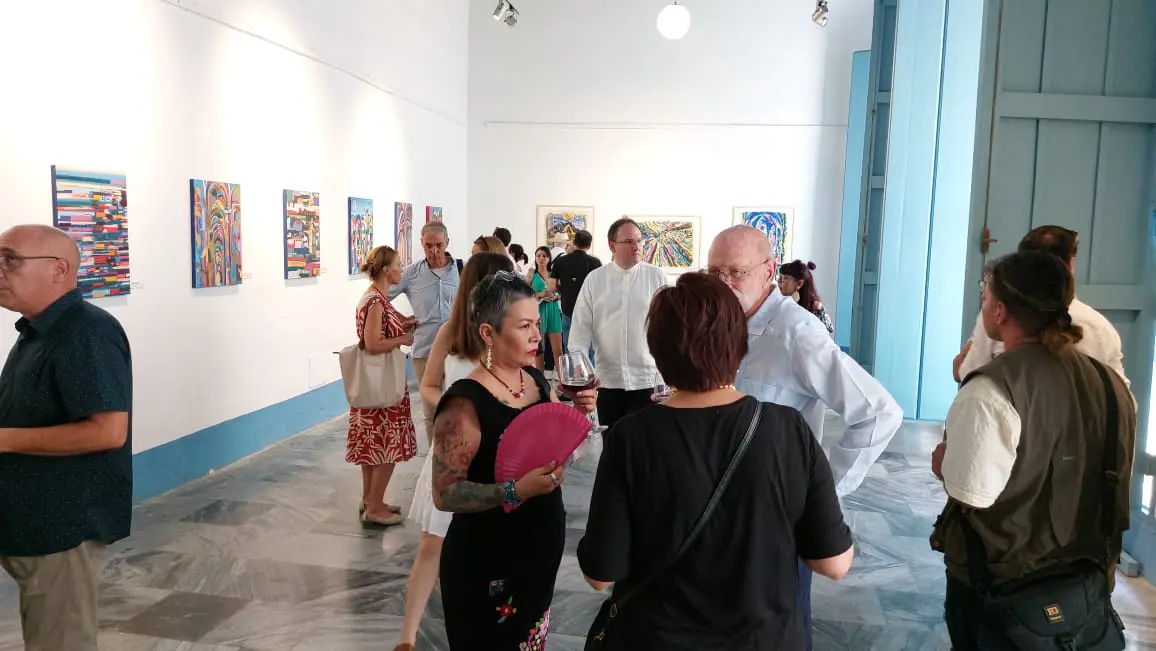
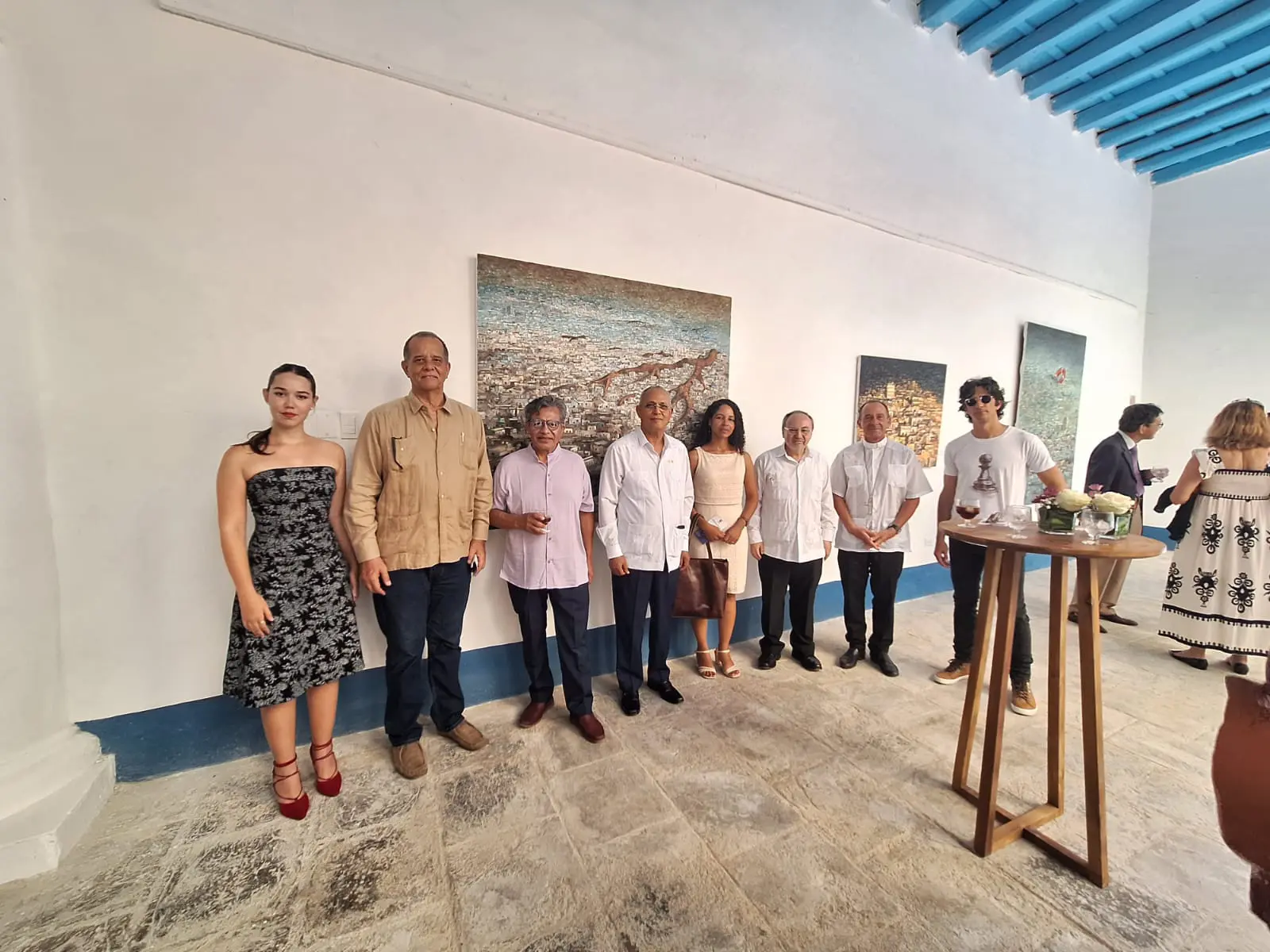
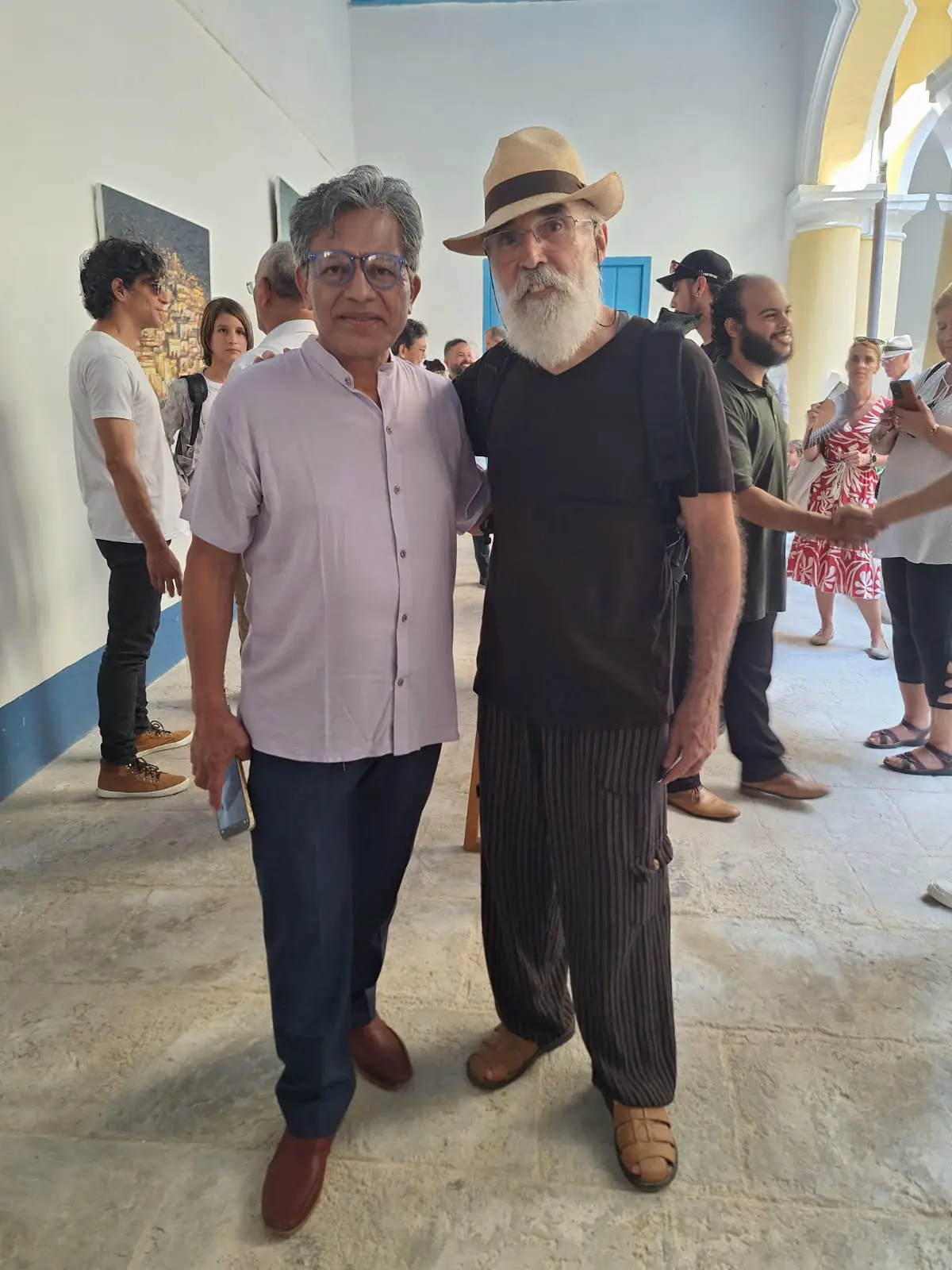
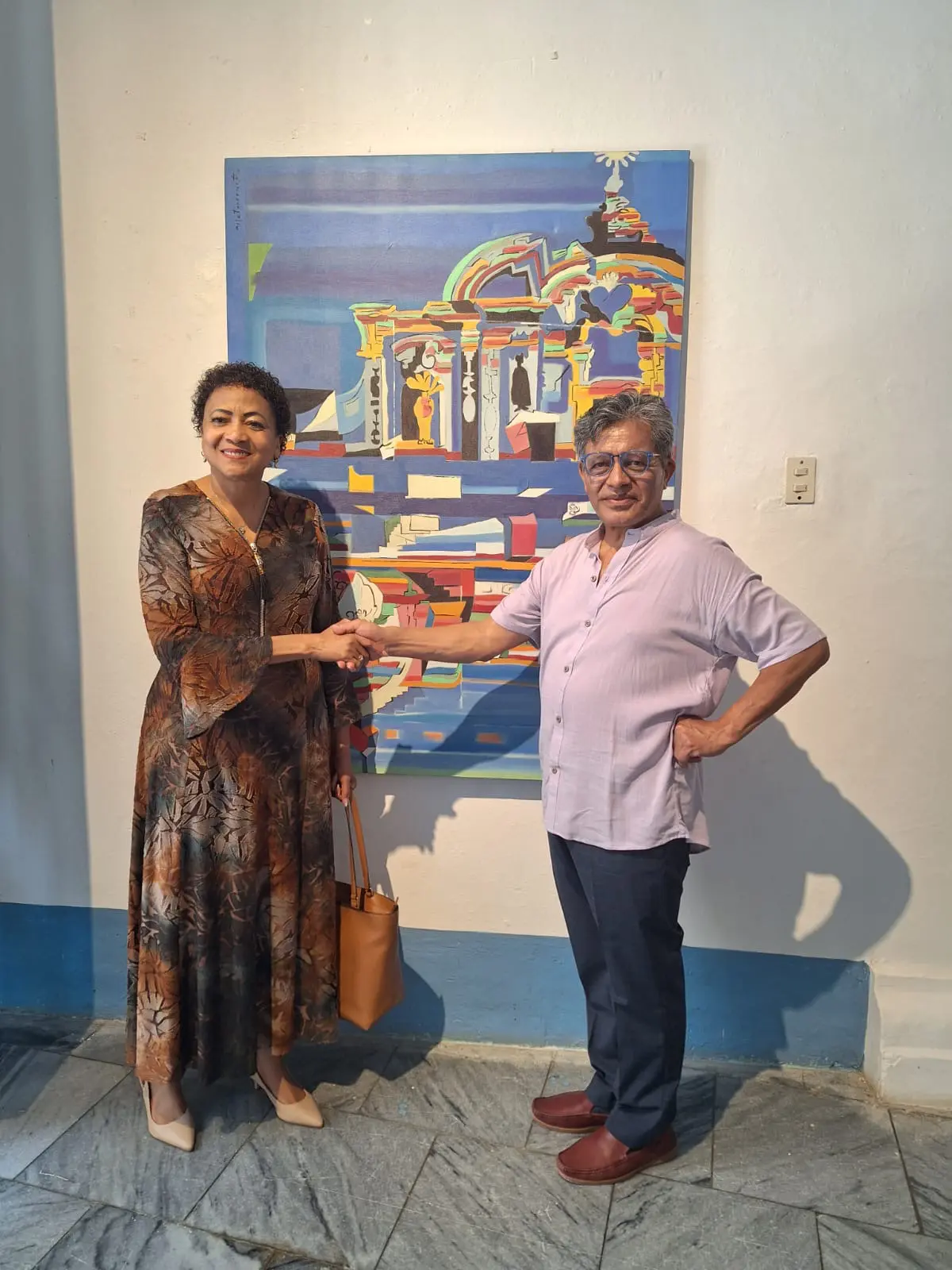
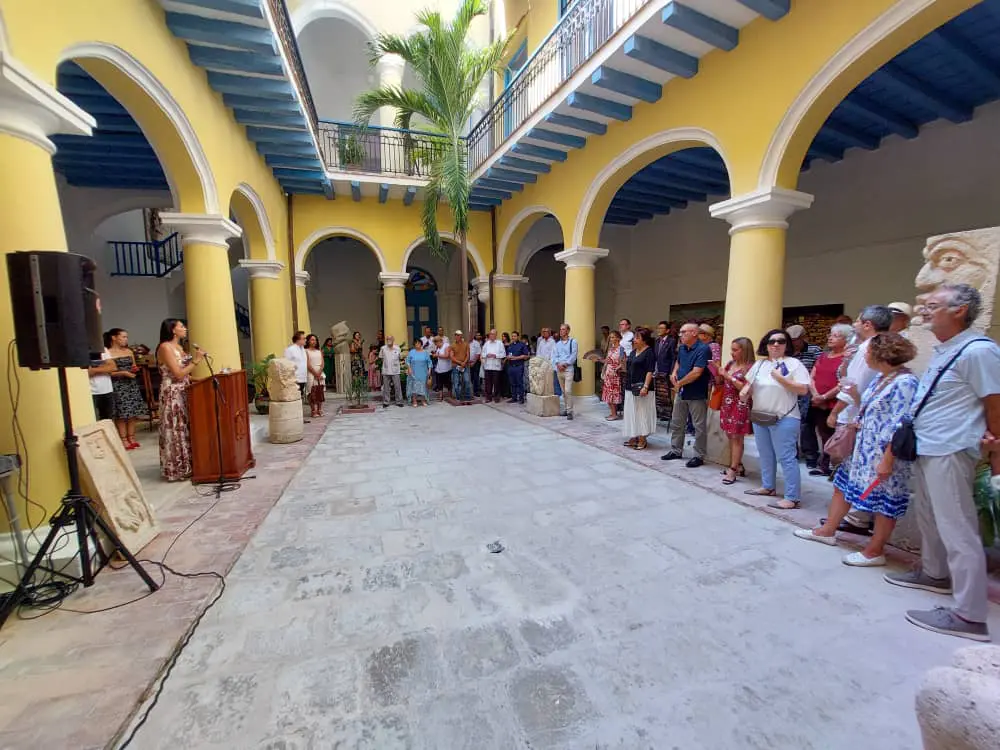
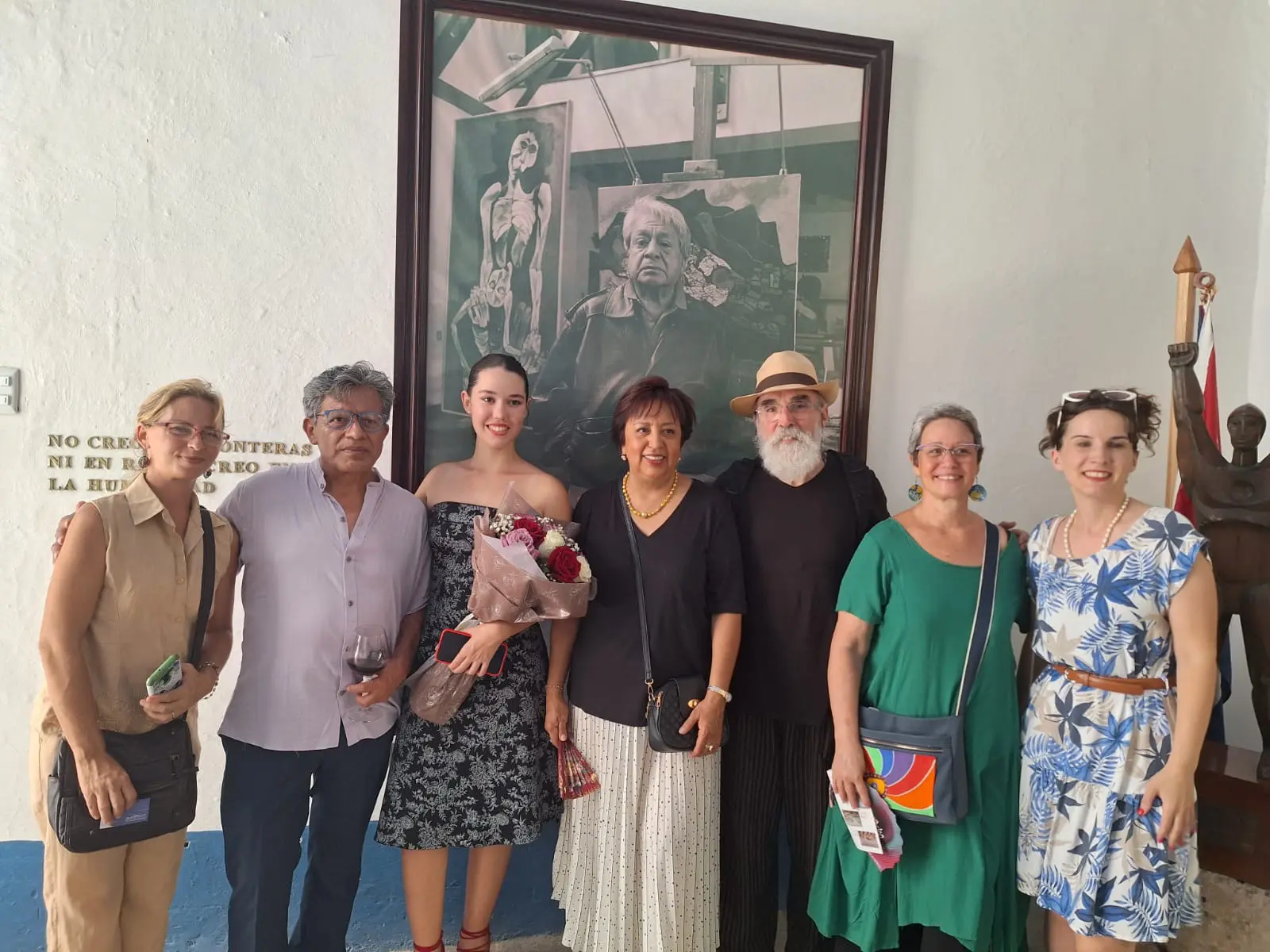
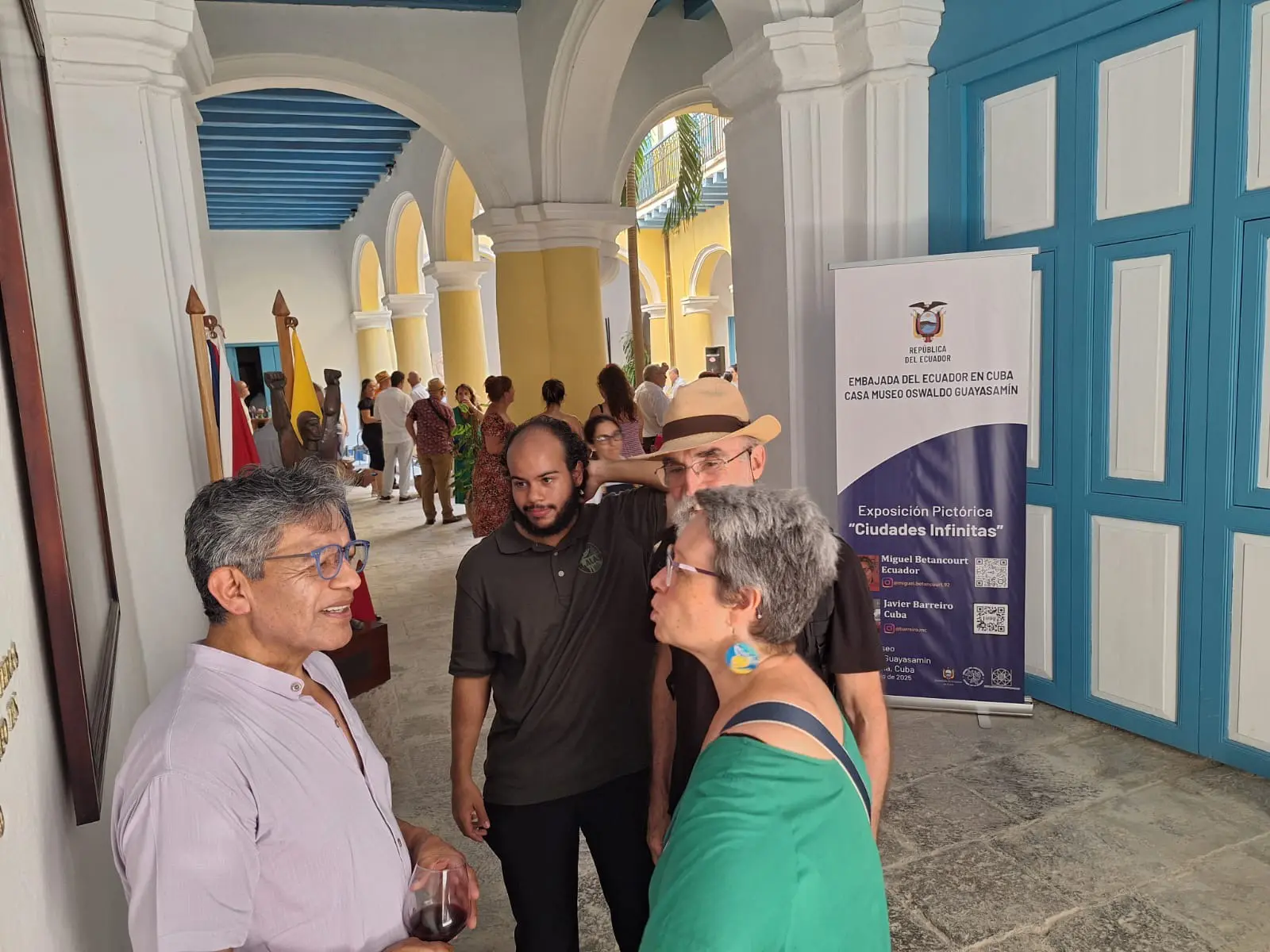
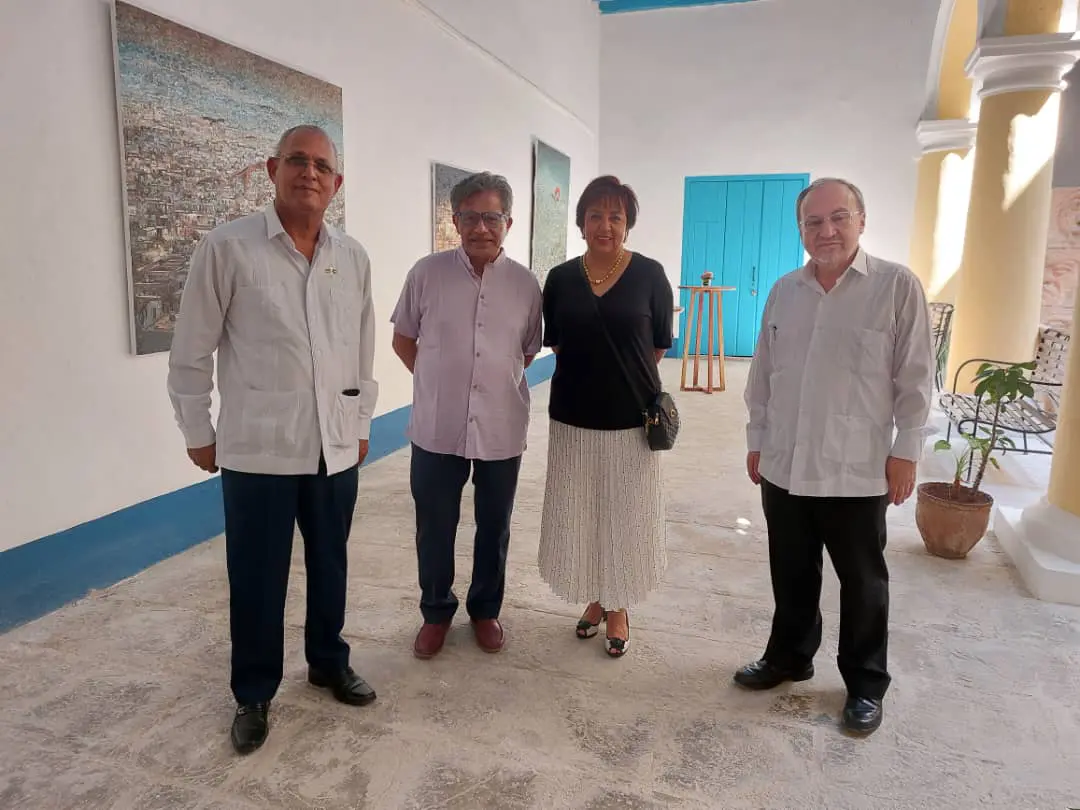
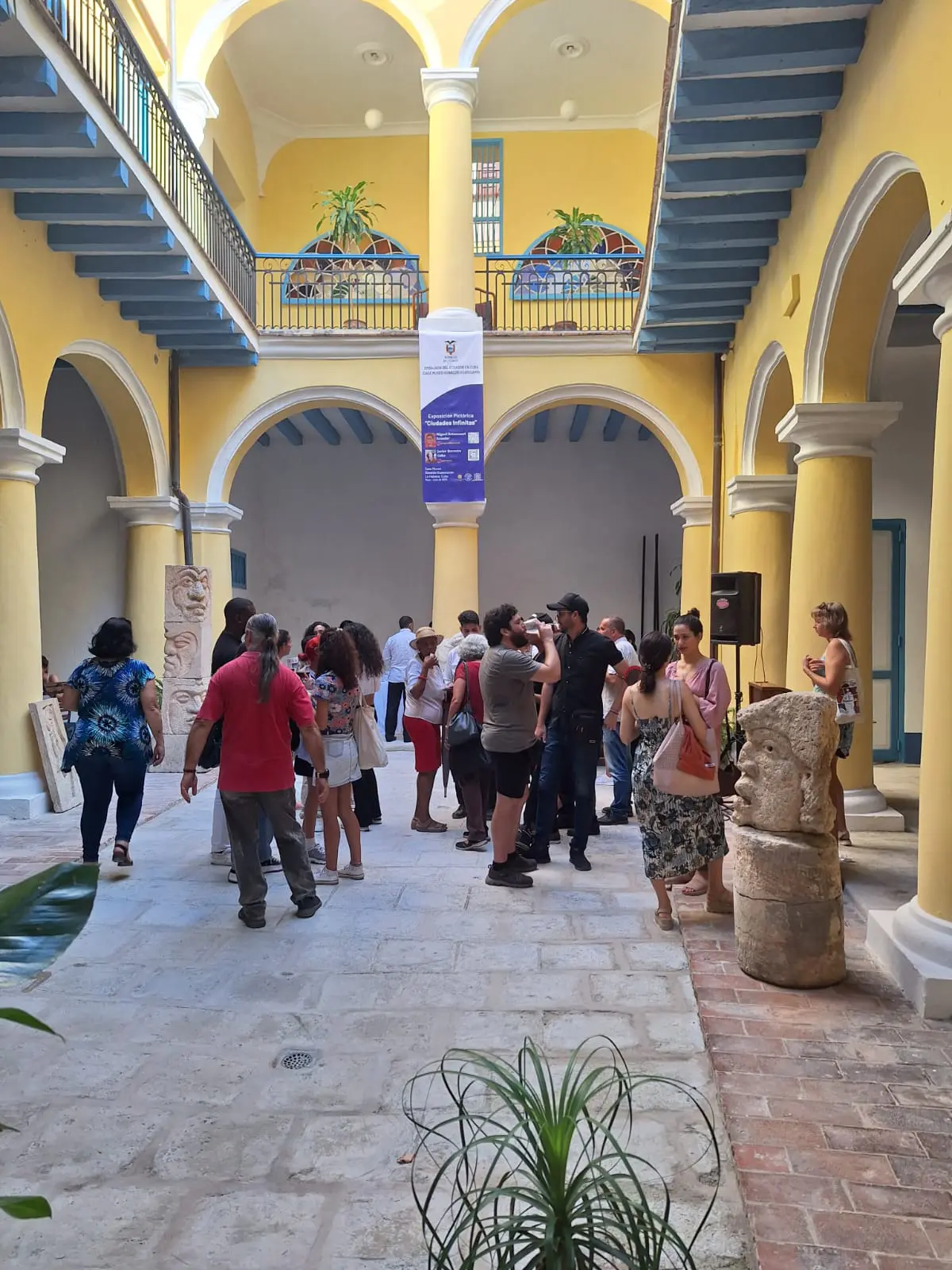
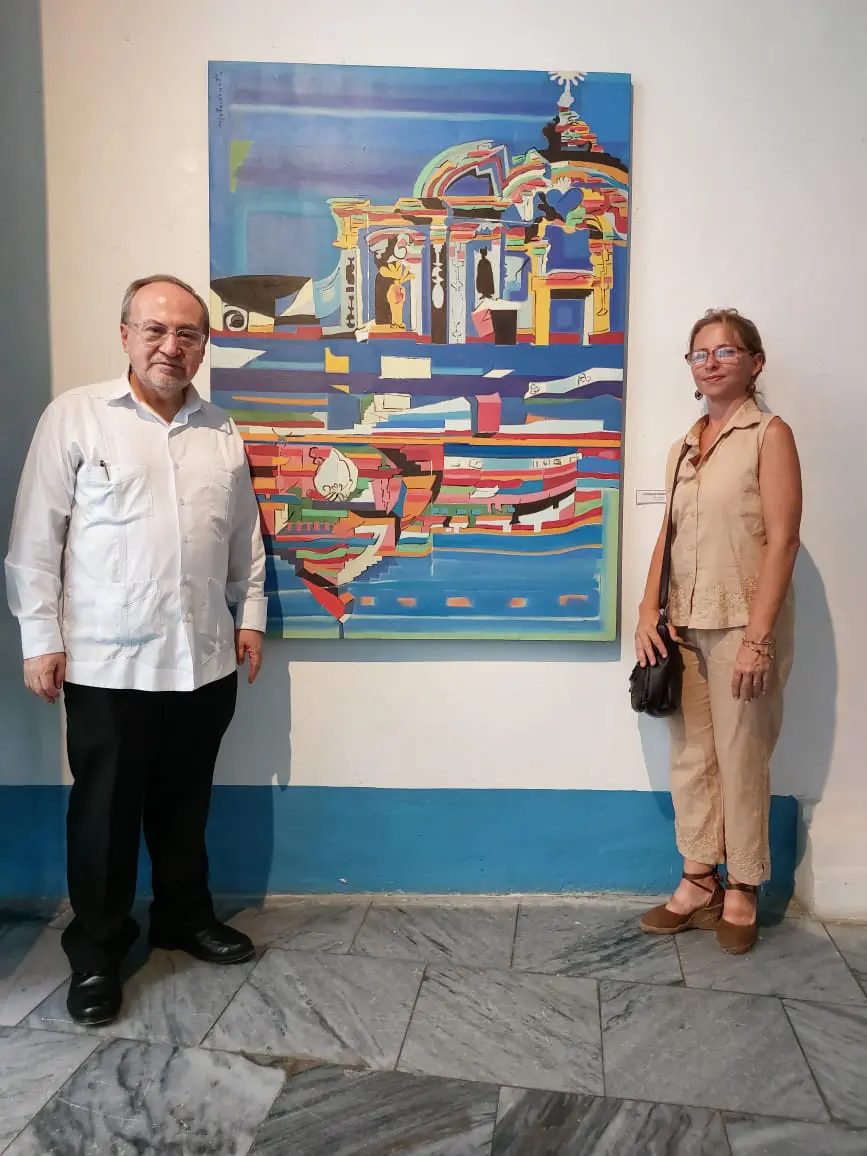
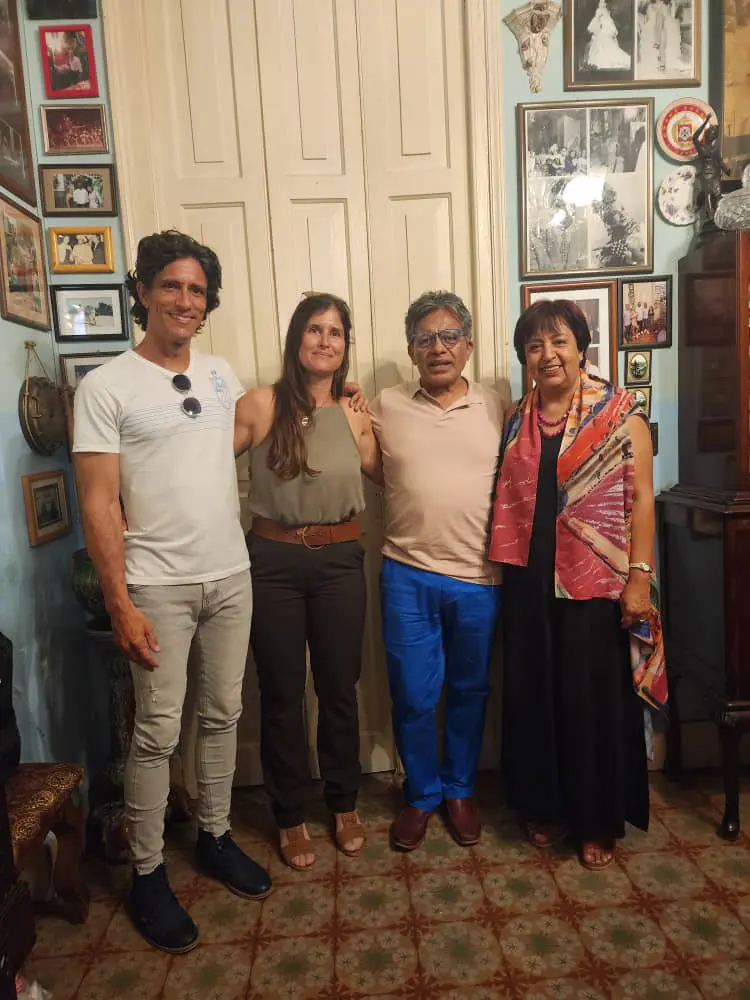
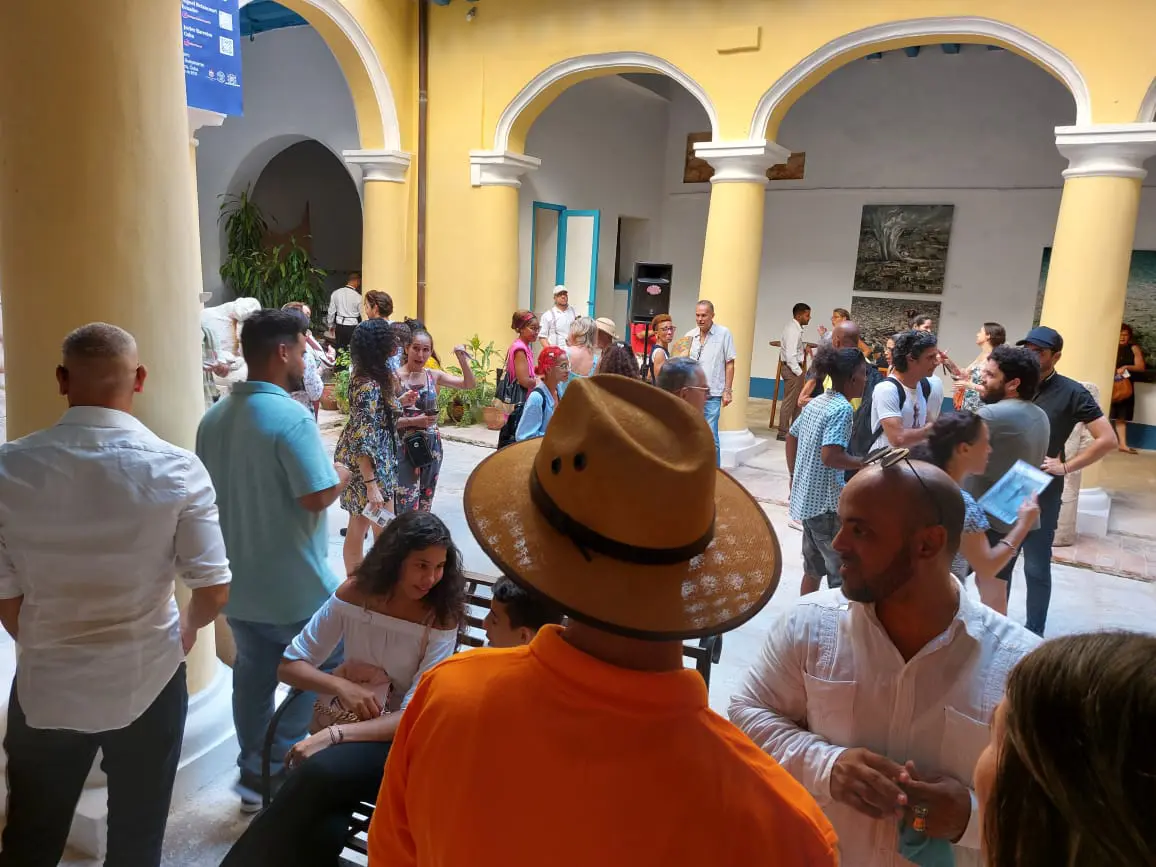
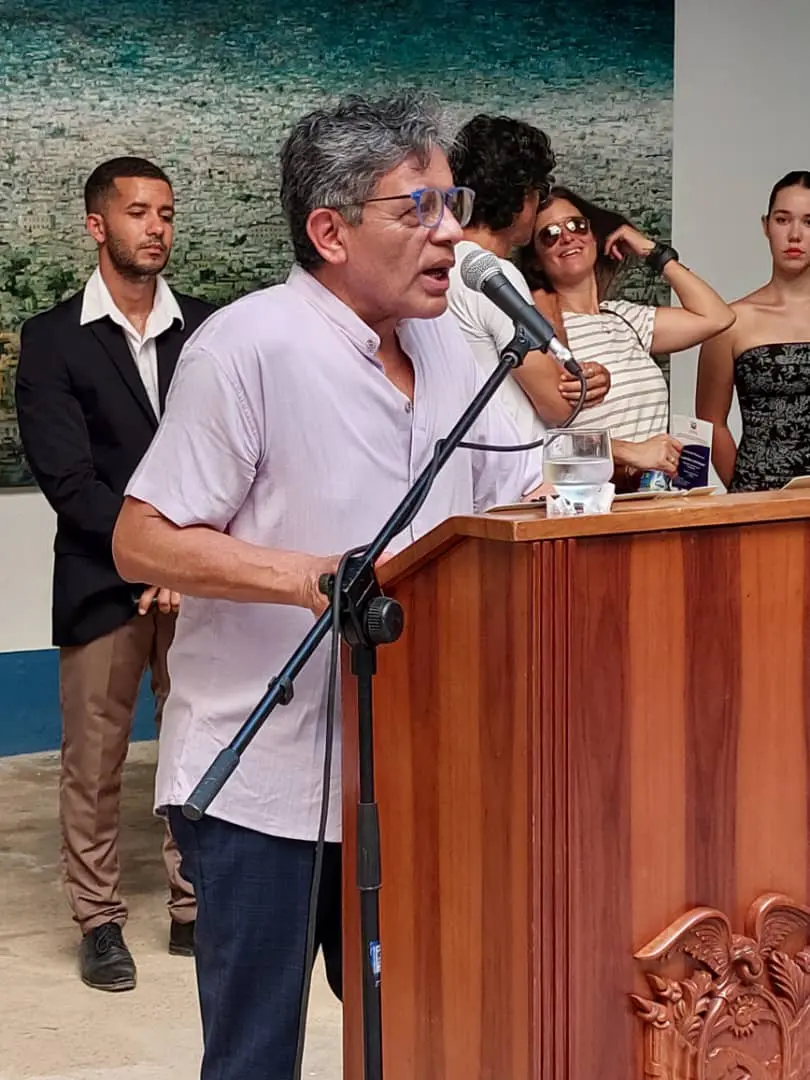
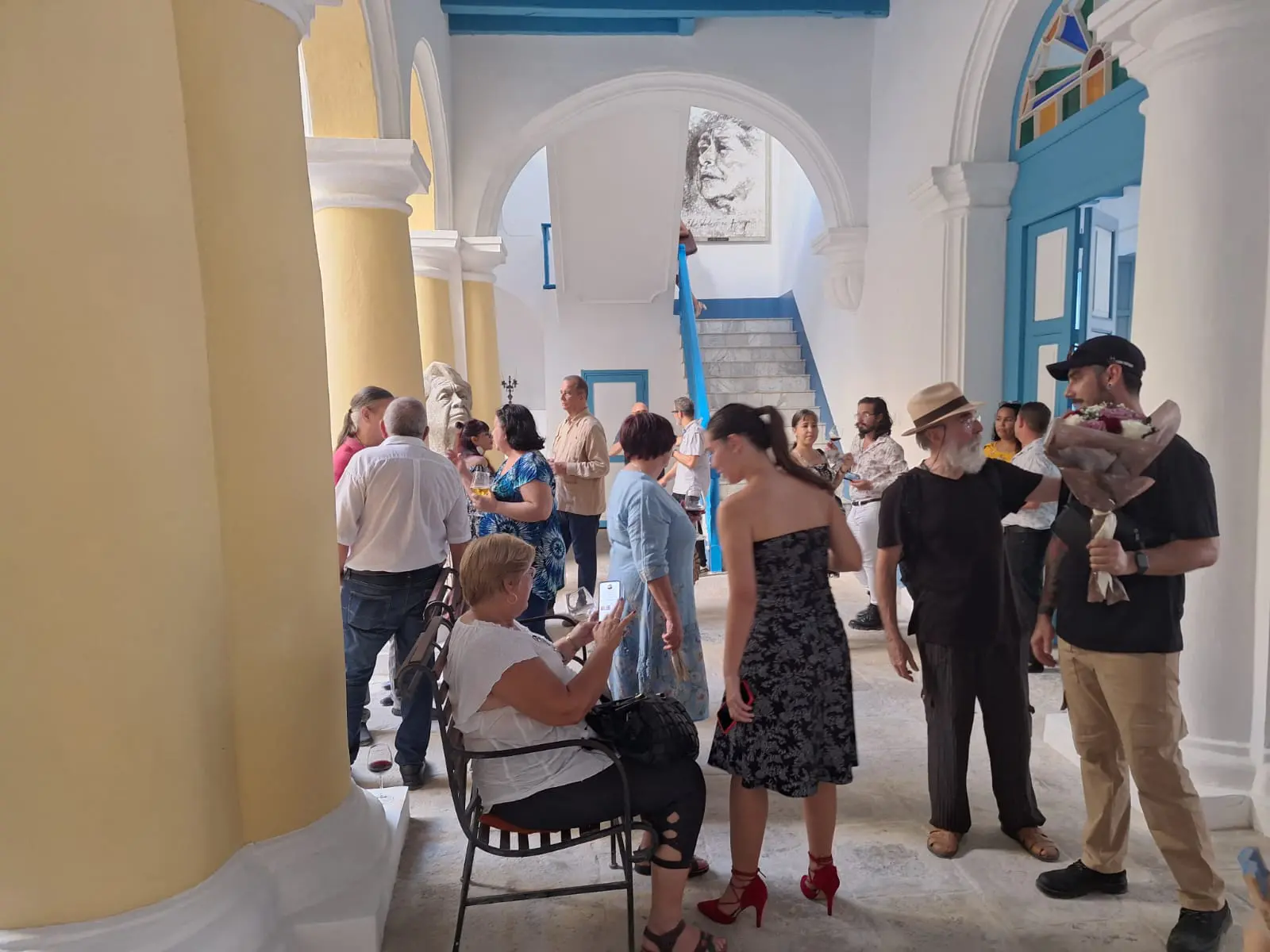
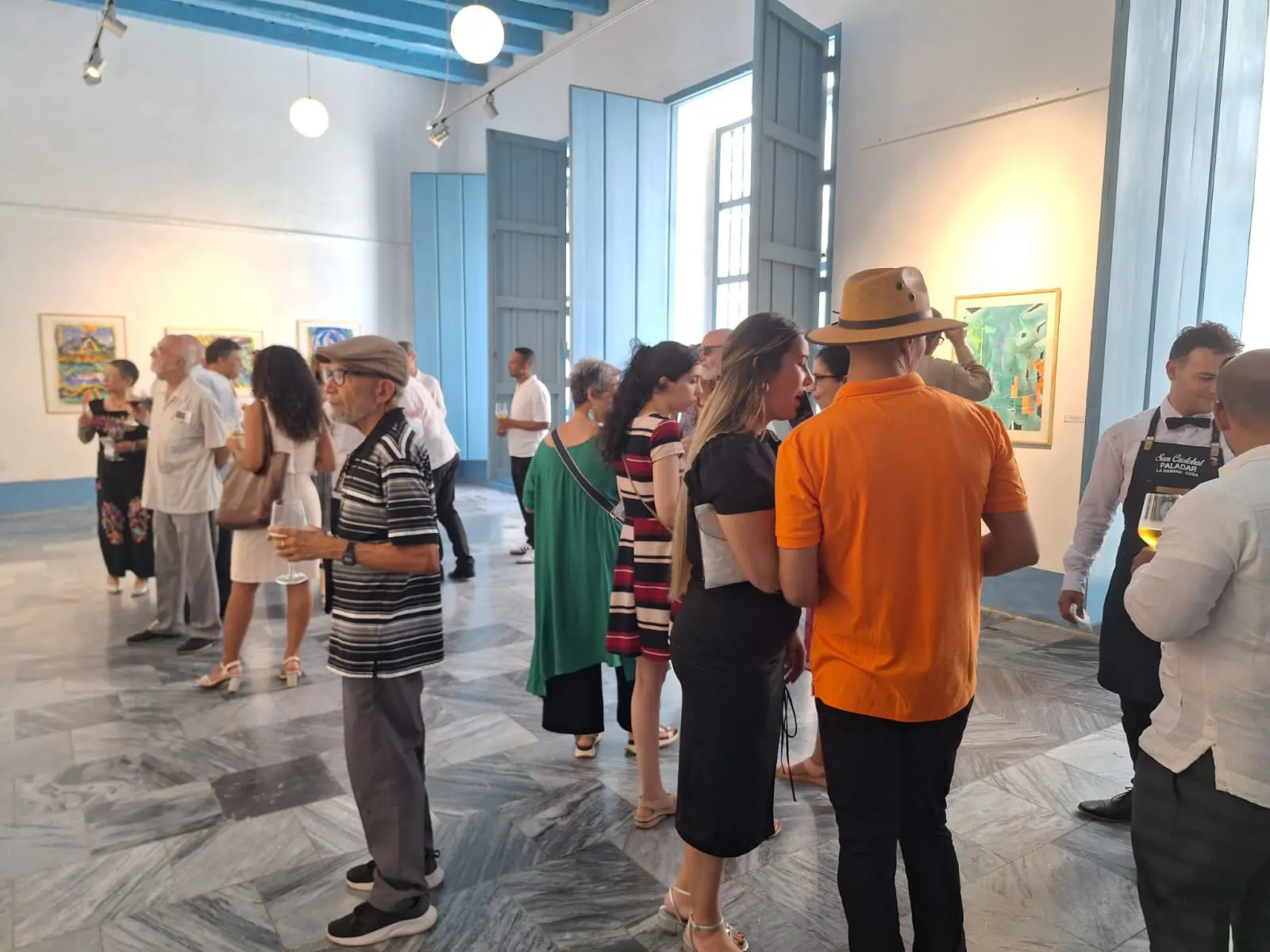
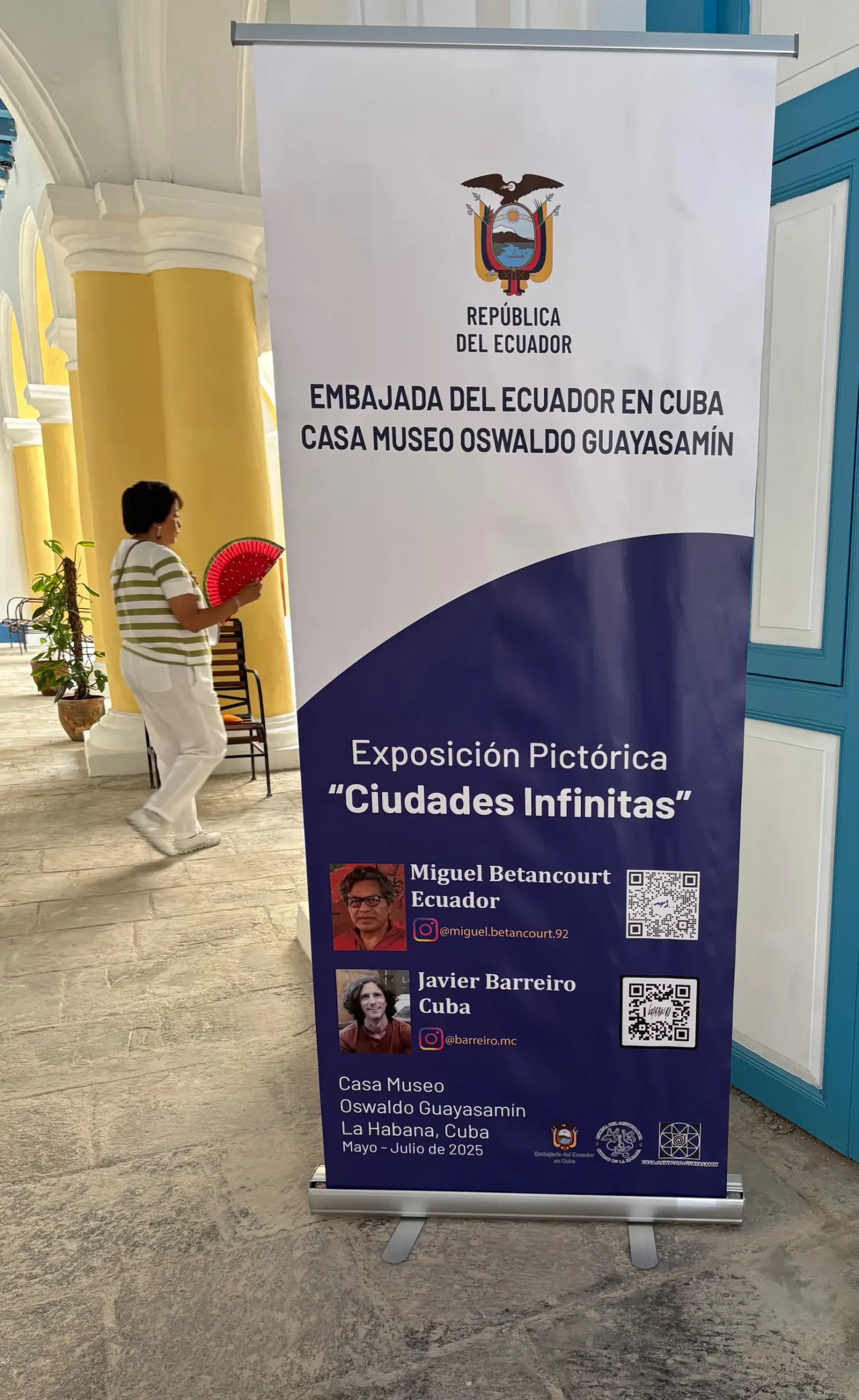
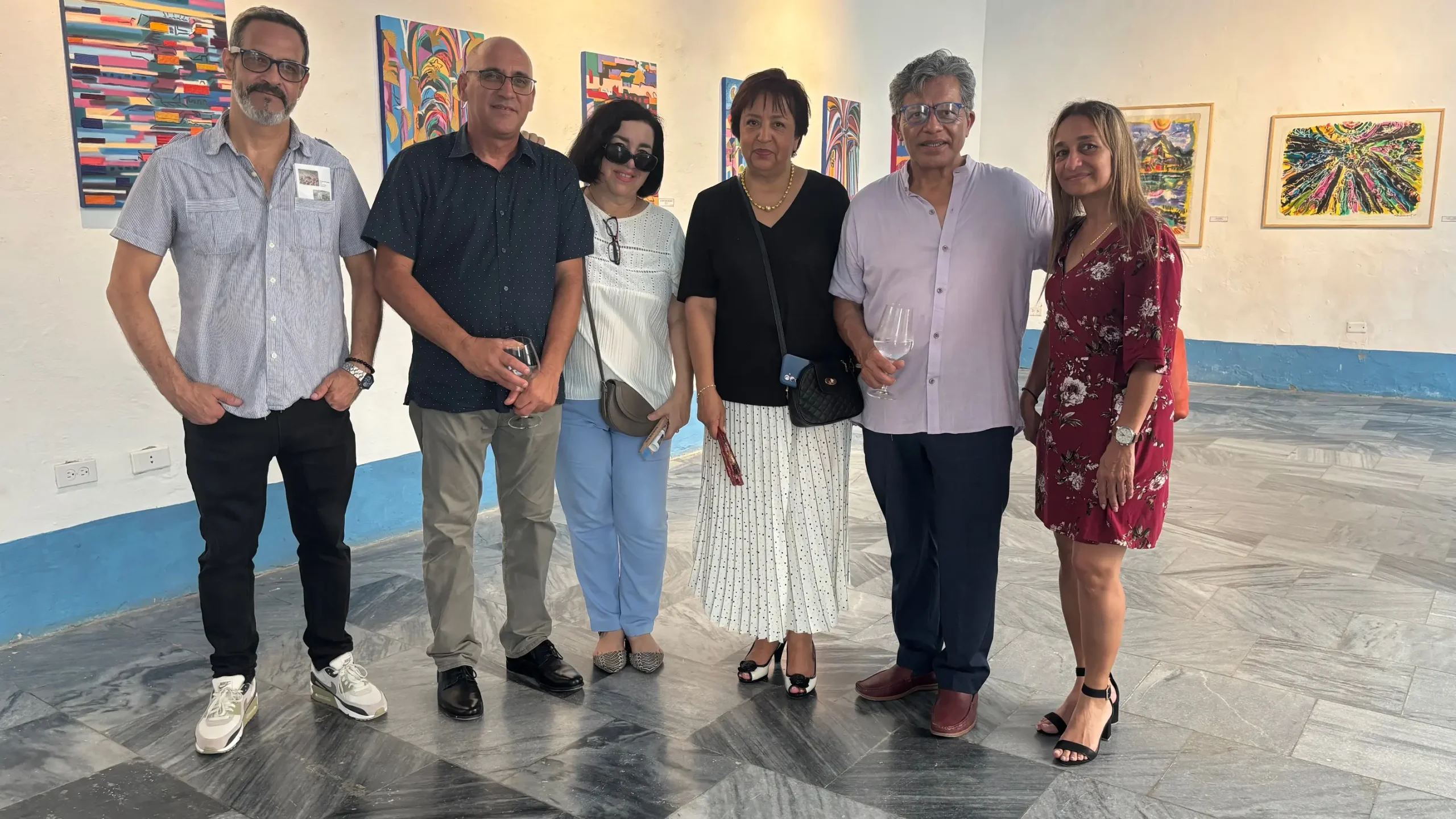
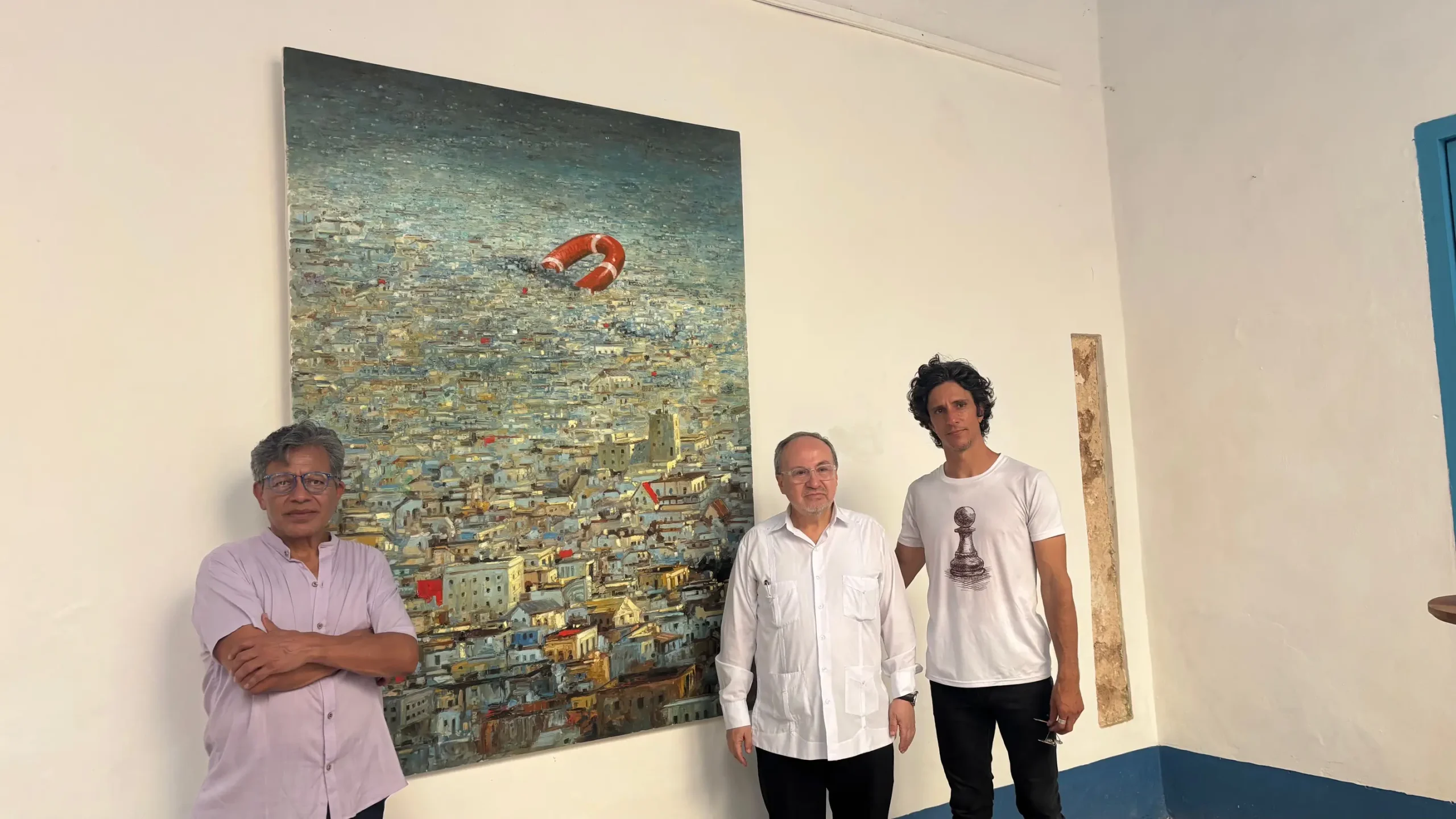
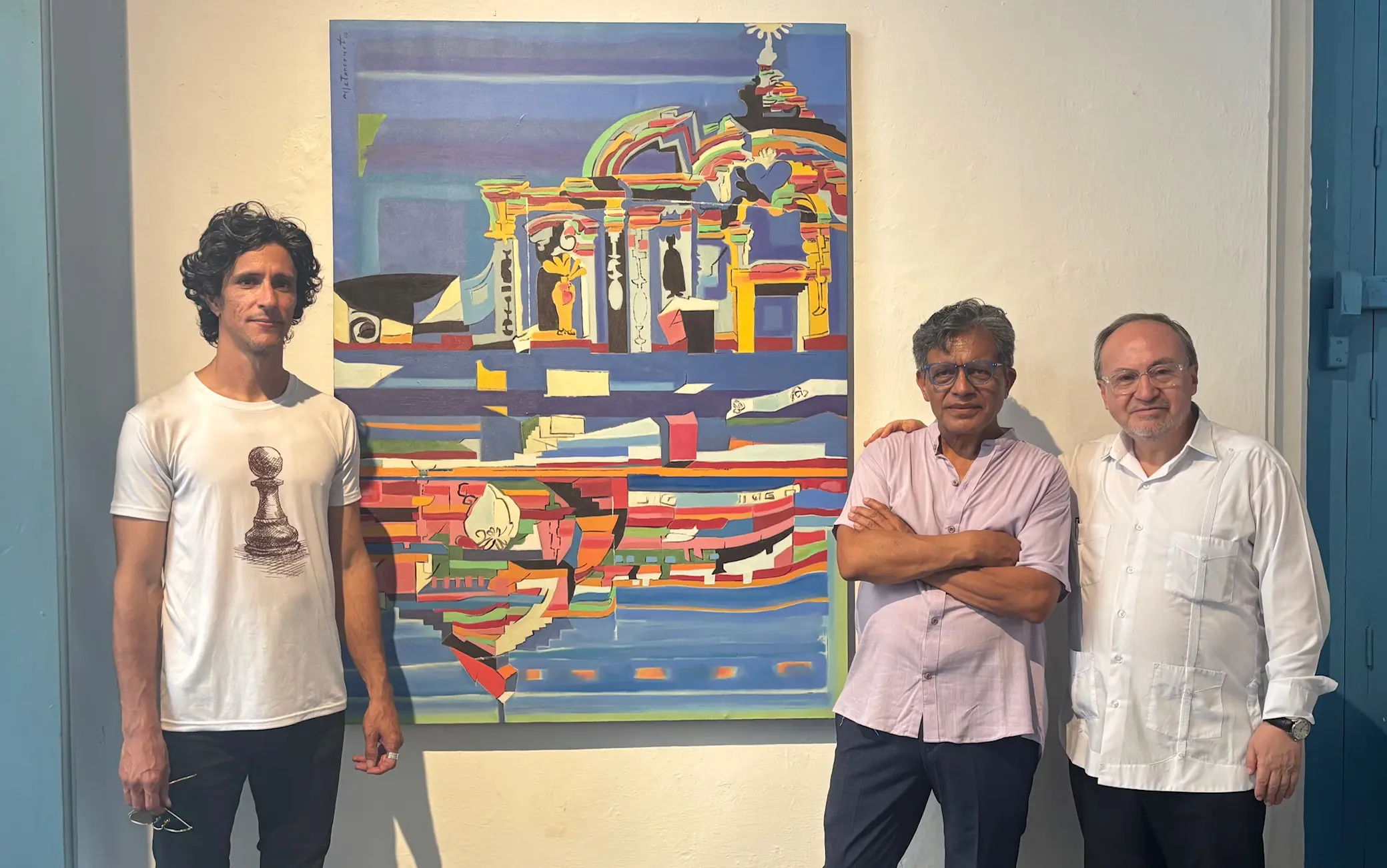
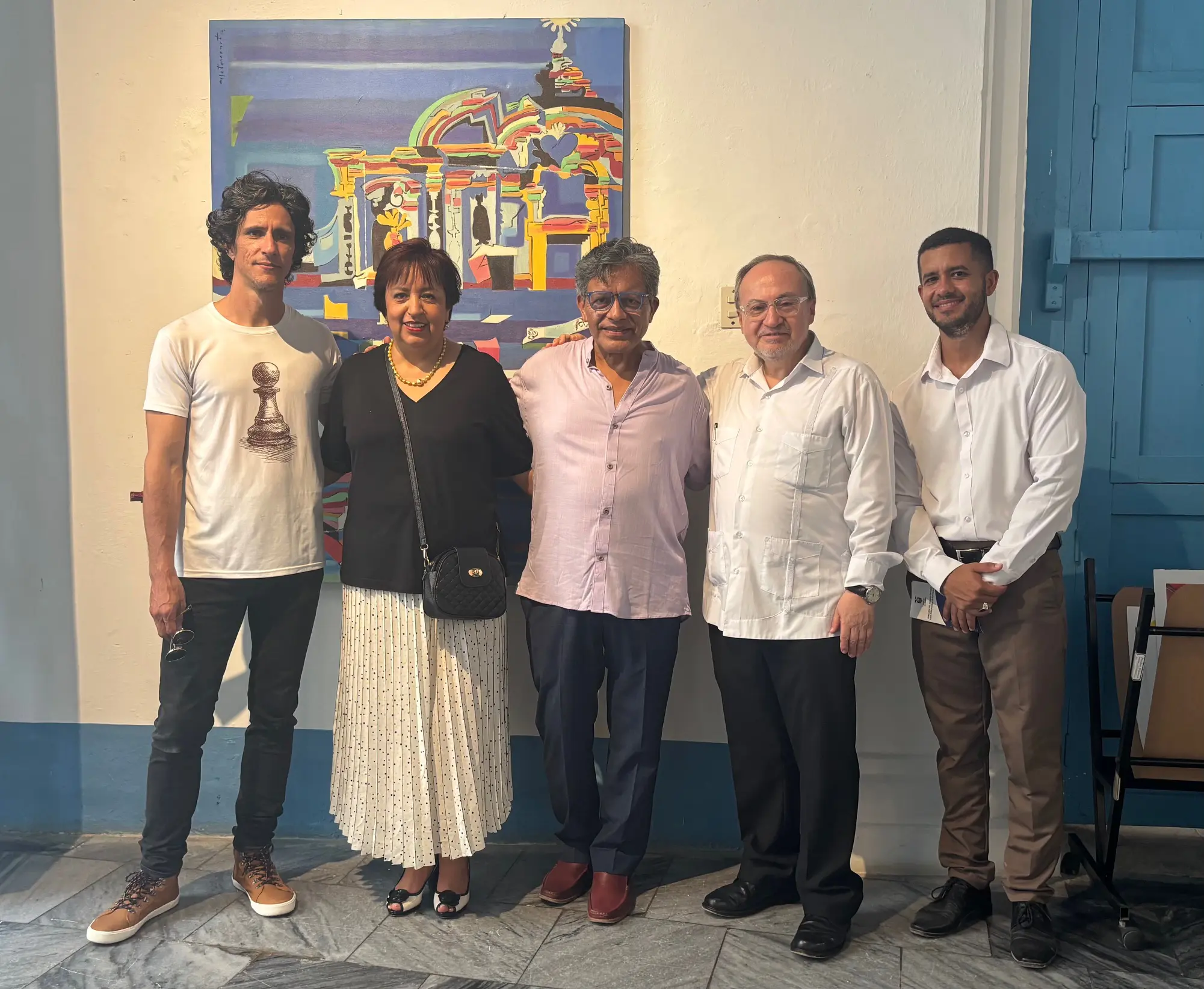
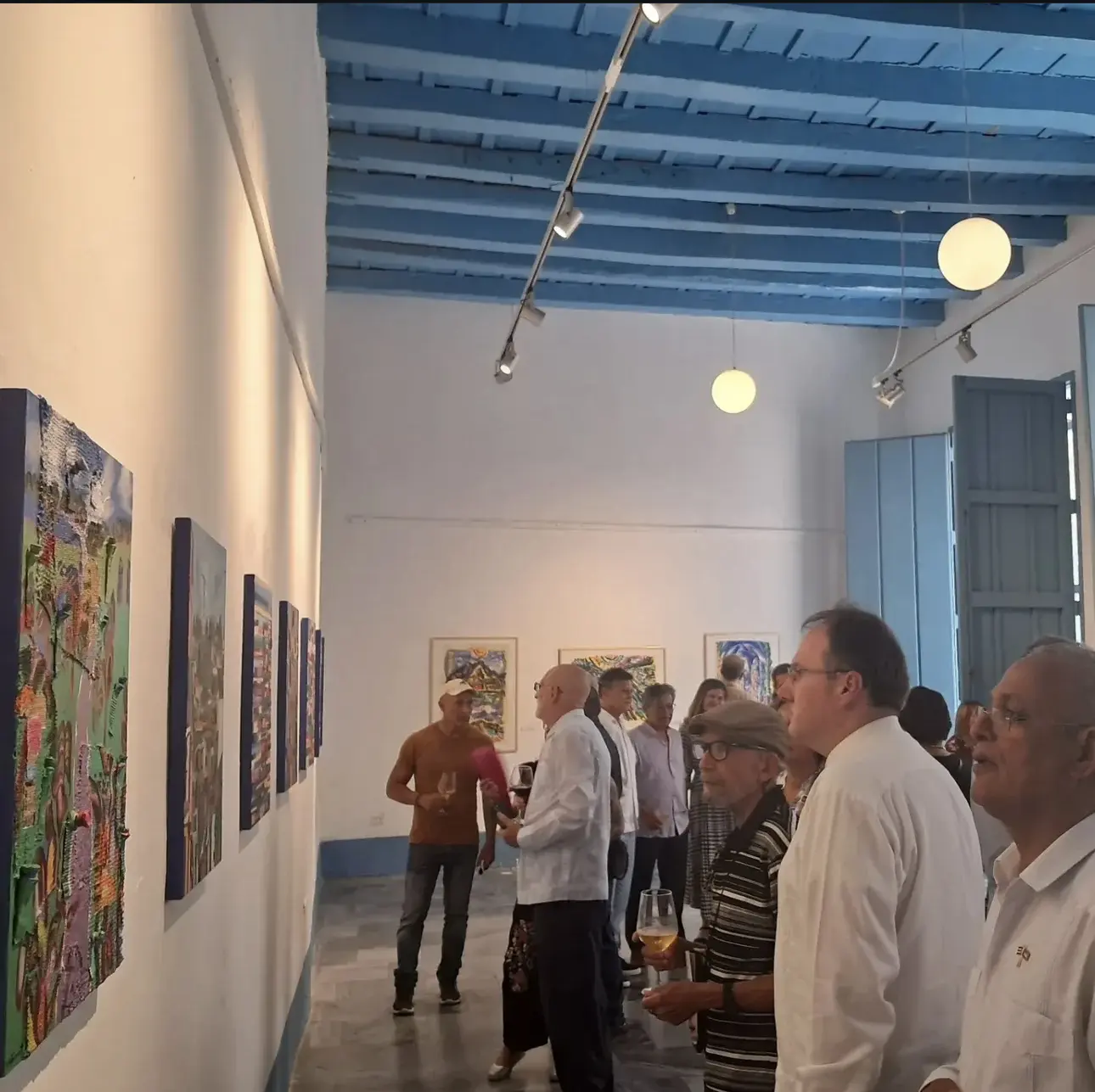
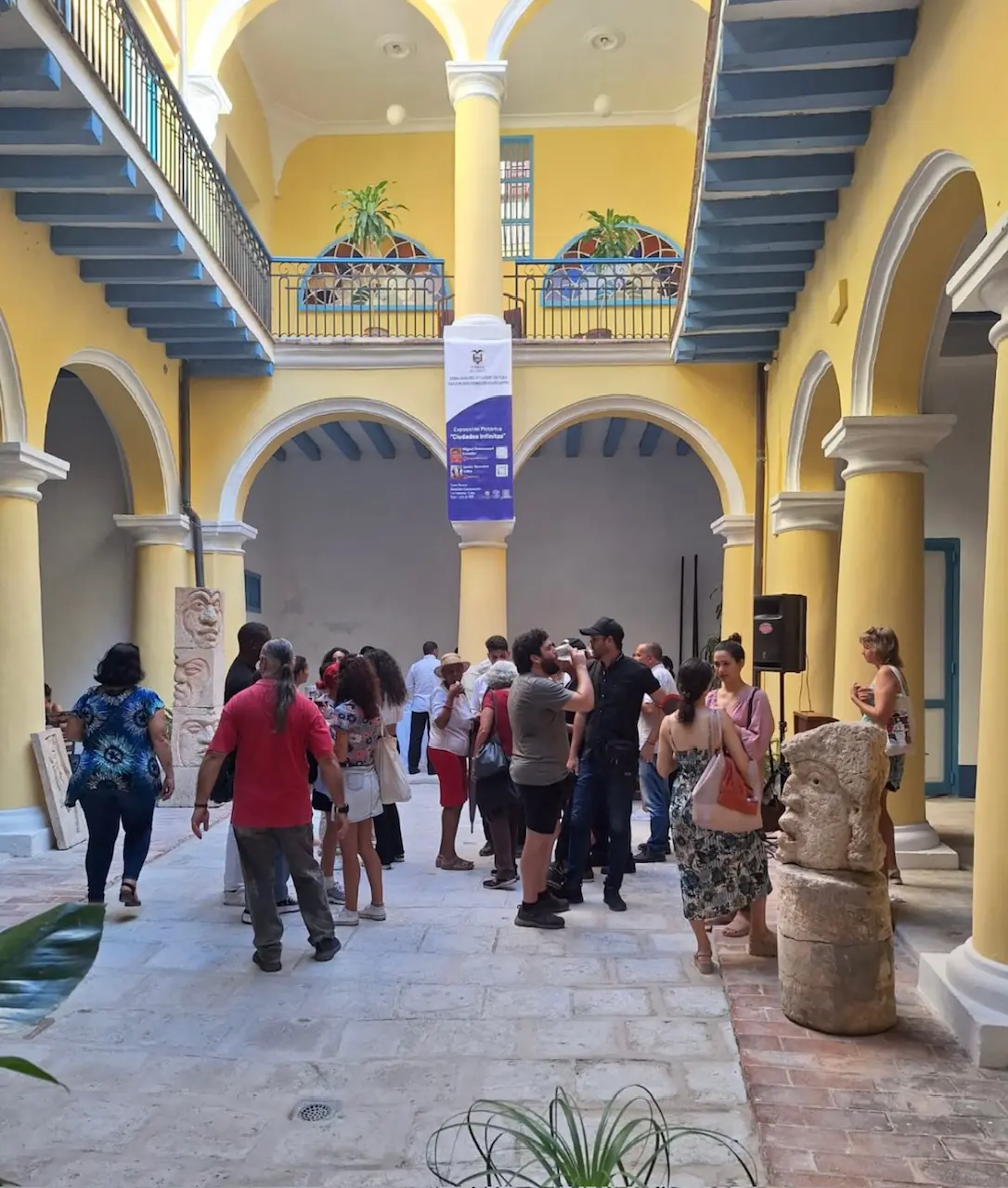
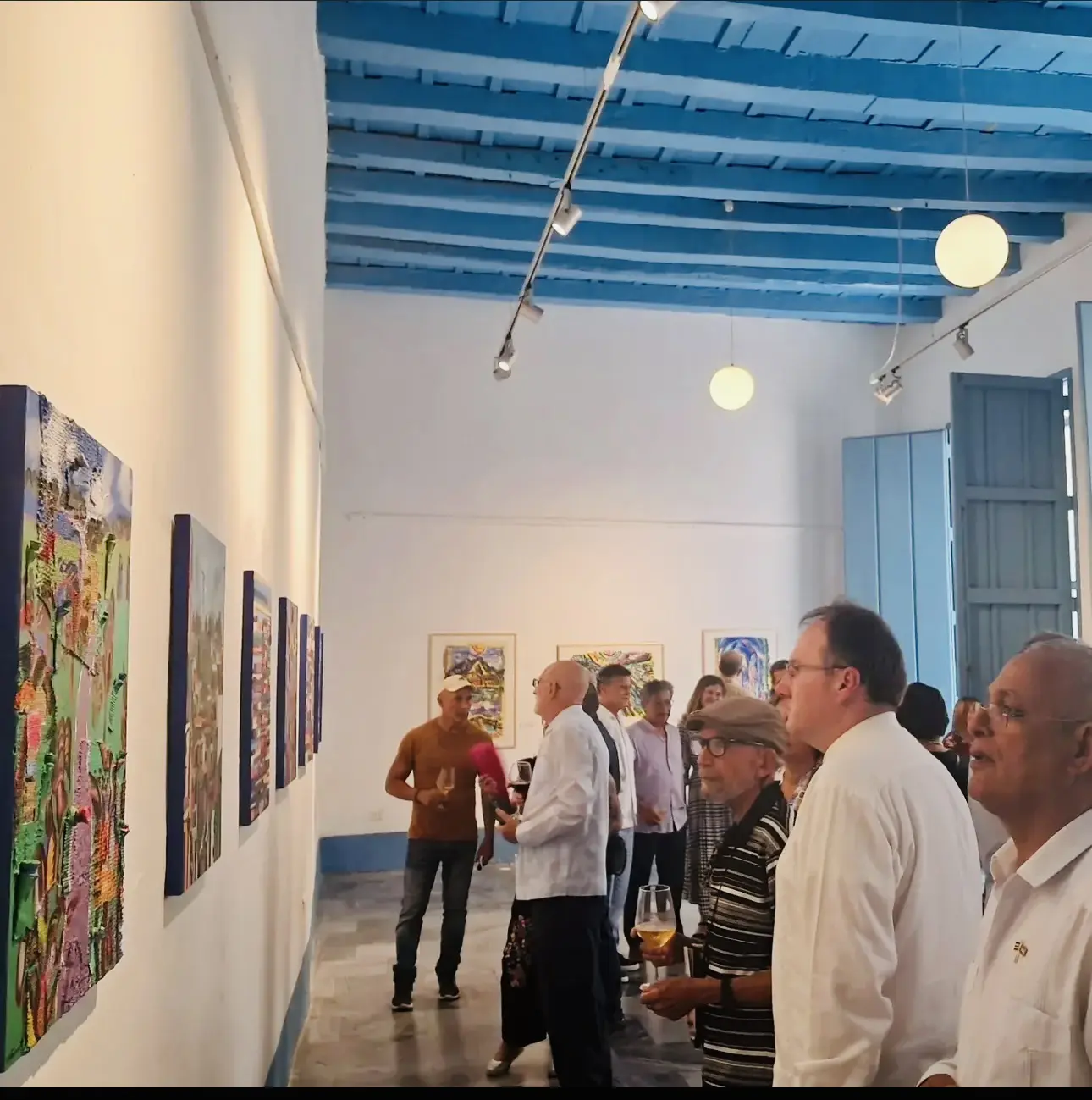
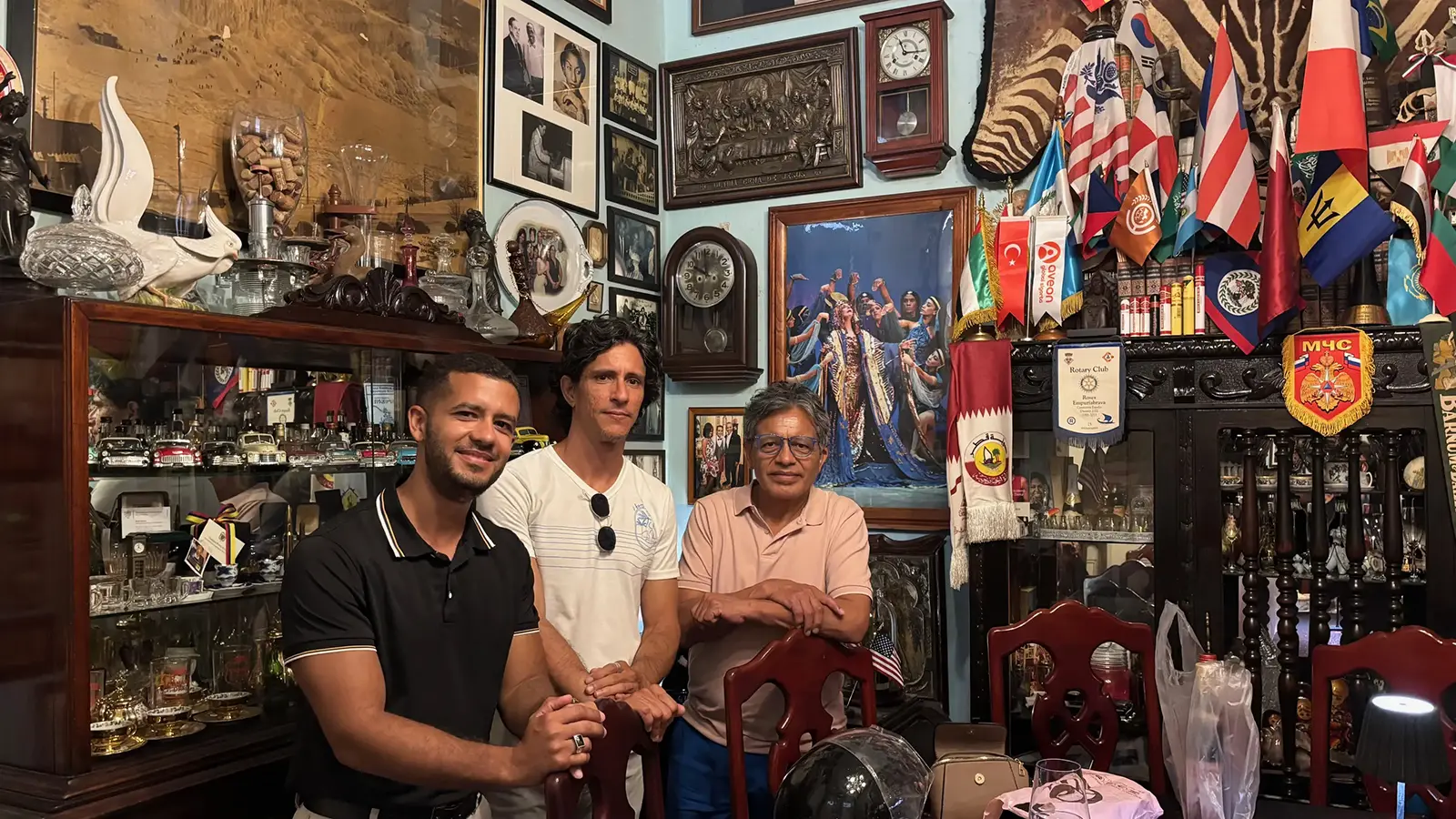
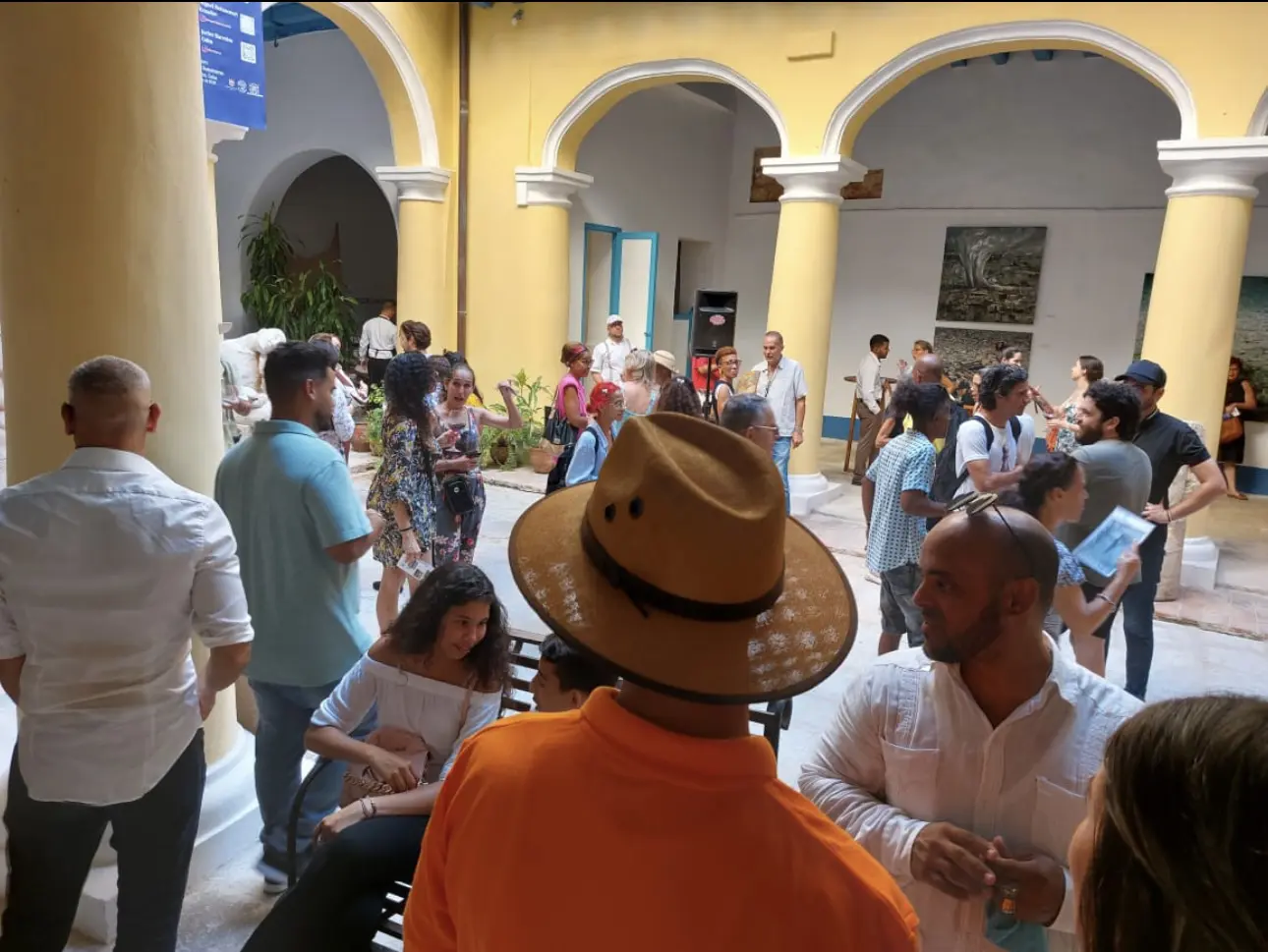
The Casa Guayasamín in the heart of Old Havana became the setting for an exceptional artistic encounter: “Infinite Cities”. This binational exhibition united the brushes of Ecuadorian master Miguel Betancourt and Cuban artist Javier Barreiro, in an exercise of introspection on the urban phenomenon as a living organism in constant transformation.
Both cities, Quito and Havana, twinned by their title as World Cultural Heritage Sites, serve as a starting point for two perspectives that converge in construction: Betancourt’s from a poetics of memory, and Barreiro’s from a stance of social critique.
The Concept: Densely Layering and Stun
Cuban curator Beatriz Hernández describes the synergy of both artists under concepts that challenge the viewer. In these works, the multiplicity of heterogeneous elements and the superposition of layers create an effect of dense layering. There is no schematic repetition; there is an ecosystem of forms that are never exhausted.
As Hernández points out:
“For a viewer looking at the works for the first time, one is immediately referred to those concepts of the ‘infinite city’, of a city that overwhelms anyone observing and living it… a living, sociocultural phenomenon.”
The City as a Metaphor for the Infinite
Inspired by visions such as those of Italo Calvino in “Invisible Cities” or the fragmented traces of Walter Benjamin, Betancourt and Barreiro present cities that are not static. In Miguel’s work, the focus is on Quito’s urban heritage, but reinterpreted as an expansion without limits, an “infinite city” reconfigured through the gaze of those who inhabit it.
This exhibition, which remained open to the public for two months, reaffirmed that urbanism, beyond concrete, is a space of possibilities, memory, and perpetual motion.