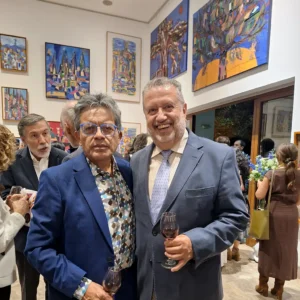
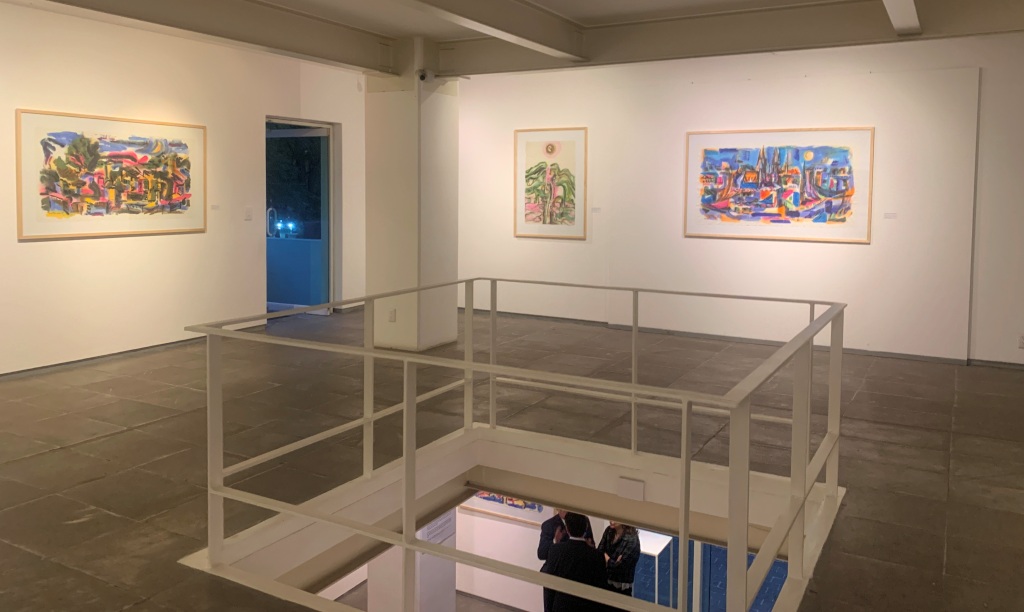
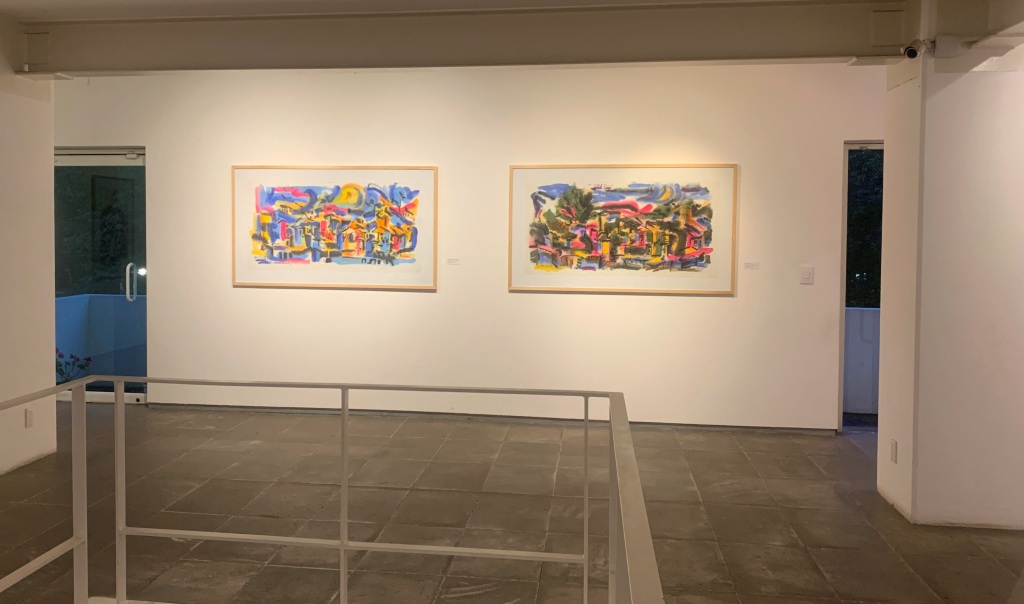
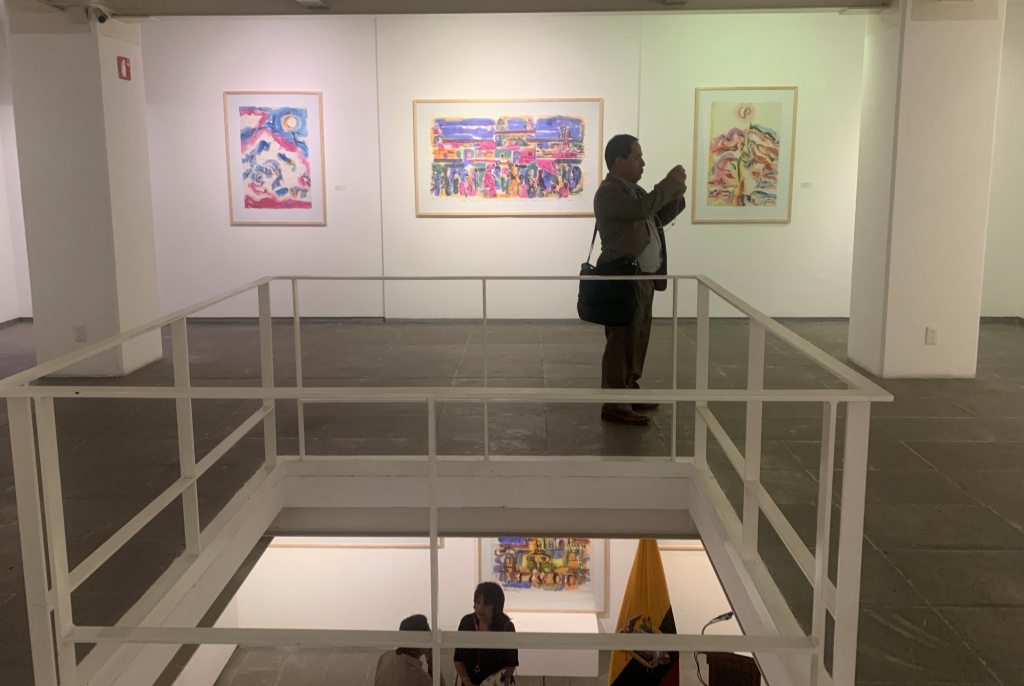
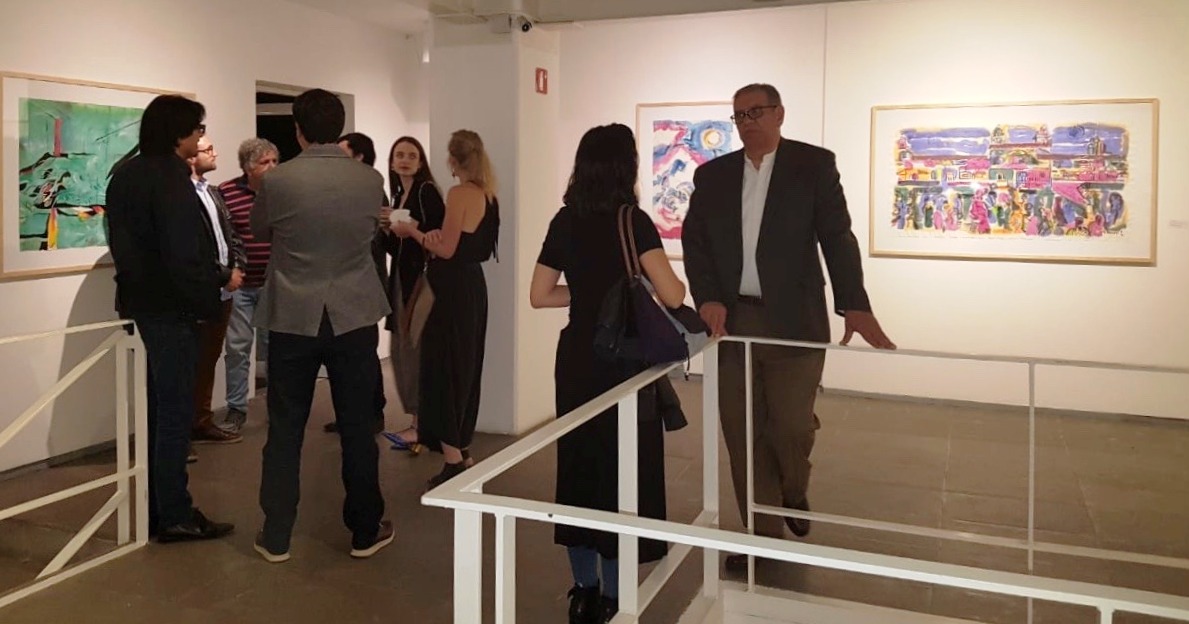
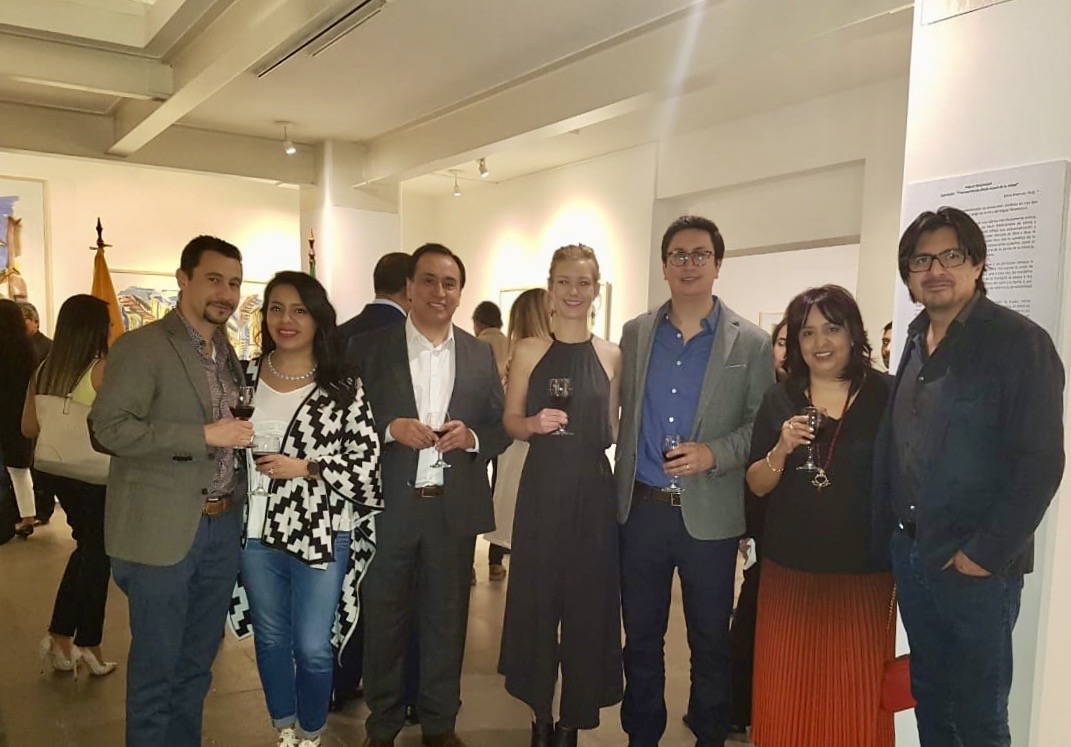
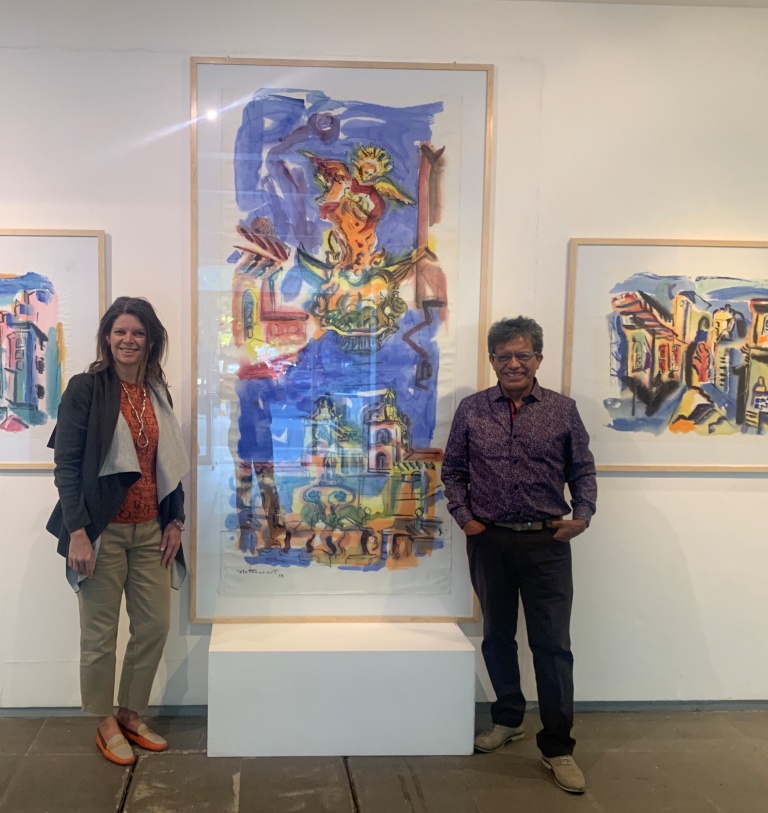
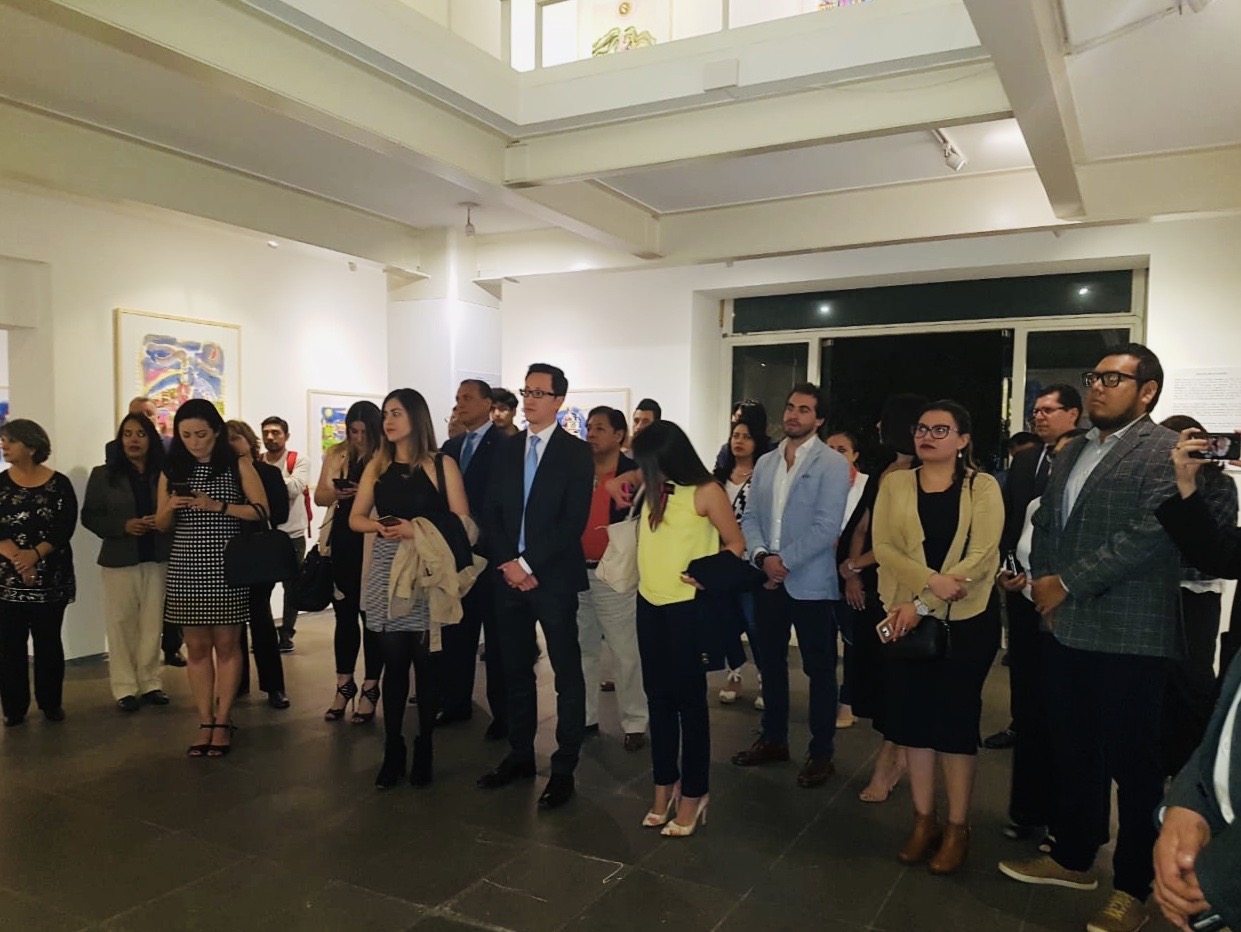
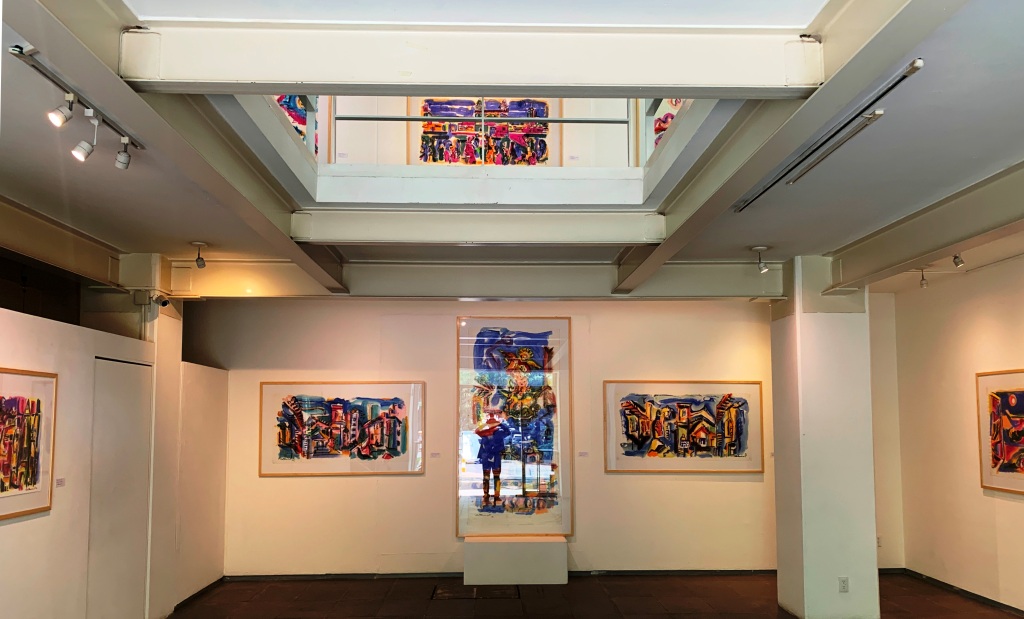
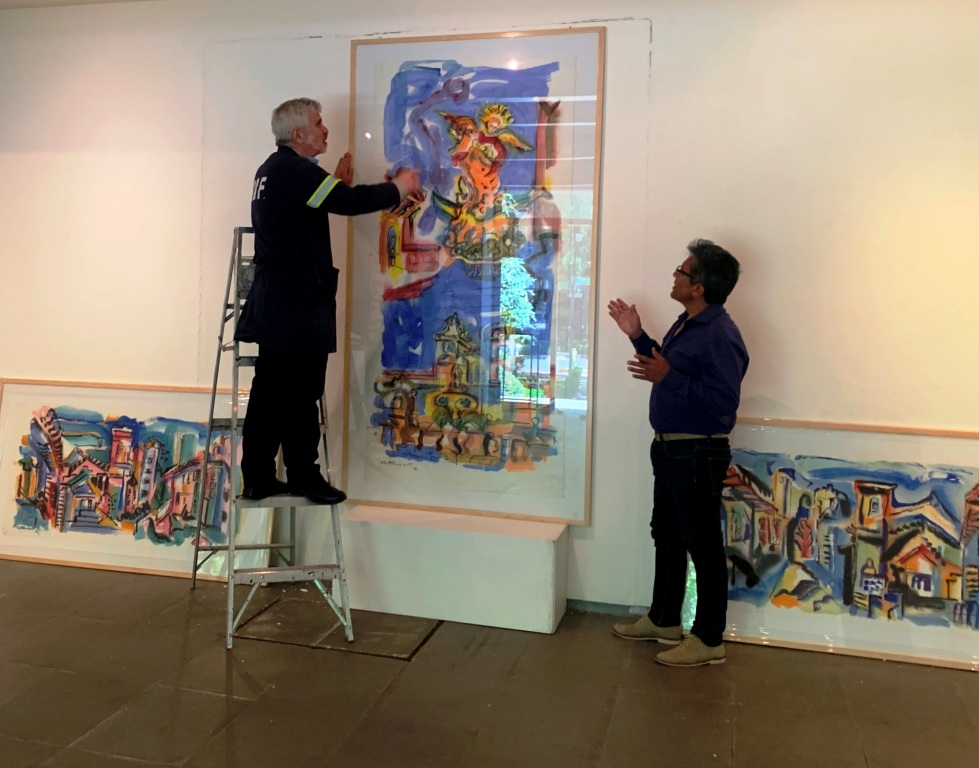
In March 2020, the iconic Torre del Reloj Gallery in Polanco, Mexico City, became the venue for a unique cultural encounter. Under the title “Transparencies of the Country of the Middle”, master Miguel Betancourt presented an anthology of 25 pieces that distill four decades of chromatic and spiritual research.
This show is not merely a painting exhibition; it is a travel logbook where the memory of Quito settles upon vegetable fibers from China, South Korea, and Japan.
The Support as Protagonist
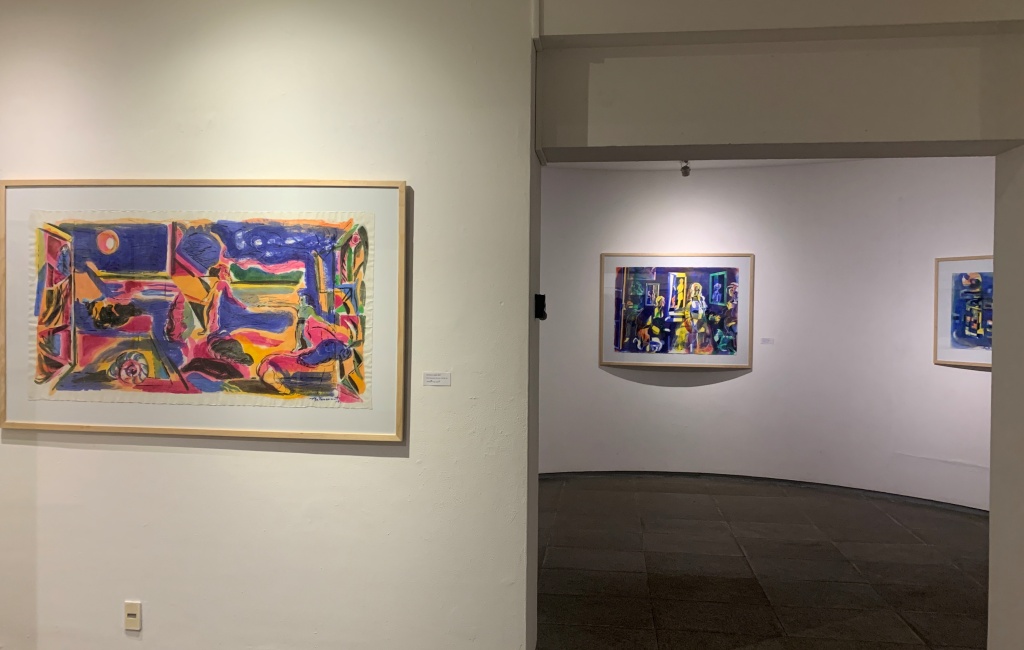
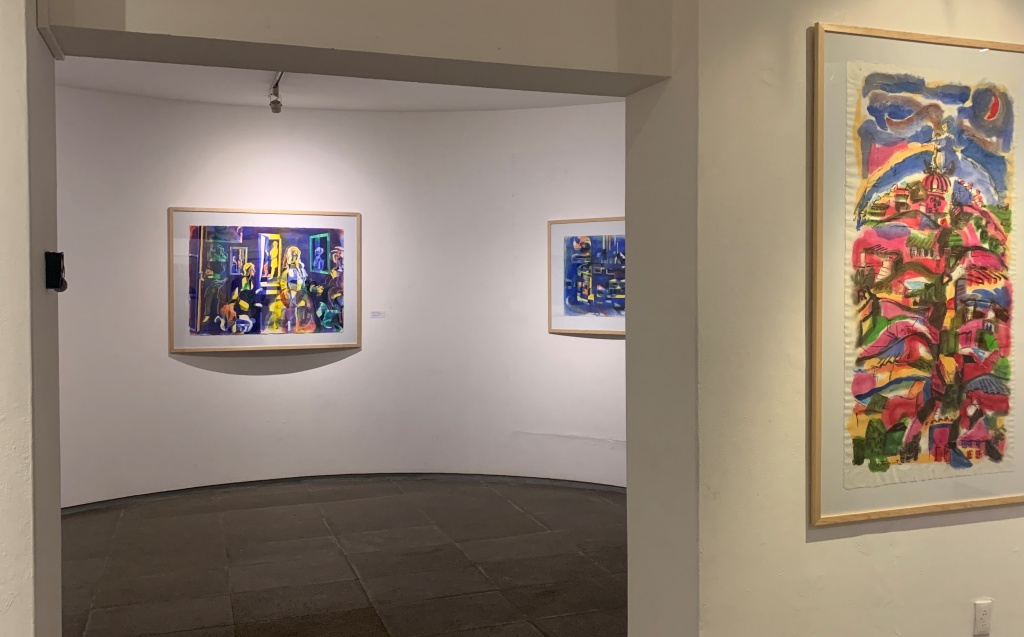
The major innovation of this series lies in its materiality. Betancourt uses rice papers of extreme textures: from paper-thin, almost ethereal membranes like an onion skin, to heavy-weight supports that withstand the saturation of acrylic and gouache. This technical choice allows light to play with transparencies, emulating the depth of Gothic stained-glass windows with the lightness of Eastern thought.
Three Axes of an Andean Cosmovision
The exhibition is articulated into three thematic sequences that have gravitated throughout the painter’s existence:
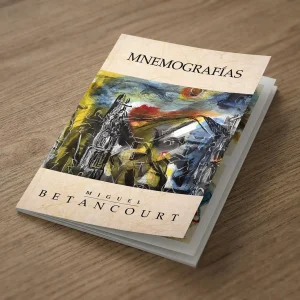
Architectures of Memory (Mnemografías): Inspired by the sacred geometry of Quito. Works such as Tropical Gothic demonstrate how cathedral windows merge with the vigor of Andean textiles. Here, color does not come from the sun, but from cultural heritage.
Figures and Characters: A journey ranging from the local to the universal. From the Virgin of Quito hovering over the San Francisco Church, to his acclaimed series of Las Meninas, where Velázquez’s icon sheds European rigidity to be reborn in Andean environments of jute and paper.
Landscapes and Tutelary Trees: The phytomorphic component, ever-present in Betancourt. Mountains, volcanoes, and stems germinating into ogives. Works such as Reverdecimiento show his most minimalist facet, where the tree becomes a symbol of simplicity and resilience.
A Checkerboard of Imperishable Sites
“Transparencies of the Country of the Middle” is, in essence, a journey into the past to reconfigure the present. Betancourt leaves visual clues for the viewer, inviting them to inhabit a different time, a space where the sun and moon remain tutelary elements and where painting is the definitive bridge between two worlds.
“This exhibition aims to transport the viewer to another time, leaving clues as if it were a checkerboard of imperishable sites.” — Miguel Betancourt